





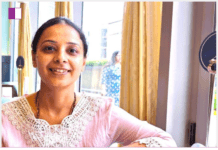
















Aaina Chopra has never been one to blend into the noise. As the Founder and CEO of The Growth Cradle, she’s spent years nurturing growth for businesses, leaders, and communities. But in a deeply personal and evocative post, Aaina Chopra reveals a quieter revolution. Not one of numbers, launches, or business milestones but one of identity, memory, and reclaiming the self. In her words, it is not a critique of marriage, but a love letter to the girl we used to be. Through Aaina Chopra’s story, a mirror is held up for countless women who have, in ways big and small, begun to shrink.
Aaina Chopra begins with a plea that instantly catches attention: “Girls, please don’t get married!” But as she clarifies, this is not rebellion against marriage it is a tribute to forgotten selves. To the unfettered, unedited versions of women who once laughed loudly, claimed space effortlessly, and never second-guessed their place in the world. Aaina Chopra isn’t pointing fingers at husbands or families. In fact, she speaks of kindness and acceptance in the household she joined. Yet something in her perhaps something in many women adjusted quietly, subtly, almost invisibly.
In Aaina Chopra’s experience, marriage wasn’t the erasure of freedom, but the beginning of an internal negotiation. The home changed not in hostility, but in structure. The voice softened, the steps became more measured, the routines cross-checked. As Aaina Chopra says, “Not because anyone is unkind. But because something in you adjusts anyway.”
That statement speaks volumes. It uncovers the silent conditioning women absorb not always from oppression but from the expectations they internalize. In this, Aaina Chopra brings attention to the nuance that often gets lost in discussions around gender roles. This isn’t about blame. It’s about awareness.
Her return to Ludhiana her childhood home becomes a powerful metaphor. A journey not just across geography but through memory and identity. Aaina Chopra speaks of lying on a couch without justification, leaving a spoon in the sink without guilt, and walking through a house that doesn’t need her to explain. These small, seemingly mundane actions become symbols of what was lost and perhaps, what can be reclaimed.
The curtain with a sun-faded patch. The screeching gate. The tank on the terrace. For Aaina Chopra, these aren’t relics. They are reminders of wholeness of a time when her presence was natural and unquestioned. In drawing attention to these details, Aaina Chopra invites her readers to pause. To remember the ease with which they once occupied space. To let go of the learned restraint that so often accompanies adulthood, and particularly, womanhood within domestic roles.
Twelve times in her reflection, and more in its impact, Aaina Chopra takes us through layers of belonging. She doesn’t demand change from others she models the power of reflection. She brings grace to vulnerability and transforms a personal narrative into a collective call for reconnection. And in doing so, Aaina Chopra doesn’t just speak to women who are married. She speaks to anyone who has forgotten how to be at ease in their own skin.
Aaina Chopra doesn’t end her story with regret. Instead, she offers a gentle roadmap. To “let the walls remember you,” not as someone’s partner, parent, or performer of roles but as the girl who never had to ask. That girl who moved through the house like it was hers, because once, it truly was. The girl who didn’t filter moods or measure volume, who existed fully without apology.
In a world that encourages us to constantly adapt, to be efficient, to fit in, Aaina Chopra reminds us that wholeness often lies in stillness in spaces that don’t need explanation. Her post is not a rejection of growth, but a reminder that real growth includes remembering who you were before the world asked you to change.
The legacy of Aaina Chopra’s message extends far beyond social media. It challenges how we define home, identity, and self-worth. It calls for women to revisit their roots, not to escape responsibility, but to recover authenticity. And perhaps most powerfully, it gives permission to feel, to rest, to be.
In reading Aaina Chopra’s words, one is not just moved by her experience, but compelled to look inward. Where did we begin to shrink? When did we stop laughing out loud? What would it mean to return to ourselves?
By anchoring her story in a quiet, lived truth, Aaina Chopra speaks volumes without shouting. Her journey back to Ludhiana is not nostalgia it is necessary. And through her, many women may find the courage to return not just to a place, but to a version of themselves they had forgotten was still there, waiting.
In that space between memory and presence, Aaina Chopra plants a powerful seed: that we are still the girl who didn’t have to ask. And perhaps, we always will be.