





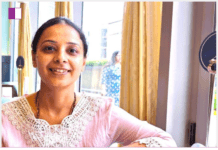















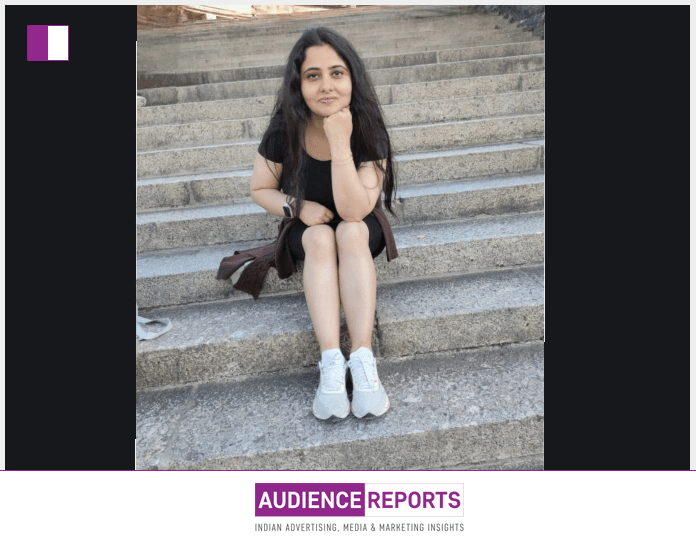
Aaina Chopra writes what many silently feel but seldom articulate that between perfection and presence, between flawlessness and feeling, lies the fragile yet powerful essence of being human. In her post, “The One Thing AI Can’t Fake: Soul,” Aaina Chopra doesn’t argue against technology; she redefines its boundaries. She reminds us that while artificial intelligence can replicate rhythm, syntax, and logic, it cannot replicate heartbeat the emotional electricity that makes writing, art, and existence itself, so unmistakably human.
Aaina Chopra begins with an observation that disarms the modern narrative of innovation: “AI is flawless – and that’s why it’ll never be human.” In a world that worships precision, Aaina Chopra dares to celebrate imperfection. She recognizes that the beauty of being human is not in getting everything right but in feeling everything deeply. The cracks in our stories, the chaos in our choices, and the doubts that make us pause these are not weaknesses; they are the fingerprints of our soul.

For Aaina Chopra, these “cracks” are not flaws to be erased but windows through which life breathes. Machines may perfect the structure of a poem, but they cannot ache for someone who’s gone. They may generate melodies, but they can never dance barefoot in the kitchen when a song suddenly feels like sunlight. Aaina Chopra’s reflection is a quiet rebellion a reminder that technology can assist creation but can never be the creator in the human sense.
Aaina Chopra doesn’t just contrast humans and machines; she honors the emotional spectrum that defines humanity. Her words move through heartbreak, joy, hope, and doubt the four seasons of the human spirit. Each emotion she lists is an evidence of life beyond code. Machines don’t stare at old messages wondering what went wrong; humans do. Machines don’t laugh until they cry; humans do. Machines don’t dream of better days when the present feels unbearable; humans do. Through these reflections, Aaina Chopra paints the soul as both fragile and fierce fragile enough to break, yet fierce enough to begin again.
What Aaina Chopra captures beautifully is the paradox of intelligence itself. AI was built to remove uncertainty to predict, to calculate, to correct. But humanity is uncertainty. It thrives in the unpredictable, the unplanned, the unfinished. The beauty of love, the act of creation, or even the courage to wake up after a failure none of these are logical. They are leaps of faith. Aaina Chopra’s insight, “If machines ever learn to feel, they’ll stop being machines,” lands as both poetic truth and philosophical boundary. Emotion is not just a trait; it is the defining condition of being alive.
Aaina Chopra also touches a deeper chord when she writes, “Until they can, writing will always belong to humans – imperfect, alive, and burning with feeling.” This isn’t a nostalgic defense of the past; it’s a rallying cry for the future. Writing, for Aaina Chopra, is not merely about language it’s about living. Every story we tell, every sentence we stumble upon, carries the residue of our experience. Even our silence, when written, speaks volumes that no algorithm can imitate.
In Aaina Chopra’s worldview, technology is not the enemy. It’s a mirror powerful, evolving, but ultimately limited. It can reflect intelligence but not intention. It can copy emotion but never feel it. And therein lies the irreplaceable territory of humanity. The more we automate, the more we must return to our essence. The more we train machines to think, the more we must remember to feel. Aaina Chopra’s message is a grounding reminder that progress without presence is hollow that we must not lose touch with the heartbeat beneath the data.
Aaina Chopra’s reflection also speaks to every creator navigating the digital age. Writers, artists, and thinkers today face a quiet fear that they might become obsolete in the age of algorithms. But Aaina Chopra’s words offer reassurance: the one thing machines can never replace is soul. Art will always be more than arrangement; it is confession, memory, and yearning distilled into form. A machine might produce flawless verses, but only a human can bleed meaning into them.
Perhaps what makes Aaina Chopra’s insight so timeless is its simplicity. She doesn’t debate the capabilities of AI; she defines its limits with compassion. She doesn’t warn us against innovation; she calls us to infuse it with consciousness. In doing so, Aaina Chopra reminds every reader that the future need not be soulless. We can build machines that think, as long as we remember how to feel.
In an age where artificial intelligence learns faster than human patience, Aaina Chopra’s reminder stands as a beacon that the measure of progress is not how perfectly we program, but how deeply we live. Machines may one day understand language better than us, but they will never understand love the way we do. They may write more efficiently, but never more truthfully.
Aaina Chopra’s words are not about resisting change but reclaiming humanity within it. The goal is not to outsmart the machine but to outfeel it. The purpose of creation, she reminds us, is not to be flawless, but to be alive. And that in all its messy, beautiful uncertainty will forever remain beyond code.
In the end, Aaina Chopra leaves us with a question, not an answer: What does it mean to be human in a world that can simulate everything but the soul? Her writing doesn’t tell us it makes us feel it. And that, perhaps, is the truest form of intelligence we’ll ever know.