





















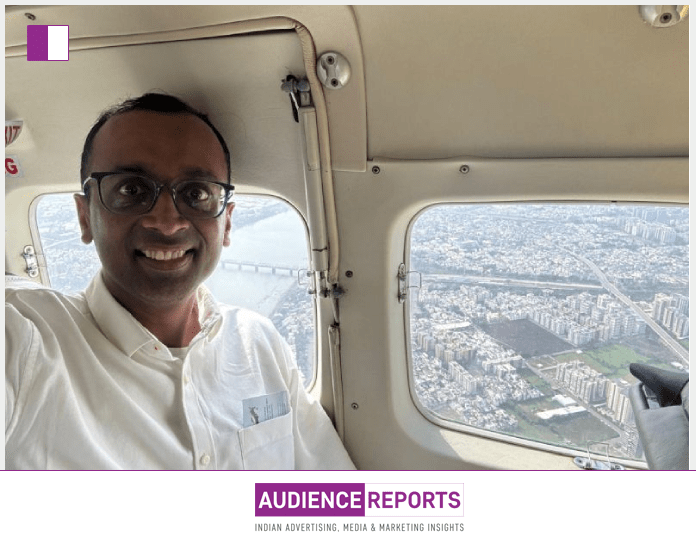
Abhishek Kiran Gupta has consistently demonstrated that the future of India’s real estate lies not only in data but also in understanding the evolving pulse of cities. As the CEO and Co-Founder of CRE Matrix, he brings together analytics, vision, and ground realities to paint a holistic picture of how urban India is transforming. His recent reflection on Surat, shared during The Realty Drive, offers much more than a panoramic view from above it provides a blueprint of how an emerging city positions itself on the growth map of India.
Abhishek Kiran Gupta observed Surat not just as a visitor but as someone deeply invested in the trajectory of real estate. From the vantage point he described, the city’s promise is clear. The DMIC corridor cutting through the hub, the bullet train project taking shape, the iconic Diamond Bourse, and the upcoming international airport terminal are not just infrastructure highlights they are signals of a city readying itself for global stature. Abhishek Kiran Gupta emphasizes these markers because they are integral to understanding how real estate development thrives where connectivity and scale intersect.

Surat has always been synonymous with textiles and diamonds. Yet, as Abhishek Kiran Gupta rightly points out, the city is diversifying. With IT and services entering the landscape, the economy is no longer tied solely to traditional industries. This diversification is shaping housing demand, commercial office space, and retail hubs in entirely new ways. By highlighting these trends, Abhishek Kiran Gupta shows how cities like Surat can evolve into balanced ecosystems, resilient to disruption and ready for the future.
One of the most striking observations by Abhishek Kiran Gupta is about the housing market. Nearly 25,000 housing units sold annually, at an average ticket size of over ₹90 Lakhs, signals that Surat is not just growing it is growing with quality and aspiration. This data point, according to Abhishek Kiran Gupta, reflects consumer confidence, upward mobility, and the willingness of buyers to invest in premium living. It also suggests that the city is fast moving beyond its perception as a manufacturing hub into becoming an aspirational urban center.
But beyond numbers, what stands out in Abhishek Kiran Gupta’s perspective is his ability to connect infrastructure with lifestyle. He describes Surat’s transition from a G+3 skyline to towers crossing 20 floors. This change is symbolic. As Abhishek Kiran Gupta illustrates, it represents the rise of vertical urban living, supported by infrastructure that encourages scale broad roads, industrial parks, and a city prepared for global connectivity. Cities are not built overnight, and it is this gradual layering of progress that leaders like Abhishek Kiran Gupta bring into focus.
Another dimension to Surat’s growth that Abhishek Kiran Gupta highlights is the grid city concept. By drawing parallels with Gandhinagar, Chandigarh, Barcelona, and New York City, he situates Surat within a global narrative. Yet, he makes it clear that Surat’s identity is unique it carries its own sparkle. This balance of global benchmarking with local distinction is what makes Abhishek Kiran Gupta’s insights compelling. He doesn’t just observe; he contextualizes, offering professionals and investors a way to view cities as evolving organisms with their own DNA.
The visit to Surat, hosted with hospitality by developers and industry professionals, also underlines an important principle that Abhishek Kiran Gupta often brings forward collaboration. Real estate, in his view, thrives on networks of knowledge, trust, and shared vision. Whether it is teams like Insomniacs or local developers, the exchange of data and on-ground perspectives creates a richer understanding of markets. Abhishek Kiran Gupta’s narrative reminds us that progress happens at the intersection of data-driven insights and human connections.
What makes Abhishek Kiran Gupta’s reflections particularly relevant for the wider real estate community is his emphasis on the future. Surat’s potential is not described in abstract terms; it is backed by visible infrastructure, measurable demand, and changing demographics. For young professionals, developers, and policymakers, his observations act as a guide showing that opportunities exist where preparation meets ambition.
In many ways, Abhishek Kiran Gupta is urging us to rethink how we look at emerging cities. Instead of waiting for them to become metros, the time is now to engage, invest, and innovate. Surat, as seen through his eyes, is not just a case study but a reminder of India’s urban resilience and adaptability.
Abhishek Kiran Gupta’s journey with CRE Matrix has always been about making data actionable. His post on Surat is a continuation of that mission. By presenting numbers alongside human stories of growth, he ensures that data doesn’t remain static on spreadsheets but becomes a narrative of progress. For him, real estate is not only about buildings; it is about the lives, aspirations, and possibilities that those structures represent.
As India continues to urbanize at a rapid pace, leaders like Abhishek Kiran Gupta remind us that vision matters as much as execution. Surat, with its bold infrastructure and evolving economy, offers a glimpse into what the future of second-tier cities could look like. And with professionals like Abhishek Kiran Gupta bringing these stories to the forefront, the industry is better equipped to align strategy with reality.
In the end, the view from the top of Surat is more than a perspective it is a metaphor. A metaphor for rising skylines, expanding horizons, and a city ready to take its place on the global map. Through his lens, Abhishek Kiran Gupta shows us that the story of Indian real estate is far from complete. It is still being written, one city at a time, and Surat is already proving itself to be one of its brightest chapters.