




























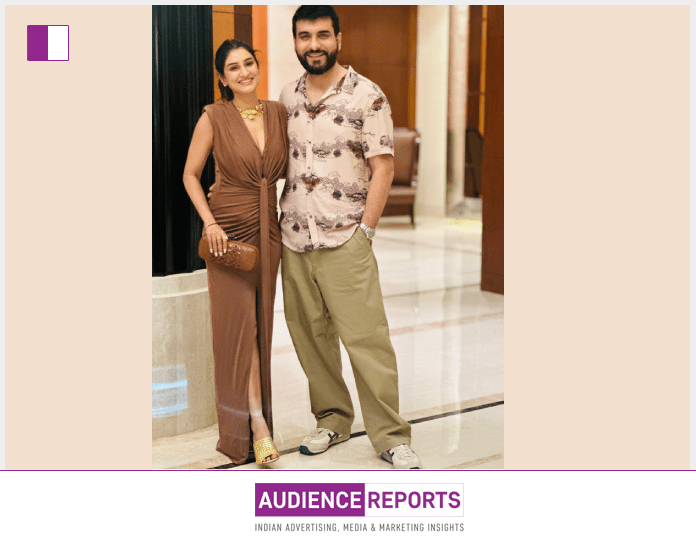
Alpana Razdan, Country Manager – India and Bangladesh at Falabella, recently shared a deeply personal and professionally insightful story that underscores a major shift in the way innovation should work especially in the Indian retail and apparel sector. Through her post, Alpana Razdan not only narrates a journey of entrepreneurship but also reflects on a transformation rooted in empathy, observation, and cultural understanding.
Alpana Razdan begins her post by revealing an unconventional decision made by her husband, Vimarsh Razdan he walked away from managing a 500 crore business. For most, such a move may seem counterintuitive, even irrational. But as Alpana Razdan unpacks the reasons, it becomes evident that this decision wasn’t about stepping down; it was about stepping closer to the real needs of Indian women. And in doing so, it sparked the creation of a brand that focuses on local relevance rather than imported ideals.
Alpana Razdan describes how Vimarsh, after two decades of global experience across the fashion capitals of the world, chose to dedicate 12 months to a singular pursuit: understanding the unmet needs of Indian women when it comes to shapewear. This research wasn’t a survey buried in spreadsheets. It was human, direct, and community-driven. Alpana Razdan highlights how he spoke with over 12,000 women through community groups and focus conversations. This wasn’t just market research it was listening at scale.
What emerged from this deep-dive was a fundamental insight that many brands had overlooked. According to Alpana Razdan, the failure of existing shapewear products wasn’t about poor quality it was about poor fit. Products designed for colder Western climates and different body types were being pushed into the Indian market without localization. Alpana Razdan emphasizes that the challenge wasn’t price or competition; it was the irrelevance of the product itself in an Indian context.
Through her narrative, Alpana Razdan paints a picture of a new approach to innovation. Vimarsh didn’t attempt to undercut global brands on cost alone. Instead, he chose to innovate through design, materials, and production techniques methods grounded in the realities of Indian climate and culture. He invested in sweat-proof adhesive technology and seamless construction using circular knitting elements rarely found in off-the-shelf shapewear. These weren’t luxury upgrades; they were essential for products meant to be worn in 40-degree heat with 80% humidity.
Alpana Razdan’s post also draws attention to the business philosophy behind this venture underneat.in. Unlike many startups that begin with an idea and then search for a market, this venture began with a need and built backward into the product. Alpana Razdan points out that this was the opposite of assumption-driven business models. It was rooted in active listening and feedback.
During the COVID pandemic, Alpana Razdan and her husband built Attic Salt, a fashion brand. But she makes a clear distinction underneat.in is different. It was born not out of a product-first mindset, but a customer-first philosophy. According to Alpana Razdan, this shift isn’t merely about geography moving from global to local it’s philosophical. It’s about solving actual, everyday problems rather than importing irrelevant ones.
Alpana Razdan beautifully encapsulates this mindset shift by stating that her husband’s global education taught him scale, his factory experience taught him quality, but the voices of 12,000 Indian women taught him relevance. This statement is more than a summary it’s a framework for building any impactful business in emerging markets. It acknowledges the limitations of traditional expertise and the power of context-driven insight.
What also stands out in Alpana Razdan’s story is the balance of empathy and execution. It’s easy to listen; it’s much harder to act on what is heard, especially when it challenges established norms and demands innovation from the ground up. Yet, through the lens of Alpana Razdan, we see how the combination of two decades of technical experience and a year of focused listening can produce not just a product but a solution.
For those in the business of fashion, retail, or any consumer-facing industry, Alpana Razdan’s post is a case study in relevance. It’s a call to turn away from the easy path of importing foreign success formulas and start designing around local truth. For Alpana Razdan, this is not just a business strategy it’s a reflection of respect for the consumer.
Alpana Razdan continues to lead as a voice of thoughtful leadership one that doesn’t shy away from vulnerability, and one that finds strength in stories grounded in real human needs. Her insights remind us that behind every successful product lies a web of human experience, culture, and climate that can’t be ignored.
Alpana Razdan’s story isn’t just about a new shapewear brand. It’s about a new way of thinking. A way that prioritizes relevance over replication, and empathy over assumptions. It’s about moving beyond trends and building something timeless because it fits not just physically, but culturally.
In a time when brands often struggle to connect authentically with their audiences, Alpana Razdan shows us what true customer-centric innovation looks like. It’s slow. It’s thoughtful. And, as the success of underneat.in is beginning to show, it’s incredibly powerful.