




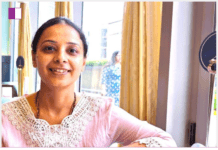















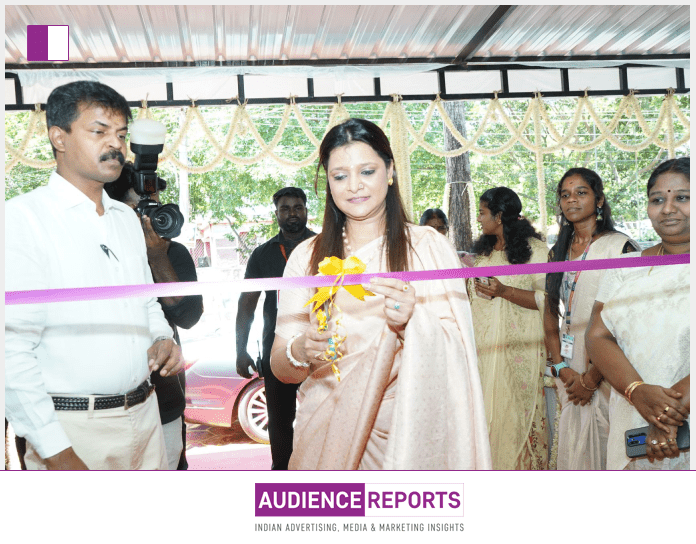
Amudhavalli Ranganathan has always believed that education is not limited to classrooms or textbooks. As the Executive Director at CK Group of Educational Institutions, she has consistently worked toward blending values, compassion, and social responsibility into the very foundation of learning. Her latest announcement of CK Unavagam in Cuddalore is a strong reflection of this vision, where education extends into the heart of community service.
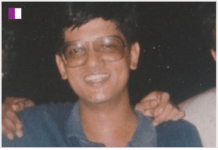
Amudhavalli Ranganathan shared how CK Unavagam is not merely a food initiative, but a living tribute to her great-grandmother, the late Mrs. R. Manoranjitham. This effort carries forward a deeply personal philosophy: no one should ever leave hungry. By linking this timeless value with modern student-led volunteerism, she has woven a bridge between past traditions and present needs.
What makes this initiative truly remarkable is that it does not stop at providing meals. Instead, it emphasizes serving food with love, dignity, and care. In her words, Amudhavalli Ranganathan explained that the project embraces a farm-to-table approach. This ensures that meals are wholesome and affordable, but also environmentally sustainable and supportive of local farmers. By making agriculture an essential partner in the project, she has broadened the impact beyond the act of feeding it becomes an ecosystem of kindness that benefits multiple stakeholders.
Amudhavalli Ranganathan has always highlighted the power of youth in shaping the future. At CK Unavagam, it is the students who take the lead in volunteering, preparing, and serving. Their participation transforms learning into practice, where compassion is no longer a theory but a lived action. When young people learn the value of service alongside their academic pursuits, they grow into leaders who understand responsibility not as a burden, but as a privilege.
This vision of student-driven service demonstrates a critical shift in how educational institutions can redefine their role. For Amudhavalli Ranganathan, institutions are not just about imparting knowledge but about nurturing empathy, compassion, and an awareness of real-world challenges. CK Unavagam becomes an extension of this philosophy a classroom without walls, where values are taught by action and kindness is graded not by marks, but by impact.
Community initiatives often struggle to sustain themselves because they remain external to people’s daily lives. What makes this project different is that it is deeply rooted in Cuddalore’s social fabric. Amudhavalli Ranganathan ensured that CK Unavagam not only provides food but also uplifts farmers, fosters sustainability, and integrates students into the rhythm of community life. By doing so, she has set an example of how initiatives can thrive when they are designed as inclusive ecosystems rather than isolated acts of charity.
Amudhavalli Ranganathan also reminds us that legacy is not about statues, awards, or memorials. It is about values lived and carried forward. By anchoring this initiative in the memory of Mrs. R. Manoranjitham, she shows how the principles of one generation can inspire the actions of another. This intergenerational transfer of values creates continuity one where compassion does not fade with time but grows stronger through collective effort.
Moreover, Amudhavalli Ranganathan’s leadership here is not about directing from above but enabling from within. She highlights the role of students as the driving force, placing the spotlight on their enthusiasm and passion. This approach decentralizes leadership, making young volunteers feel empowered and responsible. It is a subtle yet powerful way of teaching them that real change happens not when one person leads, but when many take ownership of a shared cause.
The launch of CK Unavagam also speaks to a larger truth: the challenges of hunger and poverty cannot be solved through government or institutions alone they require collective human effort. By encouraging students and communities to join hands, Amudhavalli Ranganathan shows how each meal served with care is more than just food; it is hope, dignity, and belonging. In an era where division and indifference often make headlines, this initiative quietly restores faith in humanity.
The phrase “One Meal at a Time” is not just a tagline but a philosophy that Amudhavalli Ranganathan embodies. It acknowledges that change does not happen overnight; it grows slowly, meal by meal, act by act, person by person. This vision pushes back against the idea that transformation requires grand gestures. Instead, it highlights the cumulative power of small acts of care, repeated consistently, until they ripple out into something far greater.
Amudhavalli Ranganathan’s work through CK Unavagam offers an inspiring model for other institutions, communities, and leaders. It proves that education can be more than academic it can be humane, compassionate, and socially impactful. It also reminds us that the most powerful legacies are not measured in wealth or infrastructure but in the lives touched and the values sustained.
In the end, Amudhavalli Ranganathan has not just launched a project; she has sparked a movement of compassion in Cuddalore. She has shown that when values meet action, communities thrive. She has demonstrated that students, when empowered, can become changemakers. And most importantly, she has carried forward a timeless truth that no one should ever leave hungry transforming it into a living, breathing mission for today and tomorrow.