





















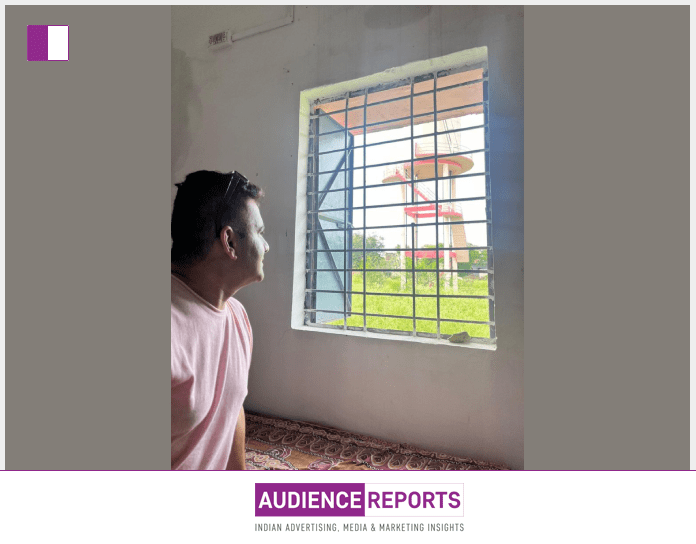
Anuraag S reflects on the world through a lens that marries design thinking with real-world insight. As a Design Firm Member at the Association of Designers of India, Anuraag S recently shared a compelling post that interprets the wisdom embedded in the hit Indian web series Panchayat a fictional yet relatable portrayal of rural governance in the village of Phulera. But more than entertainment, Anuraag S sees in it a guidebook for the modern corporate world.
Anuraag S begins his post with a powerful idea: “Resourcefulness beats resources.” This isn’t just a line; it’s a wake-up call for an era consumed by tools, budgets, and platforms. In the design industry, and across corporate environments, professionals often wait for the perfect setting ideal conditions, complete data, or top-tier infrastructure. But Anuraag S, drawing inspiration from the show’s humble characters, reminds us that real innovation comes from the ability to create under constraints. Whether it’s designing a community initiative or a digital product, constraints are not setbacks they are opportunities to think differently.
Through his reference to how villagers fix transformers or resolve conflicts without high-end systems, Anuraag S underscores that it’s the mindset that matters. This idea resonates across industries where companies that lack big funding often outperform giants simply by being agile, collaborative, and tuned into real human needs. Anuraag S doesn’t just highlight this as a theoretical idea he elevates it as a cornerstone of effective leadership and problem-solving.
Moving into the second insight, Anuraag S focuses on the theme: “People make it work.” It’s easy to underestimate the power of human connection in a system driven by KPIs, data dashboards, and endless meetings. But the unexpected bonding between characters like Sachiv Ji, Prahlad, Vikas, and Manju Devi reflects something deeper: that impact is rooted in trust. Anuraag S interprets this beautifully, suggesting that collaboration isn’t just about delegation or teamwork on paper it’s about forming real human connections even when personalities, roles, and goals don’t align neatly.
This principle, as Anuraag S interprets it, challenges the conventional corporate obsession with structure and hierarchy. Instead, it places value on empathy, dialogue, and shared purpose. In teams across the globe, projects fall apart not due to lack of planning, but due to the absence of this very trust. Anuraag S offers this lesson not as advice from a textbook but as a lived realization highlighting the subtle, often invisible power of relationships in driving meaningful progress.
Anuraag S then brings us to his third and perhaps most grounding point: “Big changes take time.” In a culture that celebrates hustle, rapid scale, and instant success, this message is both countercultural and necessary. Through the lens of Phulera, where change unfolds through slow negotiations and small wins, Anuraag S teaches us the value of persistence. Designing for change, he implies, is not about flipping a switch. It’s about enduring conversations, uncomfortable pauses, and faith in the long-term vision.
This lesson rings especially true in organizational transformation, social impact projects, or even product innovation. Anuraag S seems to say without saying it directly that the most beautiful designs, whether of systems, services, or communities, are those shaped over time with patience and intent.
What makes Anuraag S’s reflections particularly powerful is not just the lessons themselves, but the way he ties them to personal experience. Mentioning his meeting with the Panchayat team and the playful yet symbolic gift of a lauki, Anuraag S weaves warmth and authenticity into his narrative. It isn’t just a fan moment it’s a designer acknowledging the storytelling brilliance of a show that turns rural simplicity into universal leadership wisdom.
Moreover, Anuraag S’s perspective invites fellow designers and corporate leaders to reflect not just on how they work, but why they work the way they do. Are we chasing scale at the cost of substance? Are we relying on technology when what we need is trust? Are we giving up too soon because change feels too slow?
In a few hundred words, Anuraag S sparks a dialogue that goes beyond entertainment. He challenges the assumptions that drive modern business and design, replacing them with insights grounded in empathy, patience, and creative resourcefulness.
As a member of the Association of Designers of India, Anuraag S is clearly someone who sees design not just as an aesthetic practice, but as a way of seeing and reshaping the world. Through his post, Anuraag S offers a subtle blueprint how shows like Panchayat are not just cultural commentaries but reflections of what truly makes systems thrive: people, persistence, and the ability to adapt.
In a time when content often overwhelms context, Anuraag S chooses to pause, reflect, and learn from a fictional village that mirrors the challenges of real organizations. It’s this ability to draw meaning from the seemingly mundane that makes his voice stand out in the professional ecosystem.
To listen to Anuraag S is to be reminded that true leadership is not always loud. Sometimes, it’s soft-spoken like Sachiv Ji, thoughtful like a village elder, and consistent like the winding roads of Phulera. And through that quiet, the loudest changes are made.
So, whether you’re a designer, a manager, a startup founder, or a student reading Anuraag S’s reflections may just offer you more insight than a week of strategy sessions. Because, as Anuraag S shows us, the answers to our most complex problems sometimes lie in the simplest stories.