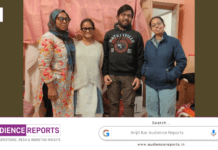





























CA CPA Nivedha Shankar begins her reflection with a question that sounds ordinary but carries years of unspoken expectations: “How do you manage your kids and family along with work?” CA CPA Nivedha Shankar does not frame this as a complaint or a personal struggle. Instead, she treats it as data—evidence of how deeply inequality is embedded in everyday conversations. From the very first line, CA CPA Nivedha Shankar points to a system that asks women to justify their presence at work while men are encouraged to imagine what comes next.
CA CPA Nivedha Shankar draws a sharp contrast between the questions asked of women and men. A working man is asked about growth, ambition, and future milestones. A working woman is asked about survival logistics. CA CPA Nivedha Shankar shows that this difference is not accidental; it is cultural conditioning. It reveals what society assumes to be a woman’s primary responsibility and what it allows a man to outsource without explanation. The question itself becomes a mirror reflecting whose time is considered flexible and whose labour is invisible.
What makes CA CPA Nivedha Shankar’s post powerful is her refusal to romanticise endurance. She does not celebrate women for “managing everything.” Instead, CA CPA Nivedha Shankar names what is often softened with praise: emotional labour, mental load, and unpaid care work. These are not abstract ideas. They are daily calculations—appointments remembered, meals planned, emotions regulated, crises anticipated. CA CPA Nivedha Shankar frames this as an entire ecosystem that women are expected to run quietly, without recognition, rest, or redistribution.
CA CPA Nivedha Shankar challenges the idea that capability equals consent. Women may be able to do it all, but CA CPA Nivedha Shankar argues that the real problem is that the system is comfortable letting them. This comfort is dangerous because it hides inequality behind competence. When women perform unpaid labour efficiently, it is no longer seen as labour. CA CPA Nivedha Shankar exposes how praise for multitasking becomes a convenient excuse to avoid structural change.
By calling this “normalised inequality,” CA CPA Nivedha Shankar shifts the conversation away from individual choices to collective responsibility. Balance, as she suggests, is often a misleading word. What is labelled balance is frequently overload disguised as strength. CA CPA Nivedha Shankar insists that balance cannot exist in a system where care work is unevenly distributed and rarely acknowledged. Without shared responsibility, balance becomes a personal burden rather than a shared outcome.
CA CPA Nivedha Shankar also highlights visibility as a missing element. Work that is unseen is easily undervalued. Emotional labour does not appear on performance reviews or profit-and-loss statements, yet it sustains households, relationships, and even workplaces. CA CPA Nivedha Shankar reminds us that when labour is invisible, it is also negotiable—and often taken for granted. Naming care work is the first step toward valuing it.
Importantly, CA CPA Nivedha Shankar does not position this as a women-versus-men debate. Her observation points to systems, not individuals. Expectations are inherited, reinforced, and normalised across generations. CA CPA Nivedha Shankar’s argument invites organisations, families, and policymakers to examine how roles are designed and rewarded. Who gets uninterrupted time? Who absorbs the cost of flexibility? Who is expected to adapt silently?
As a co-founder and professional, CA CPA Nivedha Shankar speaks from lived experience, but she resists turning that experience into a badge of honour. There is no glorification of burnout or sacrifice. Instead, CA CPA Nivedha Shankar calls for shared care, explicit acknowledgement, and structural respect for labour that has long been dismissed as “just part of life.” Her words underline that equity is not about doing more—it is about doing differently.
CA CPA Nivedha Shankar’s post ultimately asks for a recalibration of value. When care work is shared, named, and valued, the narrative changes. Women are no longer praised for surviving impossible standards; they are recognised for their professional contributions without carrying disproportionate weight at home. CA CPA Nivedha Shankar makes it clear that recognition is not charity—it is justice.
By ending with “it’s high time to change that,” CA CPA Nivedha Shankar does not offer a dramatic solution. She offers a necessary starting point: awareness followed by action. Her reflection urges us to question everyday assumptions, redistribute responsibility, and stop mistaking inequality for normalcy. In doing so, CA CPA Nivedha Shankar leaves us with a challenge that extends beyond gender—how do we build systems that do not rely on invisible labour to function?