




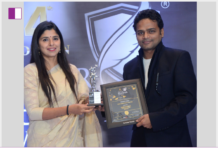
























Devanshu Mutreja is Business Development Manager at Solution Forever. His recent reflection on the role of support in leadership offers a profound lesson that transcends the boundaries of business and personal relationships alike. In his candid LinkedIn post, Devanshu Mutreja shares an intimate story about how a simple yet powerful request from his wife, Twinkle Gupta, reshaped his approach from problem solver to steadfast supporter. This shift not only transformed their partnership but also revealed key insights into what it truly means to lead and empower others.
In the early days of Twinkle’s entrepreneurial journey, Devanshu Mutreja found himself naturally stepping into the role of the business advisor. Like many well-meaning supporters, he jumped in with advice and solutions “You should price it this way,” “That client approach won’t work,” and “Let me handle this negotiation.” These reactions are familiar to anyone who has witnessed someone close struggling to find their footing in a new venture. Devanshu Mutreja’s instinct was to protect and guide by solving problems, believing this was the best way to help.
Then came a moment that shifted his entire perspective. Twinkle asked Devanshu Mutreja to stop being her problem solver and instead be her “fall guy.” This simple phrase carried profound meaning. It meant being present, ready to catch her when she stumbled, but allowing her the space to learn, make mistakes, and build resilience on her own. As Devanshu Mutreja reflects, this was like teaching someone to ride a bicycle not gripping the seat and running alongside forever but letting go while staying close enough to catch them if they fell.
This approach came into play recently when Twinkle faced a tough negotiation. Devanshu Mutreja saw the risks and predicted the outcome might not be favorable, yet he chose not to intervene. Instead, he expressed his support: “If you’re willing to take the risks, I’ve got your back.” The deal did not go as hoped. However, the experience that followed was more valuable than success alone. Twinkle emerged empowered, confident, and more self-reliant she had grown through the challenge rather than being shielded from it.
Devanshu Mutreja’s story offers a compelling framework for leadership and mentorship. True leadership is not about preventing failure; it is about creating an environment where failure is not fatal, where individuals feel safe to take risks and learn. This mindset is critical not only for spouses supporting each other’s dreams but also for managers developing talent, mentors guiding protégés, and leaders building strong teams.
By embracing the role of a “fall guy,” Devanshu Mutreja demonstrates how leaders can foster autonomy and courage. When a leader constantly solves problems for their team, it inadvertently cultivates dependence and fear of failure. Conversely, when a leader supports risk-taking by standing ready to catch their team but allowing them to experience challenges firsthand, they nurture confidence, creativity, and resilience.
This philosophy aligns well with the principles of modern leadership, which emphasize empowerment over control. Devanshu Mutreja’s experience exemplifies how stepping back can be the most powerful way to step forward as a leader. It requires trust trust in others’ capabilities and in the process of learning through trial and error.
In business development, where Devanshu Mutreja specializes, this lesson is especially pertinent. The field demands adaptability, strategic risk-taking, and innovation. If a manager or leader micromanages every step, it stifles the very qualities that drive growth and success. By embodying the “fall guy” role, Devanshu Mutreja fosters an environment where team members feel supported but are also encouraged to stretch their limits and own their decisions.
The benefits of this approach are evident not only in individual growth but also in building stronger, more agile organizations. Teams led by someone like Devanshu Mutreja, who prioritizes empowerment over problem-solving, become more engaged and motivated. They develop critical thinking and decision-making skills, which translate into better outcomes and sustained success.
Moreover, Devanshu Mutreja’s insights resonate on a deeply human level. His story illustrates that leadership is not confined to titles or positions; it is reflected in how we support and elevate those around us. Whether in a boardroom or at home, the ability to be a steady presence ready to catch but not to control is a hallmark of meaningful connection and effective guidance.
In conclusion, Devanshu Mutreja’s message challenges us to reconsider how we approach support in leadership roles. It encourages us to move beyond the urge to fix and control toward creating spaces where others can fall safely, learn, and rise stronger. For anyone involved in mentoring, managing, or supporting others’ ambitions, the lesson is clear: be their fall guy, not their problem solver.
Through this mindset, Devanshu Mutreja exemplifies a powerful model of leadership one that values growth over perfection, courage over certainty, and trust over control. His experience with Twinkle Gupta offers a universal truth: the greatest gift we can give those we support is the freedom to try, the safety to fail, and the assurance that someone will be there to catch them.