



















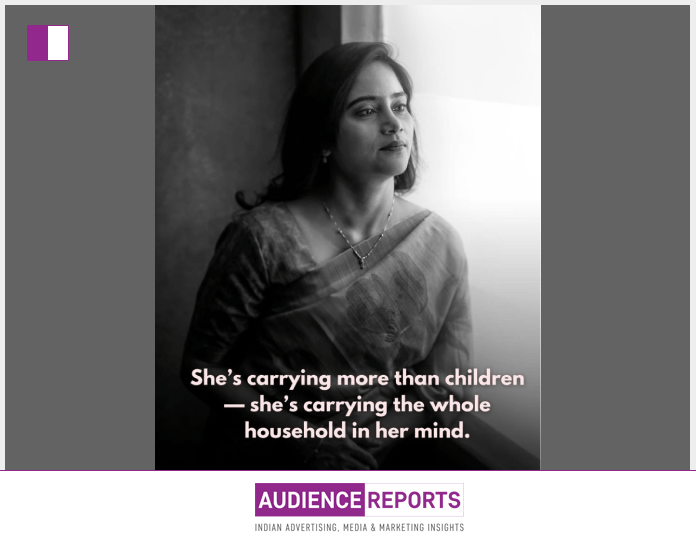
Dr.Rifana Parveen has always been deeply invested in women’s health not just their physical well-being, but also their emotional resilience. As a Fertility Specialist and Gynecologist at The LifeTree, she sees firsthand how women carry an extraordinary mix of responsibilities, often invisible to the world around them. In a recent reflection, Dr.Rifana Parveen drew attention to the unseen and unmeasured emotional labour of mothers an effort that sustains households silently, yet often goes unacknowledged.
Dr.Rifana Parveen reminds us that behind every school lunch neatly packed, every vaccination scheduled, and every birthday planned, lies an unseen layer of effort. Mothers, she observes, not only nurture but also manage the intricate details of daily life. From noticing when a child’s shoes no longer fit to balancing homework routines alongside their own exhaustion, this emotional workload is constant. And while it may not leave scars or appear on medical reports, its effects are very real.

In her reflections, Dr.Rifana Parveen calls this what it is work. Real work. Work that shapes families and sustains relationships, yet remains undervalued because it cannot be quantified or monetized. She notes how fathers often pride themselves on being providers and how society frequently praises women for their strength. But very few pause to ask the essential question: Who cares for the carer?
Dr.Rifana Parveen highlights the quiet erosion that happens when emotional labour is dismissed or overlooked. Mothers who continually suppress their needs in order to meet everyone else’s can experience thinning patience, fluctuating moods, and a gradual loss of self-identity. This is not, as she emphasizes, a sign of weakness but rather the natural toll of carrying too much without acknowledgment or support.
By bringing this issue forward, Dr.Rifana Parveen challenges families to reframe their understanding of caregiving. Emotional labour, she argues, is not a limitless resource nor should it be expected to be. Instead, it deserves recognition and redistribution. Parenting, after all, is a partnership, not a one-sided responsibility.
Dr.Rifana Parveen urges families to start with three critical steps: first, to name the work by acknowledging emotional labour as valid and significant; second, to share the load by ensuring both parents contribute equally to the responsibilities of raising children; and third, to create safe spaces where mothers can speak without fear of judgment or dismissal. These actions, she believes, can make the difference between families that simply manage and families that truly thrive.
The insight shared by Dr.Rifana Parveen is rooted in her daily practice as a doctor. She encounters women who often come to her with physical health concerns but carry an emotional weight that is harder to diagnose. By linking medical care with emotional awareness, she underscores that health is never just physical it is deeply intertwined with the mind and heart. For mothers, whose roles expand across caregiving, planning, organizing, and nurturing, the burden can be especially heavy if unacknowledged.
Dr.Rifana Parveen’s message is not merely a call for sympathy it is a call for systemic change at the family level. She invites fathers, relatives, and communities to go beyond surface-level praise and instead offer tangible support. That could mean dividing household tasks more fairly, checking in regularly on a mother’s mental health, or simply validating the effort she puts into creating a stable home environment.
At its heart, the perspective of Dr.Rifana Parveen emphasizes that emotional labour is foundational to family life. When it is recognized and supported, families flourish. When it is ignored, the effects ripple through generations, shaping how children view gender roles, responsibility, and care. By bringing this truth to light, she is not just advocating for mothers but for healthier, more balanced families.
Dr.Rifana Parveen’s reflections also serve as a reminder for women themselves. It is not selfish to seek acknowledgment, nor is it indulgent to demand partnership in parenting. Emotional well-being is as important as physical health, and sustaining it requires openness, dialogue, and shared responsibility.
Through her voice, Dr.Rifana Parveen offers more than a diagnosis she offers hope. Hope that by naming unseen work, by validating the emotional labour of mothers, and by encouraging families to take responsibility collectively, society can move toward a culture of care that uplifts everyone.
In her role as a Fertility Specialist and Gynecologist, Dr.Rifana Parveen continues to bridge the gap between medical science and the lived experiences of women. Her insights challenge us to look beyond what is visible, to value the invisible, and to act with empathy. For mothers who tirelessly hold everything together, this acknowledgment may be the first step toward genuine healing and shared strength.