





























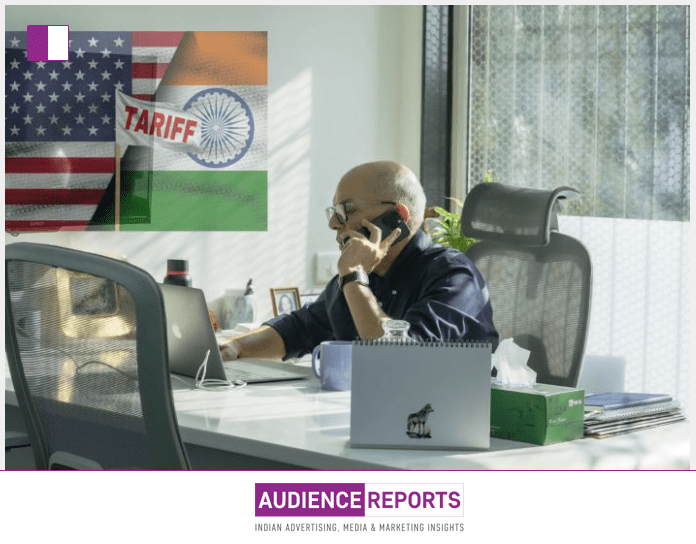
Dr. Sanjay Arora confronts a hard truth: in today’s interconnected economy, strength is not just about producing more or selling more it’s about holding leverage. His recent reflections on India’s position in the global market, triggered by a U.S. tariff hike and the “dead economy” remark, go beyond the sting of rhetoric. They point toward a deeper need for strategic recalibration both for nations and for individuals.
Dr. Sanjay Arora reminds us that when someone questions your strength, the response is not defensive outrage, but deliberate action. The U.S. move to impose a 25% tariff on Indian imports is not just an economic barrier; it’s a lesson in global power dynamics. Power, he argues, is not given it is built, maintained, and negotiated over time.
Dr. Sanjay Arora emphasizes that India’s current position supplying over 40% of the U.S. generic drug market shows operational efficiency but also exposes a risk: dependency on a single major buyer. The reality is that high volume does not automatically translate into influence. A single-point reliance makes even the most impressive success story fragile.
Dr. Sanjay Arora draws parallels from his own experience negotiating with vendors, clients, private equity partners, and teams. In every context, the ability to influence outcomes comes from diversification, risk reduction, and the creation of independent levers of control. For India, the challenge is similar: to expand its reach, fortify its strategic positioning, and build resilience that is not dictated by a single market’s mood.
Dr. Sanjay Arora lays out clear strategies for how India can turn the current wake-up call into an opportunity:
Diversify Markets – Relying on one dominant market for exports is a strategic vulnerability. Dr. Sanjay Arora points to Africa’s under-served pharmaceutical sector as an example, where India could expand from a mere 8% share to a much larger presence. Diversification spreads risk and opens new avenues for influence.
Leverage the Indian Diaspora – With 20% of Fortune 500 CEOs being of Indian origin, Dr. Sanjay Arora believes there’s untapped potential in boardroom influence. These leaders can become bridges for international partnerships, technology transfer, and market access.
Build Knowledge Hubs – By channeling advancements in AI and biotechnology into domestic education and research, Dr. Sanjay Arora argues that India can retain talent and simultaneously attract global learners. This isn’t just about stopping brain drain it’s about creating centers of excellence that fuel innovation-led growth.
Scale for Value, Not Just Cost – Cost efficiency is a strength, but Dr. Sanjay Arora urges India to aim higher. By investing in R&D, intellectual property, and design thinking, the country can make price a competitive advantage without letting it be the sole selling point. Manufacturing, in particular, offers durable strength by creating jobs, adding to GDP, and embedding India deeper into critical supply chains.
Strengthen the Rupee – Energy resilience, policy clarity, and reduced import dependence, according to Dr. Sanjay Arora, will not only stabilize the currency but also boost investor confidence in the long term. A stronger rupee isn’t just symbolic it’s a sign of structural stability.
Dr. Sanjay Arora frames these strategies within the broader concept of preparedness. The global stage doesn’t reward predictability it rewards readiness. Being reactive to shocks is not enough; influence is built well before negotiations begin. Just as a seasoned negotiator anticipates the other side’s moves, nations too must position themselves to extract maximum value from every interaction.
Dr. Sanjay Arora’s insight that “volume doesn’t equal influence” is a sharp reminder for all leaders. Whether in business or policy, over-reliance on a single partner, client, or revenue source can weaken long-term resilience. True strength comes from having multiple pathways to success and the freedom to walk away from an unfavorable deal without collapse.
Dr. Sanjay Arora also draws attention to the emotional aspect of such economic challenges. Being labeled a “dead economy” can trigger defensiveness, but it can also ignite ambition. The point, he suggests, is not to prove the critics wrong through short-term wins but to re-engineer the foundations so that such criticism becomes irrelevant.
Dr. Sanjay Arora extends this thinking beyond economics into personal and professional life. Just as a nation must build leverage through diversification and strategic investments, so must individuals. A professional who cultivates multiple skills, networks across industries, and develops unique value propositions will naturally have more negotiating power in their career.
Dr. Sanjay Arora sees India at a macroeconomic sweet spot poised for significant growth if it acts decisively. But he also warns that windows of opportunity don’t stay open forever. Waiting for conditions to be perfect is a losing game; the real move is to act strategically in imperfect conditions.
In his closing thought, Dr. Sanjay Arora reframes the narrative: India is not a “dead economy,” but an “unfinished negotiation with the future.” This isn’t just a poetic turn of phrase it’s a mindset shift. Instead of seeing setbacks as verdicts, they should be treated as stages in a longer game, where preparation, diversification, and leverage determine the final outcome.
The challenge he poses “How are you building your leverage?” is as relevant to a startup founder as it is to a government policymaker. It’s an invitation to think about the structures we’re building, the dependencies we’re creating, and the resilience we’re cultivating.
Dr. Sanjay Arora’s perspective serves as a reminder that in both business and geopolitics, survival is not about being the biggest player, but about being the most prepared. Tariffs, rhetoric, and market volatility are inevitable, but the players with the most options and the clarity to use them will always command the strongest position.
In that sense, the current moment is not a crisis to endure, but an opening to seize. And as Dr. Sanjay Arora suggests, the negotiation has only just begun.