







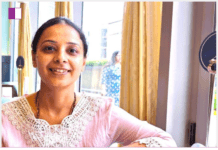
















Dr. Sharanya Thiagarajan stands at the intersection of medicine and meaningful change. As a medical doctor at Mint Hospital and a practicing gynecologist, Dr. Sharanya Thiagarajan is not only healing patients but also challenging cultural narratives that continue to place shame where there should be understanding. In a recent social media post, Dr. Sharanya Thiagarajan posed a powerful question “Still a taboo in 2025?” addressing a subject often whispered about but rarely discussed in the open: menstruation.
Dr. Sharanya Thiagarajan’s post is not merely a reflection on how society treats periods; it is a call to action. Despite all our scientific advancements from space exploration to AI revolutions she notes that something as basic and natural as buying a sanitary pad still causes discomfort. Through her words, Dr. Sharanya Thiagarajan highlights a deep contradiction in our society: we celebrate pregnancy, yet stigmatize the very cycle that makes it possible.
What makes Dr. Sharanya Thiagarajan’s voice compelling is that it comes from a place of lived experience and clinical insight. As someone who interacts daily with women across age groups and backgrounds, she has observed firsthand the mental, emotional, and physical toll that misinformation and stigma continue to exert on women’s health. Dr. Sharanya Thiagarajan emphasizes that it’s not just medical treatment that women need, but societal empathy and openness.
In India, conversations around menstruation have historically been laden with taboos. Women are often taught to hide their sanitary products, skip religious ceremonies during their periods, and speak in euphemisms rather than use correct biological terms. Dr. Sharanya Thiagarajan confronts this head-on by advocating for normalization. For her, talking openly about menstruation isn’t just about comfort it’s about health, dignity, and education.
In referencing the film PadMan, Dr. Sharanya Thiagarajan draws attention to how even popular media has begun nudging society forward, though often led by male voices. She raises a subtle but critical point what if more women in positions of influence, like herself, used their platforms to bring menstrual health into everyday conversation? Dr. Sharanya Thiagarajan’s post isn’t just a critique it’s an invitation to all doctors, educators, and content creators to take responsibility for transforming this outdated cultural silence.
Dr. Sharanya Thiagarajan does not point fingers; instead, she builds bridges. Her words, “Let’s make space for education, not embarrassment,” offer a practical roadmap. By encouraging dialogue and understanding, she believes we can replace awkwardness with awareness. In schools, at workplaces, and within homes, she wants menstruation to be treated as it is a normal bodily function, not a source of shame.
What sets Dr. Sharanya Thiagarajan apart is her ability to make the personal political. Her message resonates not just because of her title, but because she speaks with the clarity of someone who has seen the consequences of silence. Dr. Sharanya Thiagarajan understands that for young girls entering puberty, the stigma surrounding periods can lead to confusion, low self-esteem, and even absenteeism from school. For adult women, it can mean enduring pain in silence or missing medical red flags because they feel too embarrassed to seek help.
Dr. Sharanya Thiagarajan envisions a society where menstruation is discussed in biology classes without snickering, where workplaces provide menstrual products just like toilet paper, and where no woman feels the need to hide a sanitary pad in her sleeve. Her perspective is grounded, hopeful, and most importantly actionable.
In asking, “Have you ever faced awkwardness around menstruation at home, work, or school?” Dr. Sharanya Thiagarajan opens a space for shared reflection. She doesn’t pretend to have all the answers. Instead, she demonstrates the courage to start the conversation again and again if needed until change becomes inevitable. This openness to dialogue is precisely what makes her advocacy so powerful.
Dr. Sharanya Thiagarajan’s message is a reminder that healthcare doesn’t begin and end with medicine; it starts with conversation. And those conversations start with people like her who are willing to speak when others hesitate. Her stance goes beyond gender, profession, or culture. It’s about building a society where every individual understands the female body not with embarrassment but with pride.
Dr. Sharanya Thiagarajan’s voice echoes what many have felt but were afraid to articulate. By using her platform with intention, she is redefining what it means to be a doctor in the 21st century not just a healer of bodies, but a catalyst for collective transformation. Through her words and work, Dr. Sharanya Thiagarajan is proving that sometimes, the most radical act is simply telling the truth, and doing so without whispering.
In a world that often chooses silence, Dr. Sharanya Thiagarajan chooses to speak. And in doing so, she empowers others to do the same.