



























Iniyan G believes that growth is not meant to be a lonely pursuit. For years, the dominant narrative for men has been about deadlines, responsibilities, and EMIs, but seldom about emotional connection, shared journeys, or collective accountability. Through his role as a mentor at Wellness Atlas, Iniyan G is reframing this narrative by creating spaces where men can experience brotherhood as a force for transformation. His vision is simple yet powerful: men need each other, not just to survive, but to thrive.
Iniyan G highlights that the traditional journey of personal growth often leaves men feeling isolated. A man may pick up a book on habits, experiment with meditation, or chase milestones in silence, but these efforts frequently collapse under the weight of solitude. Without a community, discipline feels like punishment, and self-improvement often turns into an endless cycle of starting and stopping. According to Iniyan G, what’s missing is not intent but environment a circle of peers who understand, encourage, and challenge.
This insight became the foundation for BoB, the Band of Brothers initiative that Iniyan G has been nurturing for more than three years. At BoB, men from across professions and geographies come together to redefine growth. Doctors, engineers, startup founders, educators, and wellness coaches all sit side by side, not in competition, but in collaboration. What unites them is not their resumes but their shared belief that growth feels lighter, richer, and more sustainable when it is held in brotherhood.
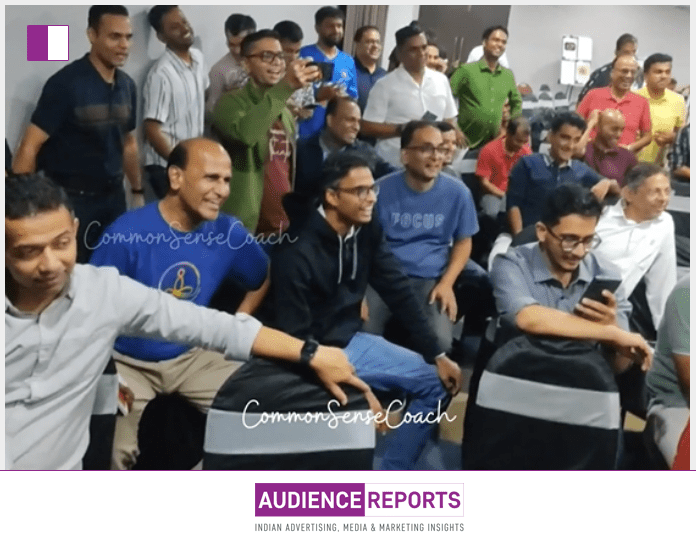
For Iniyan G, laughter is not just entertainment it is a signal of belonging. In the men’s leadership meet he describes, seventy-five men erupted in laughter, not at a joke, but at the sheer relief of finding a place where growth was no longer lonely. That laughter represented years of silent struggle finally being voiced and shared. Iniyan G points out that this kind of clean, unburdened joy is often missing from male circles dominated by competition or guarded identities.
At the core of BoB is a philosophy that men become complete not in isolation but in connection. Iniyan G explains that brotherhood is not about shaming weakness or inflating egos. Instead, it is about honesty, vulnerability, and accountability. The group becomes a mirror and a support system. One man’s breakthrough inspires another. One man’s discipline encourages consistency in the rest. Each conversation, each habit streak, each shared challenge becomes part of a collective momentum.
What sets this initiative apart, as Iniyan G emphasizes, is its practicality. BoB is not an abstract conversation about growth. It is a living practice. Members do the work building healthier lifestyles, investing in deeper relationships, exploring financial wisdom, and anchoring themselves in habits that stand the test of time. The energy is not that of a classroom but of a tribe, where each individual feels seen, valued, and uplifted.
For many men, this idea is transformative because society often demands performance without offering emotional grounding. The professional world rewards results but seldom nurtures resilience. Families lean on men’s roles as providers but rarely acknowledge their need for companionship in growth. Iniyan G challenges this imbalance by carving out a space where men can recharge, realign, and reimagine themselves without fear of judgment.
Over the last three years, BoB has quietly rewritten what it means to be a man in today’s world. And the rewriting has not been about rejecting responsibilities, but about embracing them more holistically. As Iniyan G describes, better health, deeper relationships, and stronger financial wisdom do not emerge from solitary striving but from consistent, collective reinforcement. In brotherhood, men learn to carry their own weight while also lifting others.
The impact is not limited to personal transformation. When men build themselves in community, they take that strength back to their families, workplaces, and wider networks. A man who learns to listen in brotherhood becomes a better partner at home. A leader who learns accountability in his circle becomes more authentic in his workplace. Iniyan G sees this ripple effect as one of the most powerful outcomes of the work.
For those who are used to silent struggles, stepping into such a circle may feel unfamiliar. Yet, as Iniyan G notes, the very discomfort of leaving isolation is the first step toward authentic growth. Brotherhood is not about replacing individuality but about multiplying it. The presence of others does not dilute personal identity; it sharpens and strengthens it.
Iniyan G extends a personal invitation to men who are ready to stop carrying the burden of growth alone. His call is not framed as advice but as an opportunity to be part of conversations that matter, to share laughter that heals, and to join a tribe that moves forward together. Growth, in this vision, is not punishment but a privilege, especially when shared.
The story of Iniyan G and BoB is, at its heart, a reminder that masculinity in the modern world needs new definitions. It is not enough to succeed professionally or to meet obligations; men also need depth, connection, and balance. Brotherhood, as he frames it, is not a luxury but a necessity. And in offering this space, Iniyan G has given men across India and beyond a chance to rediscover themselves not as isolated achievers but as part of a living, breathing community of growth.
Iniyan G shows that the path forward for men is not about walking alone in silence. It is about walking together, in laughter, honesty, and accountability, toward becoming more complete human beings.