





























Jeko Kolev has never been the type to shy away from uncomfortable conversations, and his reflections on public systems, taxes, and entrepreneurial responsibility show why.
Jeko Kolev brings a lived reality to a debate often reduced to ideology whether wealth creators owe their success solely to the state, or whether the state, in turn, owes them a functioning environment in return.

Jeko Kolev starts from a simple but striking observation: every time the topic of founders leaving the UK surfaces, the same refrain appears “You got wealthy here, so shut up and pay back what you owe.” But as Jeko Kolev explains through a very real, very personal story, the situation is more complex than online slogans allow.
A Story That Cuts Through the Noise
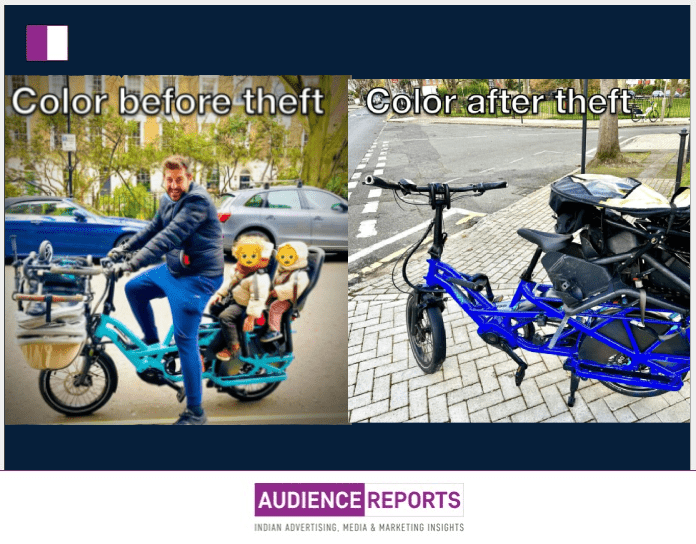
Jeko Kolev lives in London with his family, in one of the city’s most comfortable neighborhoods. Yet every three to six months, their family bike complete with two child seats is stolen. It’s equipped with trackers, so Jeko Kolev follows the signal into the same kind of shady backstreet each time. He calls the police, hoping for support, but none arrives.
So Jeko Kolev does what many would never dare: he knocks on the door himself.
With a mix of calmness, confidence, and the unmistakable presence he jokes comes from his Bulgarian origin, Jeko Kolev confronts the thieves directly. His calmness unsettles them. His directness disarms them. More often than not, the stolen bikes are returned. On his latest chase, the thieves had repainted the bike just three hours after stealing it. Even then, cooperation came instantly.
But what troubles Jeko Kolev is not the confrontation it’s what happens after. Despite being handed all the details needed for an arrest, the police never act.
This is where his story intersects with the larger debate.
Where Does Value Really Get Created?
For Jeko Kolev, this is not about refusing taxes, nor about denying the role of public systems. He openly supports balanced redistribution. But he also points out a hard truth: the UK already has the highest tax burden since World War II. And yet, he still has to personally recover stolen property multiple times a year because the system fails to provide basic safety.
So Jeko Kolev asks a clear, uncomfortable question: Where does money create more value?
Is it in the hands of:
Entrepreneurs who have repeatedly proven they can create value, reinvest it, build companies, hire talent, and create long-term economic growth?
Or is it in the hands of:
A system that spends £20 billion a year on policing and still fails to handle something as basic as a recurring neighborhood theft?
Jeko Kolev poses a provocative thought experiment: imagine giving a startup £20 billion per round for five rounds £100 billion to solve crime. The innovations would be unimaginable: AI patrols, predictive analytics, robotic responders. Whether or not one agrees, the comparison forces a re-evaluation of how public funds are used.
The Global Landscape Has Changed
Jeko Kolev emphasizes a reality that policymakers sometimes resist acknowledging: the world is highly connected, remote-friendly, and highly competitive for talent. Cities around the world now offer:
better safety,
better infrastructure,
excellent schools,
strong healthcare,
and in some cases near-zero taxes.
If a government pushes too far, founders and top talent will simply move.
Jeko Kolev is not defending reckless tax evasion. He is explaining mobility. And mobility means states no longer have a monopoly on opportunity. They must earn loyalty in the same way businesses must earn customers.
The Reciprocity of Responsibility
Jeko Kolev makes another crucial point: entrepreneurs are not asking for zero taxes; they are asking for exchange. If the state expects founders to contribute more, the state must also deliver on its end safety, efficiency, accountability, and systems that actually work.
Many argue that entrepreneurs built their companies in the UK and therefore owe everything to it. But Jeko Kolev challenges this narrative. Entrepreneurs take enormous risks, reinvest most of what they earn, and often generate significantly more value than they consume in public services.
The relationship between state and entrepreneur should be one of partnership not guilt, not resentment, not extraction.
What This Debate Is Really About
At its core, Jeko Kolev’s story is not just about bikes or taxes. It’s about expectations what citizens expect from the state and what the state expects from its contributors.
It’s also a reminder that:
Public systems must modernize.
Safety must be non-negotiable.
Talent must feel valued, not targeted.
And entrepreneurship must be seen as a partnership with society, not an obligation to be exploited.
A Closing Reflection
Jeko Kolev forces readers to step back from heated online arguments and instead focus on the deeper issue of value how it’s created, how it’s lost, and how it circulates within a nation.
His story does not ask people to take sides. Instead, it asks them to think.
A functioning society requires contribution, but it also requires competence. It requires taxation, but it also requires trust. And as Jeko Kolev shows, trust erodes quickly when the systems funded by taxes fail to uphold even the basics.
In the end, Jeko Kolev’s reflection is a call not for lower taxes, but for higher accountability and for a conversation grounded in reality rather than rhetoric.