































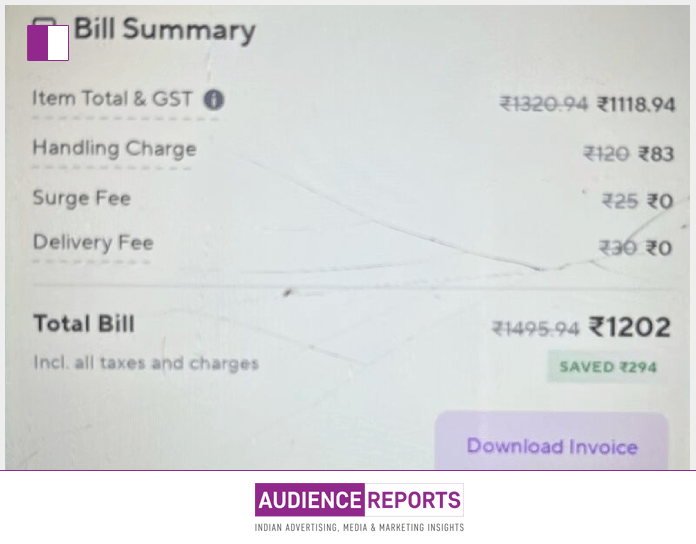
Karan Trivedi is not merely building “something interesting” at a stealth startup he’s building it with purpose, clarity, and the kind of sharp-eyed perspective that the startup ecosystem needs more than ever. His recent post on LinkedIn, a critical yet thought-provoking callout of pricing discrepancies in Zepto’s “Super Saver” plan, isn’t just about a few hidden charges or a misleading checkout screen it’s a statement about values. And it’s the kind of clear-headed, principle-driven critique that defines how Karan Trivedi approaches innovation, product design, and customer-centricity.
Karan Trivedi begins his post with a direct question to Zepto’s founder, Aadit Palicha “Are you stoned?” It’s intentionally provocative, not for shock value, but to jolt readers out of apathy. Karan Trivedi isn’t interested in shallow outrage; he’s spotlighting a deeper concern: how digital product design and pricing strategies, when guided by misleading tactics, damage trust. In an era where customer acquisition costs (CAC) are soaring and loyalty is fickle, Karan Trivedi argues that trust isn’t a luxury it’s a survival imperative.
Karan Trivedi breaks down the deceptive math between Zepto’s “Daily” and “Super Saver” offerings. The latter, despite the name, ends up costing more not less thanks to what he calls “HIDDEN DARK PATTERN” charges. The term dark patterns refers to UX strategies that trick users into decisions they might not otherwise make, and Karan Trivedi doesn’t hesitate to name them. He calls this out not just as a consumer annoyance but as a strategic blunder with long-term repercussions. “Don’t do such things which can indirectly prevent you from getting listed through an upcoming IPO,” he warns.
This isn’t an empty threat; it’s a warning grounded in reality. Karan Trivedi is deeply familiar with the nature of high-burn, low-margin industries like quick commerce. He notes that in a business where profitability is elusive by design, customer loyalty is your last defense and hidden fees are loyalty’s worst enemy. “You can never get a loyal customer base out of this once you run out of cash due to Burn in CAC,” he writes.
That line captures the essence of why Karan Trivedi’s perspective matters. In the venture-backed rush to scale, many startups treat the customer experience as expendable. But Karan Trivedi reminds us that long-term success is not built on gimmicks or short-term growth hacks. It’s built on integrity, on transparency, and on creating products that align with what they promise.
This is why what Karan Trivedi is building, though still under wraps, carries weight. His voice is one of rare clarity in a noisy, hype-driven ecosystem. Where many glorify valuations and blitzscaling, Karan Trivedi talks about ethics, user empathy, and the sustainability of business models. He understands that in a landscape crowded with noise, a startup’s north star must be trust.
Karan Trivedi’s post also surfaces a broader conversation: the ethical responsibility of founders in shaping user behavior. When the design of a checkout page confuses rather than clarifies, when a plan called “Super Saver” ends up more expensive than a normal order, the problem isn’t the user it’s the design. And as Karan Trivedi rightfully points out, these aren’t innocent mistakes. They are deliberate choices that reflect a startup’s true priorities.
Moreover, Karan Trivedi’s sharp critique comes with a constructive undertone. He’s not rooting for Zepto to fail. On the contrary, he’s urging it to do better because the consequences of not doing so are real. As Indian startups inch closer to public markets, they must remember that retail investors, regulators, and consumers are watching. What may seem like a trivial manipulation today could become a major roadblock tomorrow.
The impact of Karan Trivedi’s message lies in its simplicity and urgency. Small things, he reminds us, matter a lot. And when these small things betray trust, they lead to bigger issues abandoned apps, negative word of mouth, and the eventual collapse of what once looked like a rocket ship. His post is not about bashing Zepto it’s about demanding better. And that, in itself, reflects what Karan Trivedi is committed to building.
Karan Trivedi represents a new kind of founder one who’s unafraid to speak truth to hype, who values product integrity over rapid traction, and who sees users not as metrics but as people. In a time when so many are building for valuations, Karan Trivedi is building for value.
As the tech ecosystem matures and IPOs become more common, the scrutiny will only increase. Founders will need to be held accountable not just for their revenues, but for how they earn them. Karan Trivedi’s post is a wake-up call not just to Zepto, but to every startup chasing scale without soul.
In a world where dark patterns have become too normalized, Karan Trivedi brings light. His willingness to question, to analyze, and to speak publicly against misleading practices sets a benchmark for the kind of leadership we need in India’s next wave of startups.