




























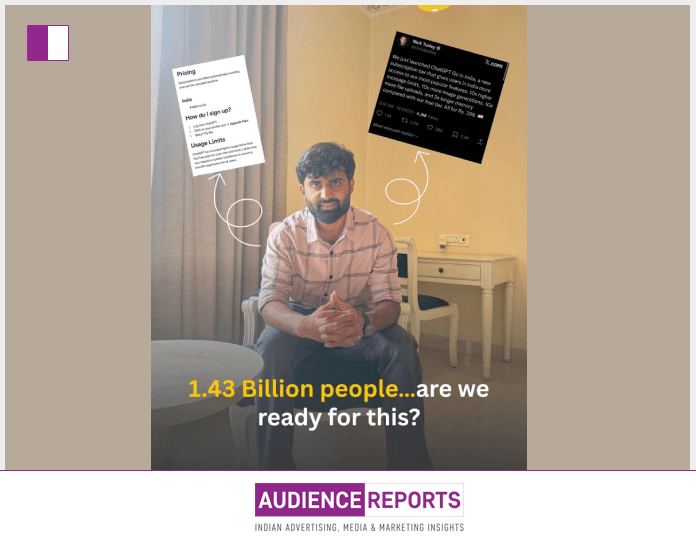
Krupal Chaudhary has raised a timely question that sits at the intersection of technology, culture, and human behavior. His thoughts on the ₹399 subscription model for ChatGPT Go are not just about affordability or payment methods. Instead, they touch upon the deeper shift in how people in India and perhaps worldwide are starting to perceive artificial intelligence as part of their everyday essentials, much like their favorite OTT subscriptions.
Krupal Chaudhary rightly points out that ₹399 has always been a sweet spot for Indian consumers. From Netflix and Hotstar+ to Prime and Spotify, Indian audiences have gradually normalized paying small amounts for convenience, entertainment, and access. The entry of ChatGPT Go at this price point is not only strategic but also symbolic. It represents a move from AI being a premium tool to AI becoming mainstream something available on UPI, accessible to all, and positioned as a “daily use” product rather than an exclusive one.
What Krupal Chaudhary highlights is not just the list of features though they are impressive: access to GPT-5, 10x more usage, image generation, file uploads, and stronger memory. The bigger point is about cultural adoption. Will Indian users begin to see AI as a necessity, just like streaming platforms or music apps? Or will it remain in the gray zone, where curiosity exists but mass adoption is still hesitant because productivity tools are not as emotionally engaging as entertainment?
The reflections of Krupal Chaudhary on this shift raise important questions. For instance, when we think about paying ₹399 for binge-watching a series, it feels like leisure. But when it comes to AI, the purchase decision triggers questions of value: Am I getting my money’s worth? Will this improve my productivity? Is this more of a utility than an indulgence? Unlike Netflix or Spotify, AI is not about distraction it’s about augmentation. And that makes the psychology of adoption different.
Krupal Chaudhary also touches upon the Indian consumer mindset. India is a land where free trials, discounts, and “value-for-money” thinking dominate purchasing decisions. It is not enough to say that AI is powerful; it must prove that it fits into the rhythm of daily life. The ₹399 price point may attract early adopters, but the larger wave will depend on whether people start to view AI as a true extension of their work and creativity.
There’s another subtle point in what Krupal Chaudhary has raised: the question of dependency. If AI becomes as accessible and normalized as OTT apps, will we lean too much on it? Will we start outsourcing our decisions, ideas, and even imagination to an algorithm? The balance between using AI as a supportive tool versus becoming reliant on it will define the cultural shift we are stepping into.
Krupal Chaudhary frames this as more than just a pricing strategy it is about shaping habits. Once consumers get used to opening AI apps the same way they open Instagram or Prime Video, we are looking at a transformation in digital culture. AI would no longer be just a “tool for work” but something as instinctive as scrolling through social media or streaming a song on repeat. That could have profound effects on both productivity and creativity, positive or negative depending on how it is used.
The way Krupal Chaudhary poses questions “Will AI subscriptions really become our next OTT craze? Will it snatch away our productivity? Will our brain become more dead?” shows that this is not simply about enthusiasm but also caution. This duality is important. Every technology that becomes mass-market reshapes society in ways we cannot always predict. Just as OTT changed how we consume stories, and social media changed how we connect, AI may change how we think.
In reflecting on these questions, Krupal Chaudhary makes it clear that the ₹399 subscription is not the end of the story. It is the beginning of a much larger conversation about accessibility, culture, and dependency. The affordability will make AI more democratic, but the cultural adaptation will decide whether it becomes essential or remains optional.
Ultimately, the debate that Krupal Chaudhary sparks is not about whether Indians can afford ₹399. It is about whether Indians are ready to place AI alongside their entertainment apps as a daily essential. If they do, we are looking at a future where AI is not just a workplace tool but a lifestyle habit something that could redefine creativity, productivity, and even the way we think about knowledge itself.
Krupal Chaudhary has put forth a question that does not yet have a clear answer. But one thing is certain: the moment AI becomes as common as music streaming or video bingeing, the fabric of how we live, work, and create will change forever. And ₹399 may well be remembered as the small price that opened the door to a big cultural revolution.