





























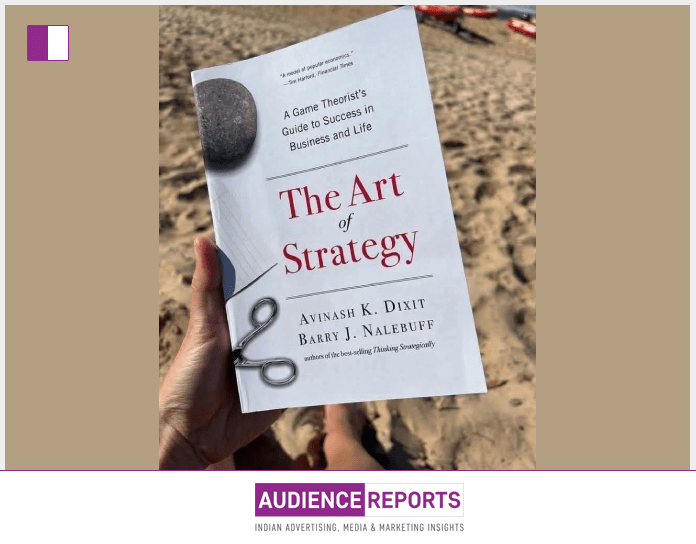
Mahesh Gamage has always approached life with curiosity and a hunger for deeper understanding. As the Co-Founder and Director at The ExpertIn, Mahesh Gamage has consistently sought ways to bridge complex concepts with practical applications. When Mahesh Gamage recently shared his insights from the book The Art of Strategy: A Game Theorist’s Guide to Success in Business and Life by Avinash K. Dixit and Barry J. Nalebuff, it was not just a simple book review. It was a reflection of how Mahesh Gamage sees the world through the lens of strategy, foresight, and deliberate action.
Mahesh Gamage understands that in both business and life, decisions are rarely made in isolation. Every choice impacts others, just as their choices impact us. This interconnected dance is where Mahesh Gamage thrives. Through his engagement with game theory, Mahesh Gamage emphasizes that success often lies not in overpowering others but in outthinking them, predicting their moves, and positioning oneself advantageously.
One of the standout lessons Mahesh Gamage drew from the book is the concept of “Think Ahead, Reason Back.” Mahesh Gamage believes that planning a course of action without visualizing the final destination is like navigating without a map. By starting with the end goal and reasoning backwards, Mahesh Gamage has effectively applied this in his professional projects, making each step intentional and aligned with the final objective.
Mahesh Gamage also highlights the importance of anticipating the moves of others. In a world driven by competition and negotiation, Mahesh Gamage stresses that understanding your counterpart’s motives and likely actions is critical. Whether it’s preparing for a client meeting or navigating business partnerships, Mahesh Gamage demonstrates that success often hinges on preparation and the ability to step into another’s shoes.
Another compelling insight from Mahesh Gamage revolves around the power of commitments. According to Mahesh Gamage, making credible promises can significantly shift the dynamics of any situation. Drawing from the authors’ example, Mahesh Gamage explains how boldly staking one’s position can force others to adjust their strategies. In his own leadership journey, Mahesh Gamage has used this principle to set firm, clear boundaries that have ultimately strengthened his influence within collaborative settings.
Mahesh Gamage’s takeaways also underline the transformative power of cooperation. He brings attention to the classic “Prisoner’s Dilemma” to illustrate why collaboration often yields better outcomes than cutthroat competition. In his professional interactions, Mahesh Gamage has moved beyond the fear of losing advantage and instead focused on building mutually beneficial alliances, which he believes is a far more sustainable path to growth.
An essential principle Mahesh Gamage champions is the idea of mixing strategies. In competitive environments, predictability can be a weakness. Mahesh Gamage shares how he has applied the concept of randomizing approaches, whether in problem-solving or negotiations, to keep his counterparts from gaining easy leverage. This adaptive mindset is part of what makes Mahesh Gamage an agile thinker.
Mahesh Gamage is also keenly aware of how incentives can shape behavior. Through the lens of game theory, he has come to appreciate that the right motivations can alter outcomes significantly. Mahesh Gamage recounts how tweaking reward structures in his teams not only boosted participation but also unlocked higher levels of performance. His sensitivity to how systems influence people is a hallmark of his strategic leadership.
Complexity, Mahesh Gamage notes, often paralyzes decision-making. Yet, as The Art of Strategy teaches, even the most intricate challenges can be simplified when broken down into manageable parts. Mahesh Gamage has used this lesson to great effect in his work, tackling complicated decisions by methodically dissecting them and reducing the emotional weight that often clouds judgment.
What stands out about Mahesh Gamage is not merely that he reads books on strategy it’s that he lives them. Mahesh Gamage actively integrates these insights into his leadership, his projects, and his everyday decisions. For Mahesh Gamage, theory is only valuable if it transforms into practical action.
More than just a co-founder or a director, Mahesh Gamage is a student of strategic thinking. His approach is not driven by the pursuit of quick wins but by the discipline of long-term positioning. Mahesh Gamage consistently demonstrates that success in today’s world is about more than working harder; it’s about thinking sharper and moving smarter.
Through his reflections on game theory, Mahesh Gamage invites others to step into a mindset where calculated moves, empathy, adaptability, and cooperation coexist. Mahesh Gamage believes that strategy is not a cold, competitive art it is the thoughtful process of understanding yourself, the people around you, and the paths that lead to collective progress.
In essence, Mahesh Gamage shows that the art of strategy is not confined to boardrooms or negotiations. It lives in everyday choices, in how we lead teams, build relationships, and solve problems. For Mahesh Gamage, every decision is part of a larger game, and the true victory lies in playing it with both intelligence and integrity.