


























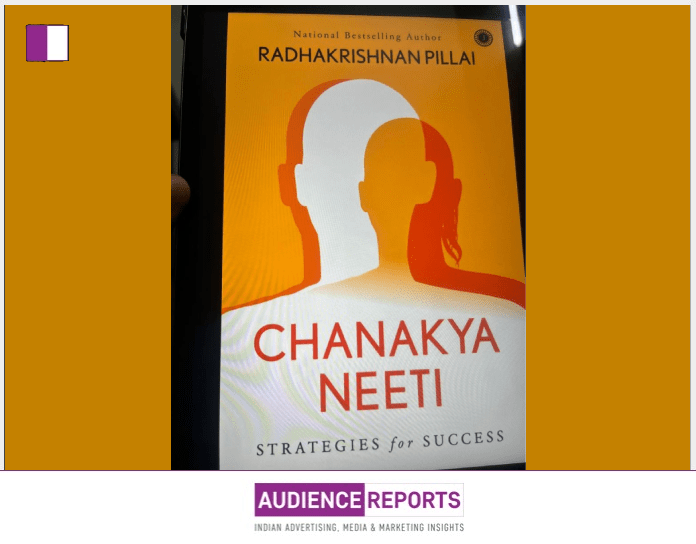
Malhar Barai offers a refreshing lens on leadership one that blends modern frameworks with timeless wisdom. Malhar Barai does not just read books; he absorbs perspectives, challenges assumptions, and invites others to rethink what it means to lead. In his recent reflection, Malhar Barai shared his two reading companions for the month: Multipliers by Liz Wiseman and Chanakya Neeti by Dr. Radhakrishnan Pillai. Through this simple post, Malhar Barai manages to open a deeply meaningful doorway into the very nature of leadership, exploring how it evolves, influences, and ultimately defines the legacy one leaves behind.
Malhar Barai begins by highlighting how these titles differ in style yet converge in purpose. Multipliers captures leadership from a modern, behaviour-driven perspective, while Chanakya Neeti unwraps the ancient, spiritual layers of leading and guiding people. According to Malhar Barai, these two books form a bridge between contemporary leadership expectations and time-honored wisdom. In a world that constantly changes, Malhar Barai believes leaders must remain adaptable, yet rooted in principles that withstand the test of time.

The idea of Multipliers resonates with Malhar Barai because it reflects the leaders many aspire to become and sometimes fail to embody. Multiplier leaders are those who amplify intelligence, strengthen capabilities, and bring out the best in their teams. As Malhar Barai suggests, reading this book can be a humbling experience. It forces one to see both encouraging traits and uncomfortable tendencies within oneself. After all, as Malhar Barai notes, there are moments when we uplift others with openness and trust, but there are also times when we may unintentionally become diminishers stifling growth without even realizing it.
Malhar Barai emphasizes the transformative power of honest self-reflection. A leader’s role is not just to direct but to multiply ideas, strengths, and opportunities. That, he believes, is where true leadership begins. The book outlines how one can shift from being a diminisher to a multiplier, and Malhar Barai believes this shift forms the foundation of leadership that is forward-looking and empowering. In his view, the greatest legacy a leader can leave is the growth of the people they touch, not the titles they collect.
Switching perspectives, Malhar Barai dives into Chanakya Neeti, a text that offers leadership lessons through a spiritual, rather than religious, lens. This distinction is essential, and Malhar Barai acknowledges it thoughtfully. Leadership, when viewed spiritually, becomes less about authority and more about clarity. Chanakya Neeti invites readers to explore shlokas that illuminate the concepts of strategy, discipline, and vision. Malhar Barai appreciates how the book takes one through a journey starting with understanding oneself, then understanding power, and finally understanding how to build an enduring path.
For Malhar Barai, these ancient teachings serve as a reminder that leadership did not start today, nor will it end with corporate models. Leadership is a human experience, and humans have long sought guidance on how to lead well. Through this spiritual lens, Malhar Barai finds ideas that balance modern interpretations with foundational truths: wisdom, character, and intent.
One of the most compelling aspects of Malhar Barai’s reflection is how he positions both books as complementary rather than contrasting. While Multipliers equips leaders with practical tools to navigate real-world teams, Chanakya Neeti anchors them in introspective, timeless wisdom. Malhar Barai believes great leadership emerges at the intersection of skills and values. A leader can push boundaries, embrace innovation, and drive results but without grounding, their impact remains shallow. In the same way, spiritual understanding without actionable frameworks can feel incomplete. By engaging with both, Malhar Barai demonstrates a holistic approach to growth.
In today’s fast-paced environment, Malhar Barai finds value in slowing down to learn, reflect, and recalibrate. His post reminds us that leadership is an ongoing process not a title, not an achievement, but a journey of continuous evolution. Every leader, including Malhar Barai, has moments of strength and moments of misalignment. What matters is the willingness to learn and the courage to transform.
The emphasis on legacy is subtle yet powerful. Malhar Barai believes the best legacy is not built through personal accomplishments but through empowerment. A leader’s true success is measured by how many others rise because of them. This belief aligns seamlessly with the essence of Multipliers and echoes the deeper insights of Chanakya Neeti. In choosing these two books, Malhar Barai signals that leadership is both an art and a responsibility an interplay between intellect and intuition.
Ultimately, Malhar Barai’s reflection offers more than a reading recommendation. It serves as an invitation: to reexamine how we lead, how we grow, and how we influence the people around us. By blending modern practices with timeless principles, Malhar Barai encourages every aspiring leader to build a version of leadership that is compassionate, strategic, empowering, and deeply authentic.