





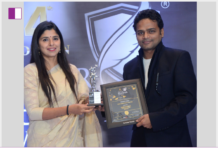
























Mannsi Agrawal begins her reflection with a simple observation from Bangalore, but what follows is not a celebration of startups or speed. It is a reminder. In a city where almost everyone is building something, products, companies, teams, personal brands, Mannsi Agrawal draws attention to a quieter, more demanding kind of work: building the self. Her post does not romanticize hustle. It questions its foundation.
Mannsi Agrawal, Founder at The Communication Alchemy Guild, uses Bangalore as a living metaphor. The city is dense with ambition. Founders talk about scale, funding, growth curves, and exits. Yet Mannsi Agrawal points out a contradiction that many avoid confronting. While businesses are expected to grow rapidly, the people running them often remain unchanged. Skills stagnate. Emotional capacity is stretched thin. Self-awareness is postponed in favor of execution.
What Mannsi Agrawal highlights is uncomfortable because it shifts responsibility inward. It is easier to refine a pitch deck than to refine one’s communication habits. It is easier to hire talent than to address personal blind spots. According to Mannsi Agrawal, this mismatch is where many leadership failures quietly begin, not because founders lack intelligence or drive, but because they underestimate the cost of inner growth.
Mannsi Agrawal makes a crucial distinction between activity and development. Leaders are often busy scaling organizations, yet they rarely scale their own capacity to lead. The assumption is that confidence will arrive with success, clarity will follow growth, and emotional regulation will somehow emerge under pressure. Mannsi Agrawal challenges that assumption directly. She argues that these qualities are not byproducts of success; they are prerequisites for sustaining it.
When Mannsi Agrawal says that teams follow what they see, not what they are told, she is pointing to a truth many managers resist. Culture is not created through slides or slogans. It is modeled through behavior. If a founder is reactive, the team becomes cautious. If a leader avoids hard conversations, accountability weakens. Mannsi Agrawal emphasizes that leadership is visible even when leaders think they are being silent.
Another key idea Mannsi Agrawal brings forward is that communication, confidence, and emotional regulation are not “soft skills.” They are core infrastructure. Without them, strategy breaks under stress. Deals fall apart not because of logic, but because of tone, timing, and trust. Mannsi Agrawal frames these abilities as assets, ones that compound over time, just like revenue or networks.
Mannsi Agrawal also raises an important question that founders rarely ask themselves honestly: “Am I growing as fast as my company?” This question is not motivational. It is diagnostic. It exposes gaps between external growth and internal readiness. Mannsi Agrawal suggests that when personal growth lags behind business growth, decisions become reactive, leadership becomes fragile, and burnout becomes inevitable.
Stress, ambiguity, and people management are constants in entrepreneurship. Mannsi Agrawal does not present them as obstacles to be eliminated, but as conditions to be handled skillfully. The ability to stay grounded during uncertainty is not accidental. According to Mannsi Agrawal, it comes from intentional self-work, understanding triggers, refining communication patterns, and building mental resilience before crisis forces the lesson.
What makes Mannsi Agrawal’s perspective particularly relevant is her refusal to glorify visibility. She notes that the real winners are often winning quietly. They are not always the loudest on social media or the fastest to announce milestones. They are consistent because their leadership is not dependent on external validation. Mannsi Agrawal implies that longevity belongs to those who invest in inner stability, not just outward momentum.
Mannsi Agrawal’s lesson that “companies can be copied, people can’t” is practical, not poetic. Products, strategies, and even cultures can be replicated. But self-awareness, presence, and clarity cannot be cloned. These qualities shape judgment, influence relationships, and determine how leaders respond when plans fail. Mannsi Agrawal positions leadership itself as the product, one that must be continuously improved.
As conversations turn toward scaling in 2026 and beyond, Mannsi Agrawal’s message becomes more urgent. Markets will change. Technology will accelerate. Competitive advantages will shrink faster than before. In that environment, the only sustainable edge is the person at the center of decision-making. Mannsi Agrawal is not asking founders to slow down; she is asking them to grow deeper.
In the end, Mannsi Agrawal is not offering inspiration for its own sake. She is offering a standard. Build the company, yes, but build the person with equal discipline. Because every strategy depends on judgment, and every judgment depends on the one making it. According to Mannsi Agrawal, that work is non-negotiable.