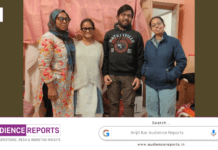

























Meeta Jhunjhunwala begins her reflection not with answers, but with a room full of women and a question that has lingered for generations: why no one prepared them for menopause. Meeta Jhunjhunwala captures a moment many women recognize instantly—different ages, different symptoms, different life stories, yet the same underlying confusion and sense of being caught off guard. This is not a dramatic failure of medicine or intention, but a quiet gap in how women’s transitions are discussed, supported, and understood.
What stands out in Meeta Jhunjhunwala’s experience is the reframing of menopause. Instead of treating it as a medical problem to be fixed, Meeta Jhunjhunwala positions it as a life transition that deserves care and context. This distinction matters. When menopause is framed only as a list of symptoms—sleep disturbances, emotional shifts, libido changes, energy dips—it can feel like something has gone wrong. Meeta Jhunjhunwala challenges that assumption by placing these experiences within a broader human rhythm of change.
In the conversations Meeta Jhunjhunwala describes, bodies are not broken machines but adaptive systems. Sleep shifts, emotions surface, and desire fluctuates not because a woman has failed, but because her body is recalibrating. Meeta Jhunjhunwala does not deny the discomfort or difficulty of this phase. Instead, she resists the urge to isolate symptoms and chase quick fixes without understanding the whole picture.
A key part of Meeta Jhunjhunwala’s approach is holistic menopause care. This means looking beyond hormones in isolation and paying attention to nutrition, the nervous system, intimacy, mindset, and daily rhythms. Meeta Jhunjhunwala emphasizes that these elements are interconnected, not optional extras. When one area is ignored, the burden often shows up elsewhere—emotionally, physically, or relationally.
Meeta Jhunjhunwala also speaks about intimacy in a way that feels grounded rather than sensationalized. Intimacy during menopause is often surrounded by silence or shame, yet it plays a central role in how women experience themselves and their relationships. By including intimacy as part of holistic care, Meeta Jhunjhunwala normalizes conversations that many women have been taught to avoid, even when those conversations are essential to well-being.
Another important layer in Meeta Jhunjhunwala’s reflection is MIRÓR. Meeta Jhunjhunwala does not present it merely as a platform or program, but as a space where women are not expected to navigate menopause alone. This distinction is subtle but powerful. Information can be found online, but community and safety are harder to come by. Meeta Jhunjhunwala highlights the value of a space where questions are welcome, silence is broken, and menopause is not framed as an ending but as a recalibration.
What lingers most from Meeta Jhunjhunwala’s post is not the educational content, but the emotional shift in the room. Meeta Jhunjhunwala notices relief—relief that comes from being seen and heard. When a woman says, “This is happening to me,” and hears “Me too,” something important changes. The experience moves from isolation to shared understanding. Meeta Jhunjhunwala points out that this relief is often more healing than any single piece of advice.
Meeta Jhunjhunwala’s perspective also challenges a deeper cultural habit: treating menopause as something to endure quietly. By naming the transition and giving it language, Meeta Jhunjhunwala helps remove the sense that women must simply push through. Understanding, compassion, and informed support become the foundation, rather than resilience alone.
Importantly, Meeta Jhunjhunwala does not promise transformation through positivity or denial. She does not suggest that menopause will suddenly become easy if approached correctly. Instead, Meeta Jhunjhunwala focuses on learning how to live well through the transition. This is a practical, grounded goal—less about perfection and more about agency.
For high-achieving women especially, Meeta Jhunjhunwala’s work touches a sensitive point. Many are used to managing, optimizing, and solving problems. Menopause resists that framework. Meeta Jhunjhunwala offers an alternative: listening instead of controlling, supporting instead of fixing. This shift can feel unfamiliar, but it opens space for a more sustainable relationship with the body.
Meeta Jhunjhunwala’s gratitude at the end of her reflection feels earned, not performative. It is directed toward honesty, openness, and courage—the qualities required to speak about menopause without minimizing it or turning it into a spectacle. These conversations, as Meeta Jhunjhunwala notes, matter more than we often realize because they quietly reshape how women move through this phase of life.
Ultimately, Meeta Jhunjhunwala’s message is not that menopause needs fixing. It needs preparation, conversation, and respect. When women are given that, they do not simply survive menopause. As Meeta Jhunjhunwala observes, they learn how to live well within it—and that learning begins with being seen, heard, and supported at every stage of the transition.