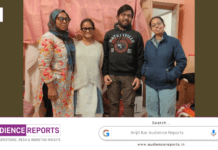






























Nikhil Dey offers a profound reflection on a truth that quietly shapes every relationship, every family bond, and every personal journey the delicate balance between closeness and space. His recent experience of his son’s wedding becomes more than a personal milestone; it becomes a moment of introspection. Through a timeless quote by Kahlil Gibran, Nikhil Dey explores how human connections flourish not only through togetherness, but also through the intentional creation of distance, individuality, and room to grow.
Nikhil Dey begins by grounding the insight in the simple, emotional reality of preparing a wedding toast. Weddings are moments of unity, celebration, and deep connection. Yet, they also remind us that love cannot thrive when confined. By recalling Gibran’s wisdom “the pillars of the temple stand apart” Nikhil Dey highlights a paradox that most of us sense but seldom articulate: relationships become stronger when individuals stand firmly on their own.

Nikhil Dey suggests that human beings are naturally drawn to connection. We travel across cities, countries, and even emotions to be with the people we love. We gather around tables, share food, share stories, and stitch memories that hold us together. These are the moments that make life meaningful. As Nikhil Dey points out, we are social creatures who crave belonging, companionship, and the warmth that comes from shared experiences.
But in the same breath, Nikhil Dey reminds us that the very act of coming together creates a counterbalance the essential need for space. Too much closeness, no matter how loving, can become overwhelming. Too much dependency can blur identities. Too much togetherness can restrict the natural flow of personal evolution. Nikhil Dey acknowledges that this is where conflict, restlessness, and frustration often arise. We desire connection, yet we also desire autonomy. We want to be seen, yet we also want to step aside and breathe.
This is where the wisdom of Nikhil Dey becomes particularly meaningful. He points out that space is not the opposite of love; space is what allows love to remain steady, refreshing, and sustainable. Boundaries, solitude, and individuality do not diminish relationships they nourish them. When we give ourselves room to grow, we also give the people we love the freedom to evolve. And when two people grow individually, the connection between them strengthens rather than weakens.
Nikhil Dey emphasizes that creating space is not something we are naturally taught. Togetherness comes easily celebrations, conversations, shared journeys. But learning how to step back, how to hold space for oneself, and how to allow others to do the same requires intention. It demands emotional maturity, awareness, and a willingness to trust that relationships built on strong foundations do not break simply because there is distance. Instead, they breathe better.
This lesson applies not only to marriage but to every human relationship: parent and child, friends, colleagues, and even the relationship we hold with our own inner self. Nikhil Dey reflects that making space for another person first requires creating space for oneself. This self-honoring gesture enables us to show up with clarity, patience, and authenticity. When our inner space is intact, we bring healthier energy into every bond we form.
Through the lens of the wedding toast preparation, Nikhil Dey beautifully captures the balance between holding on and letting go. Parents raise their children with love, guidance, and togetherness but ultimately, they must step back and allow their children to build lives of their own. Partners share dreams and daily routines, but they must also respect each other’s solitude. Friends support each other unconditionally, yet each must continue walking their own unique path.
Nikhil Dey brings this wisdom to life with clarity: love is not possession, and connection is not confinement. When we understand the power of healthy space, we stop fearing distance. Instead, we embrace it as a necessary companion to closeness.
As the world becomes more connected digitally, culturally, emotionally the need for conscious space becomes even more important. Constant interaction does not equal strong relationships. As Nikhil Dey highlights, genuine togetherness is sustainable only when balanced with moments of quiet reflection, personal growth, and gentle detachment.
In a time when many struggle with overwhelm, burnout, or emotional fatigue, the reminder from Nikhil Dey is invaluable. Creating space is not withdrawal; it is wisdom. It is a practice that allows relationships to thrive with more depth, more presence, and more appreciation.
Ultimately, Nikhil Dey invites us to rethink how we love, how we connect, and how we coexist. He invites us to embrace the poetry of Gibran not as abstract philosophy, but as a living guide for everyday relationships. The oak and the cypress do not grow in each other’s shadow, yet they share the same earth, the same sun, and the same sky.
In the same way, meaningful relationships grow not by collapsing into one another, but by standing strong together, yet apart. And through this balance, Nikhil Dey reminds us, we discover a deeper, more sustainable form of love, connection, and growth.