




























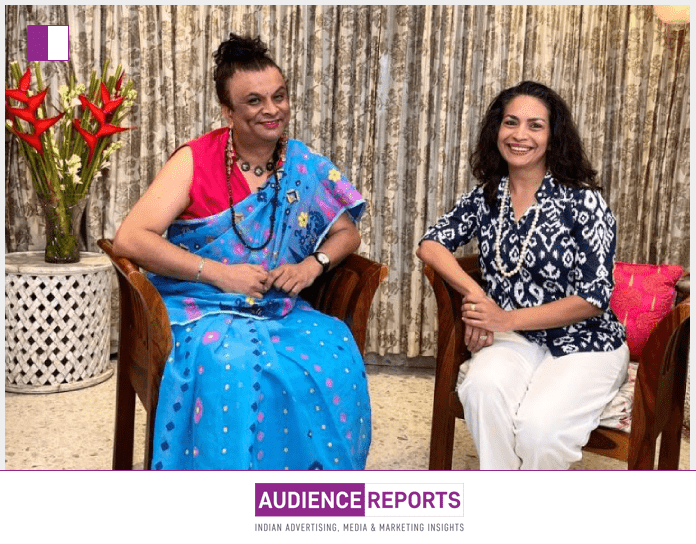
Pooja Chaudhri has a way of seeing conversations not just as exchanges of words, but as catalysts for awareness, empathy, and transformation. When she shared her reflections after a conversation with Harish Iyer, it wasn’t merely about recounting a meeting it was about illuminating what it means to be real, raw, and radically human in a world often obsessed with appearances. Pooja Chaudhri captured the essence of a dialogue that blended humour with honesty, and fire with grace, reminding us that the most powerful voices are the ones that refuse to conform yet continue to connect.
In her post, Pooja Chaudhri describes her experience with Harish Iyer as a mix of therapy, stand-up comedy, and social revolution and that description itself is a metaphor for what true communication should be. It should heal, challenge, and make us laugh at the absurdity of our own blind spots. Pooja Chaudhri didn’t just witness an inspiring personality; she experienced what it means to face truth with both courage and compassion. In a world that often glorifies perfection, she chose to highlight imperfection as power the ability to turn trauma into teaching and pain into perspective.

Pooja Chaudhri’s reflection becomes more than just admiration; it becomes a lens through which we can understand the evolution of empathy in modern leadership. The takeaway she shares “We don’t need allies who clap for us, we need humans who stand with us” is more than a quote; it’s a mirror held up to corporate culture, social activism, and everyday interactions. Pooja Chaudhri invites us to reimagine inclusion not as an event or policy, but as a practice. She reminds us that real allyship isn’t about applause; it’s about accountability.
When Pooja Chaudhri writes, “Pride is more than a month, it’s a mindset,” she extends the meaning of pride far beyond its LGBTQ+ context. It becomes a symbol of identity, of being unapologetically oneself, whether in a boardroom or a brainstorming session. Pooja Chaudhri understands that authenticity is not a branding tool it’s a leadership philosophy. In an age where workplaces chase diversity metrics but often miss genuine inclusion, her perspective feels both refreshing and necessary.
Pooja Chaudhri’s insights also highlight the delicate balance between humour and honesty. In her portrayal of Harish Iyer, she points to the brilliance of someone who uses laughter not to escape pain but to dismantle it. That duality to make people smile while making them think is something Pooja Chaudhri herself embodies in her communication. She reminds us that meaningful change doesn’t always arrive with solemn speeches; sometimes it comes with a smile, a story, or a well-timed spark of sarcasm.
At the core of Pooja Chaudhri’s reflection lies a truth about human connection: it thrives when we stop performing and start participating. She emphasizes that inclusion is not a hashtag to display but an action to demonstrate. Whether it’s in personal interactions or corporate culture, the essence of belonging is built when people feel seen and supported, not just celebrated during specific times of the year. Through her words, Pooja Chaudhri quietly advocates for a shift from symbolic gestures to sincere conversations.
As Executive Director at Concept PR, Pooja Chaudhri operates in a world where words shape narratives and influence perception. Yet, her takeaway from this conversation transcends professional communication it’s about emotional intelligence. Pooja Chaudhri recognizes that the future of communication isn’t about polished statements but about honest dialogues that acknowledge vulnerability. Her message resonates deeply in a time when organizations and individuals alike are learning to speak and listen with more authenticity.
Pooja Chaudhri’s reflection also becomes a subtle call for leadership that listens. Leaders, she implies, must move beyond policies and press releases; they must embrace humanity in their everyday choices. Inclusion, empathy, and authenticity are not soft skills they are strategic strengths. When leaders like Pooja Chaudhri amplify voices that challenge stereotypes and celebrate individuality, they not only expand awareness but also redefine what professionalism truly means.
There’s also an underlying theme of resilience in Pooja Chaudhri’s post the idea that one’s story need not be defined by pain. The sparkle she mentions is not denial of struggle, but defiance against being reduced by it. In highlighting humour as a form of healing and activism, Pooja Chaudhri reminds us that light can exist even in the heaviest conversations. Her perspective makes us realize that strength is not about silence; it’s about speaking out and still holding space for laughter.
If authenticity had a masterclass, as she beautifully notes, it would indeed be taught by people like Harish Iyer but it would also be attended by those like Pooja Chaudhri, who listen deeply, reflect meaningfully, and share generously. In a noisy digital world, her words cut through the clutter because they carry intent. They remind us that empathy isn’t performative, it’s participatory.
Pooja Chaudhri’s reflection is a tribute to truth-telling with tenderness. It’s an example of how professional voices can use their platforms not only to promote brands but to nurture better human understanding. By turning a simple meeting into a moment of learning, she demonstrates that leadership is not about status it’s about sincerity.
In the end, Pooja Chaudhri’s message lingers because it doesn’t end with applause. It ends with action. Her reminder that inclusion is an ongoing practice one that requires courage, compassion, and continuity is a message worth carrying forward. In her words, we find both reflection and resolve: that to build truly inclusive spaces, we must not just speak diversity but live it. And that, as Pooja Chaudhri shows us, begins with one honest, human conversation at a time.