





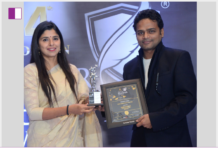
























Priyanka Salot isn’t just another name in the crowded D2C landscape. She represents a generation of founders who dare to challenge conventional wisdom not for rebellion’s sake, but to redefine what sustainable success looks like. When Priyanka Salot co-founded The Sleep Company, she didn’t just launch a product; she re-engineered an entire process. Her decision to reject the much-touted “start with third-party manufacturing” advice is now part of a powerful business case for every founder who dreams beyond shortcuts.
Priyanka Salot began her journey not from a place of comfort, but from curiosity. Leaving her corporate job, she stepped into an uncertain world of innovation where the margins were thin, and the challenges were thick. Most D2C founders begin by outsourcing production a choice that appears efficient on the surface. But as Priyanka Salot discovered, efficiency without control can slowly erode the very foundation of a brand. Each layer of outsourcing chips away at profit, quality, and originality. Suppliers take their cut, timelines stretch, and innovations leak. What’s left is often a diluted product far removed from the founder’s original vision.

For Priyanka Salot, that was not an acceptable path. From day zero, she and her team at The Sleep Company decided to build their manufacturing in-house. That decision wasn’t just bold it was transformative. Their patented SmartGRID technology didn’t exist anywhere in the world, so they made their own machines to produce it. In a world obsessed with quick fixes, Priyanka Salot chose the harder route, one that demanded patience, technical mastery, and relentless belief in their product.
The payoff was profound. Priyanka Salot and her team could now make changes with agility that most outsourced brands could only dream of. When a customer suggested the mattress could be softer, the response came not in months of back-and-forth with third parties but in a matter of weeks because the entire production was under their roof. This control over quality wasn’t just operational efficiency; it was a direct bridge between customer feedback and product evolution.
Priyanka Salot also understood that innovation thrives in proximity. By keeping R&D and manufacturing together, her team turned experimentation into a daily habit. New ideas could be tested immediately, not negotiated endlessly. That integration between imagination and implementation became the lifeblood of The Sleep Company’s success.
Another quiet victory for Priyanka Salot was in safeguarding the uniqueness of her brand. With in-house manufacturing, there was no external exposure of proprietary processes, no risk of imitation. Their SmartGRID technology, now patented in multiple countries, stayed confidential and protected. In an industry where design theft and copycat products are common, this was a strategic masterstroke.
Today, Priyanka Salot leads a company that has crossed ₹1000 crore in revenue not because of marketing gimmicks or cheap suppliers, but because of the depth of control she and her team built into their system. With two manufacturing plants and over 160 experience centers, The Sleep Company doesn’t merely sell mattresses; it delivers trust, quality, and innovation that customers can feel quite literally every night.
But what makes Priyanka Salot’s story truly inspiring isn’t just her company’s growth. It’s her mindset the willingness to question what everyone else calls “standard practice.” In doing so, she highlights an essential truth about entrepreneurship: shortcuts might get you started, but ownership gets you sustained.
Priyanka Salot exemplifies how founders can create long-term value by staying close to their product. When you manufacture your own ideas in every sense you’re not at the mercy of external forces. You own the process, the quality, the innovation, and most importantly, the customer experience. That’s the foundation of a brand that lasts.
Her journey challenges every aspiring founder to think deeply about the choices they make early on. Are you building a brand that depends on others to execute your vision? Or are you building the capability to execute it yourself? As Priyanka Salot shows, the difference can be the gap between struggling to survive and learning to thrive.
The entrepreneurial world often glorifies “speed to market” the idea that getting out fast is all that matters. Priyanka Salot’s journey stands as a counterpoint: that getting it right matters more than getting it fast. Because when you take time to build the core the systems, the standards, the control you create a brand that doesn’t just compete, it leads.
In many ways, Priyanka Salot represents a quiet revolution in Indian entrepreneurship. She brings together innovation, discipline, and customer empathy in a way that’s deeply modern yet timeless. Her story isn’t about defying advice for the sake of defiance, but about understanding the deeper logic of ownership in a fragmented, outsourced world.
The message she leaves behind for other founders is both simple and profound: if your product is built on something truly unique whether it’s technology, craftsmanship, or intellectual property don’t hand that uniqueness over to others. Protect it, nurture it, and own it fully. Because, as Priyanka Salot reminds us, the strength of a brand lies not in how fast it grows, but in how deeply it’s built.
And perhaps that’s the ultimate lesson from Priyanka Salot’s journey that innovation isn’t just about what you create, but how you create it. Control, integrity, and relentless focus on quality may not sound glamorous, but they’re the very things that transform an idea into a 1000-crore reality.
In the end, Priyanka Salot didn’t just build a company she built a blueprint. A reminder to every founder that real growth comes not from cutting corners, but from crafting edges that stand firm against time.