













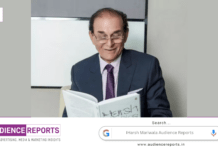








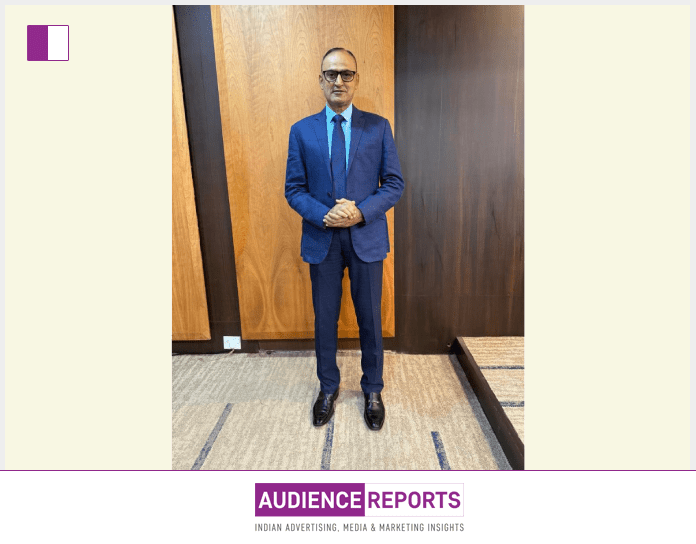
Prof. SS Prasada Rao, Ph.D, is not just a scholar of management but a thinker who has continuously contributed to shaping how entrepreneurship is understood and executed in real-world scenarios. In his recent post, Prof. SS Prasada Rao, Ph.D, introduced the RAMP Model, an acronym for Return, Advantage, Market, and Potential, as a compelling tool to evaluate startup ideas. His articulation goes far beyond theoretical frameworks; it serves as a grounded approach to interrogating the depth, feasibility, and future of a business idea.
Prof. SS Prasada Rao Ph.D has always maintained that ideas, while exciting, are not sufficient to build sustainable ventures. In a world intoxicated by innovation for innovation’s sake, his model acts as a stabilizing force. The RAMP Model is not about killing creativity; rather, it channels it through the lens of realism. Prof. SS Prasada Rao Ph.D makes it clear that dreaming big is encouraged, but dreaming blind is dangerous. The RAMP Model provides that critical lens to dream responsibly.
Return: Looking Beyond the Bottom Line
Prof. SS Prasada Rao Ph.D begins the model with ‘Return’ a term many associate narrowly with financial gains. However, he expands this understanding by including social and environmental outcomes. He cites Flipkart as an example of a company that initially offered a simple service but rapidly evolved, creating immense financial and social value. In contrast, he brings attention to Selco India, where the return is measured through rural empowerment via solar energy. Prof. SS Prasada Rao Ph.D emphasizes that founders must clearly define what kind of return their venture will deliver and how it aligns with the needs of stakeholders, communities, and investors.
Advantage: Defining What Sets You Apart
Next, Prof. SS Prasada Rao Ph.D moves to ‘Advantage’, the segment of the model where the differentiation of an idea is rigorously tested. He highlights Zomato’s ability to combine food discovery, user reviews, and delivery an integrated approach that gave it an edge in a crowded market. Meanwhile, startups like TinyOwl serve as cautionary tales of failure due to lack of distinct positioning. Prof. SS Prasada Rao Ph.D warns that passion for an idea often blinds entrepreneurs to the realities of competition. This is where Advantage steps in not to discourage ambition, but to refine it.
Market: Timing and Demand as Success Enablers
The third pillar, ‘Market’, forces founders to ask the hard question: is there a real and immediate demand for this product or service? Prof. SS Prasada Rao Ph.D illustrates this with the story of Paytm, which launched during a time when digital payments weren’t the norm but later soared post-demonetization. His analysis reveals a key insight timing is as critical as the product itself. Prof. SS Prasada Rao Ph.D doesn’t see the market as a static environment; he views it as a moving landscape that founders must continually study and adapt to.
Potential: Can It Grow Beyond the Pitch Deck?
Finally, Prof. SS Prasada Rao Ph.D addresses ‘Potential’ the capacity of an idea to evolve, scale, and endure. Swiggy’s transformation from a food delivery app to a logistics solution is a perfect example. The model does not just assess current viability but future elasticity. Can the idea stretch into new verticals, serve different demographics, or adapt to new geographies? These are the questions Prof. SS Prasada Rao Ph.D believes every startup must confront if they wish to move from being a momentary trend to a long-term player.
Beyond the Checklist: RAMP as a Strategic Mindset
What sets the RAMP Model apart is not just its structure but its mindset. Prof. SS Prasada Rao Ph.D is explicit that this is not a one-time checklist for business plans but a diagnostic tool to be applied repeatedly across a startup’s journey. He understands the startup world is fluid what works today might be irrelevant tomorrow. Therefore, RAMP is not static; it evolves with the business. Prof. SS Prasada Rao Ph.D teaches us that rigorous questioning is not the enemy of innovation, but its best companion.
Discipline Meets Imagination
Prof. SS Prasada Rao Ph.D is aware of the temptation that entrepreneurs face: to romanticize their ideas. The term “idea intoxication” he uses is a sharp and accurate portrayal of what happens when vision lacks execution. It’s a trap many fall into believing that a compelling story guarantees success. The RAMP Model sobers that intoxication. It’s a dose of discipline injected into the bloodstream of innovation.
Prof. SS Prasada Rao Ph.D sees the RAMP Model as more than academic theory. It’s a compass for entrepreneurs navigating uncertainty. It doesn’t eliminate risk it prepares founders to engage with risk intelligently. That’s the real power of this framework.
Building the Next Generation of Thinkers and Doers
At SP Mandali’s Prin. L. N. Welingkar Institute of Management Development & Research, Prof. SS Prasada Rao Ph.D continues to shape the next generation of entrepreneurs. But he doesn’t just train them to think creatively; he trains them to think critically. The RAMP Model is now a cornerstone in that mission. His impact doesn’t stop at the classroom. Through his thought leadership, Prof. SS Prasada Rao Ph.D contributes to the broader discourse on how businesses can be both visionary and viable.
Conclusion: A Framework That Stays Relevant
In a startup culture where hype often overshadows substance, the RAMP Model is a refreshing call to balance. Prof. SS Prasada Rao Ph.D has built a tool that respects imagination but insists on interrogation. It is that blend of heart and head that makes this model, and his contribution, so timely and relevant.
Prof. SS Prasada Rao Ph.D has not just built a framework; he has ignited a mindset shift. Through RAMP, he reminds us that good ideas deserve more than enthusiasm they deserve scrutiny, strategy, and execution. And that is the true foundation of enduring ventures.