




























Ranjan K Panda stands as a voice of conscience in a world often swayed by hypocrisy and misplaced moral judgments. Through his post, “Maa, Morality, and the Hypocrisy We Inherit,” Ranjan K Panda opens a window not only into his personal grief but also into the broader human condition our contradictions, our cultural double standards, and our need to rediscover genuine empathy. The words of Ranjan K Panda remind us that morality, when detached from compassion, loses its very meaning.
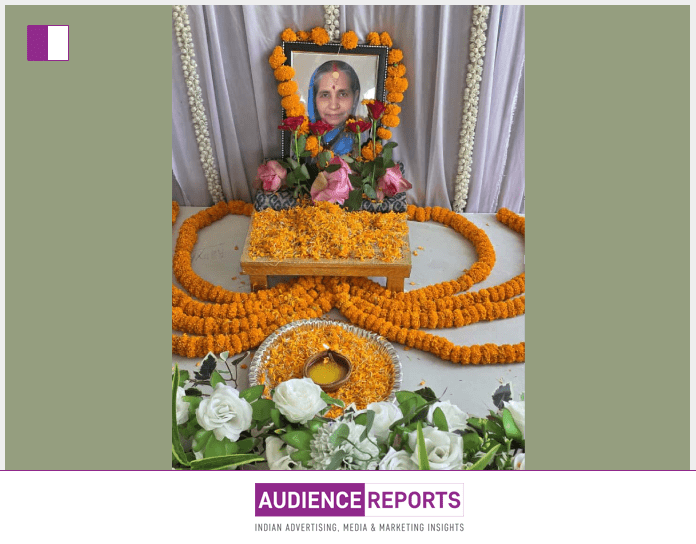
Ranjan K Panda’s reflection begins with an intimate portrayal of loss the passing of his mother, his “Maa.” The void he describes is not just emotional but spiritual. His mother, once vibrant and nurturing, became a shadow of herself due to Alzheimer’s, yet her touch remained as divine as ever. In these memories, Ranjan K Panda does not merely mourn; he contemplates what she represented a quiet rebellion against judgment and a deep belief in human dignity. Through her, Ranjan K Panda learned that morality is not about appearances or conformity; it is about kindness and understanding.

In his narrative, Ranjan K Panda recounts how an image of a woman bathing in the Ganges wearing a bikini sparked outrage among the so-called moral guardians of society. This incident becomes a mirror reflecting the hypocrisy embedded in our social fabric. Ranjan K Panda questions why a woman’s attire invites condemnation while men bathing nearly naked in the same river are seen as performing a holy act. The question, piercing and direct, is not merely about clothing but about control the moral policing of women’s choices by those who mistake prejudice for purity.
Ranjan K Panda’s perspective draws from his mother’s quiet wisdom. She never demonized women for their choices; instead, she believed in dignity, freedom, and respect for individuality. Ranjan K Panda emphasizes that her thoughts were far more progressive than most of her generation a testament to her strength of character and moral clarity. In recalling her, Ranjan K Panda invites us to reconsider the values we inherit. Are they truly moral, or are they instruments of judgment designed to suppress?
The article takes a deeper turn as Ranjan K Panda explores another layer of hypocrisy how society condemns drinking alcohol but often ignores the far more dangerous act of objectifying women. He observes that while a man’s glass of liquor might stain his reputation, his predatory gaze rarely does. This imbalance, Ranjan K Panda argues, reveals a collective blindness a moral code that punishes symbols while excusing sins. The conditioning runs so deep that silence becomes a virtue, and endurance replaces justice.
Through these reflections, Ranjan K Panda is not just critiquing society; he is also engaging in self-examination. He recognizes that even in his own home, discussions about alcohol were forbidden, yet the moral inconsistencies surrounding gender and dignity were rarely questioned. His mother’s later revelations exposed this contradiction how men’s morality was guarded by ritual, while women’s safety was left to endurance. This honest acknowledgment of inherited hypocrisy gives Ranjan K Panda’s writing both emotional weight and philosophical depth.
What stands out most in Ranjan K Panda’s reflection is his resolve to honor his mother not through rituals but through values. He declares that the true tribute to her memory lies in living with compassion, courage, and respect for all. In this choice, Ranjan K Panda transcends grief he transforms it into purpose. His mother’s passing becomes not an end but a continuation of her moral legacy, carried forward through his words and actions.
In a world increasingly divided by moral posturing, Ranjan K Panda’s insights act as a reminder that empathy is the highest form of morality. His experience reveals that genuine spirituality is not found in rituals or public outrage but in the quiet choices that honor human dignity. The story of Ranjan K Panda and his Maa becomes a universal reflection of loss, love, and awakening. It invites us to confront our own contradictions and to seek a morality rooted not in judgment but in understanding.
By connecting personal loss with social commentary, Ranjan K Panda bridges the gap between the intimate and the collective. His mother’s lessons, distilled through memory, speak to a larger truth: that the world will only change when we stop inheriting hypocrisy and start embodying compassion. Through his voice, Ranjan K Panda reminds us that the moral fabric of society is woven not by the loudest critics but by the quietest hearts.
As Ranjan K Panda closes his message with gratitude toward friends who supported him during his time of grief, his humility underscores everything he stands for. In his words, mourning becomes mindfulness, and reflection becomes resistance. The life and values of his Maa live on not through rituals, but through the sincerity of his convictions.
Ultimately, Ranjan K Panda’s story is more than a personal memoir; it is a moral meditation for our times. His words compel us to look inward, to unlearn hypocrisy, and to rediscover the essence of humanity the courage to be kind, the strength to be fair, and the wisdom to be free.