







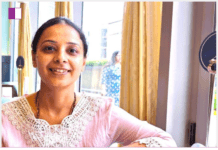













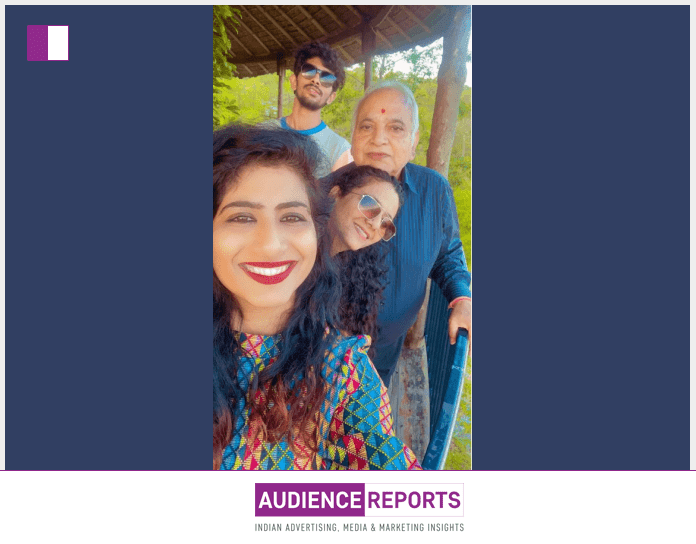
Rashi Agarwal has never been just another name in the startup ecosystem. She represents a generation of founders who are not only building businesses but rewriting what ambition, tradition, and purpose look like in today’s India. In a recent reflection shared publicly, Rashi Agarwal captured something deeply personal a truth that resonates far beyond boardrooms and balance sheets: that many of us, no matter how successful or independent, are simply trying to make our parents proud.
Rashi Agarwal begins her story with a simple yet profound admission: most of us, whether we say it or not, are driven by the desire to hear our parents say, “We’re proud of you.” For her, this isn’t just sentiment it has shaped career decisions, fueled risks, and given meaning to moments that may otherwise seem ordinary.
Coming from a traditional Baniya family, Rashi Agarwal didn’t exactly grow up with entrepreneurship on the table. Her grandmother’s advice was to “shaadi karo, chill karo,” reflecting a generational mindset where comfort and stability were the goals. Her father oscillated between encouraging a good job and nudging her toward marriage. And like many Indian parents, he offered his love not in grand gestures, but in quiet acceptance until her choices challenged his expectations.
When Rashi Agarwal left a well-paying job to start LetsFlaunt, she wasn’t entering the limelight she was running around to tailors and vendors, doing the heavy lifting that doesn’t make headlines. Her father didn’t oppose her path, but neither did he fully understand it. “Why struggle?” he would ask. It’s a question every unconventional path invites, especially when viewed through the lens of security and familiarity.
But Rashi Agarwal didn’t stop there. She went on to co-found Zypp Electric, a venture now reshaping last-mile delivery through electric mobility. Again, her father didn’t immediately cheer. But something shifted over time slowly, subtly. The calls began to change. He started every conversation with a reference to Zypp. And then one day, from a family gathering, he said something she hadn’t heard before: “Rashu, you’ve become so famous. Everyone is talking about you.” And with that, the words she had been waiting for: “I’m a proud parent.”
Rashi Agarwal describes this moment not with boastfulness, but with humility and an honesty that many professionals can relate to. It’s not about fame or fortune; it’s about hearing the voice that raised you acknowledge the path you’ve taken. That small sentence, said softly and perhaps even routinely, carries the weight of a thousand achievements.
In fact, Rashi Agarwal shares that on days her father forgets to say it, something feels missing. This vulnerability admitting that we are all, at some level, seeking parental validation is what makes her reflection so compelling. It’s not weakness; it’s humanity.
What Rashi Agarwal also highlights is how love often comes masked in expectations. When she bought a BMW, it wasn’t because of a personal fascination with cars she admits she’s not into them at all. It was her father’s dream car. When her husband asked her which car she wanted, the answer was immediate: “BMW leni hai. Papa ko pasand hai.” The purchase wasn’t for the machine it was for a moment. To see pride in her father’s eyes. That’s not consumerism. That’s legacy.
In today’s fast-paced world of startups, innovation, and disruption, Rashi Agarwal offers a grounding perspective. That no matter how forward-thinking our ideas may be, they’re often powered by something deeply rooted in the past our relationships, our families, and our longing to be seen and loved.
Rashi Agarwal also reminds us of the fragility of these bonds. She recounts a conversation with someone who had lost his father and with that loss, his drive. He realized his ambition had always been about making his father proud. Without him, the pursuit suddenly felt empty. That story lingered with Rashi Agarwal, and it stays with the reader too.
The takeaway? If your parents are still around, and still saying they’re proud of you hold that close. That affirmation isn’t trivial. It’s fuel. It’s the beginning of many people’s journeys, and sometimes, the only thing that keeps us going when everything else feels overwhelming.
Rashi Agarwal’s story isn’t about building a unicorn or achieving celebrity status. It’s about being real, staying rooted, and honoring where we come from even as we leap forward. In her words, that parental validation is love in its purest form.
Through her journey, Rashi Agarwal shows that strength isn’t in detaching from our roots but in growing from them. She represents the silent majority of changemakers those who carry not just their dreams but also the dreams of the people who raised them.
In every call from her father, in every “I’m proud of you,” Rashi Agarwal hears more than praise. She hears purpose. And perhaps, in doing so, she speaks to the part in all of us that’s still looking for the same.