






















Reema H. Kundnani recently shared a thought-provoking reflection that blends humor, personal experience, and workplace wisdom. Her story began with something as small as an autocorrect slip Devi becoming Devil in a WhatsApp message. What appeared as a funny moment with a friend recovering from wisdom tooth extraction, for Reema H. Kundnani it became a reminder of how one small difference can alter meaning entirely. A single letter changed everything, just as a single choice in behavior can shape relationships, teams, and leadership at work.
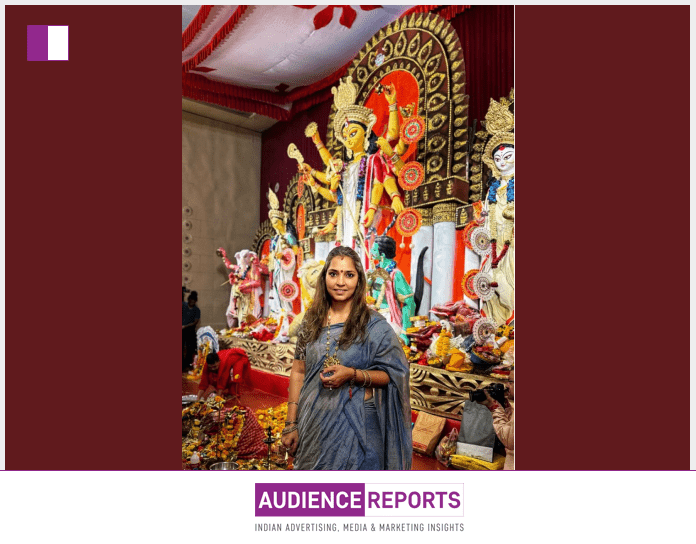
Reema H. Kundnani connected this idea beautifully with the spirit of Navratri, the nine-night festival celebrating the triumph of good over evil. Instead of treating mythology as something distant, she brought it right into the boardrooms and workspaces we inhabit daily. In her view, the Devi is not only a symbol from stories but also a set of practices in how we show up for others. The Devil, on the other hand, is not just a villain in mythology but the behaviors that pull down collaboration, trust, and growth.

What makes Reema H. Kundnani’s perspective powerful is her framing of six workplace “L”earnings simple yet profound shifts that distinguish Devi-like behavior from Devil-like patterns. These “L’s” serve as reminders that leadership is not a title but a series of everyday choices.
Listening
Reema H. Kundnani emphasized that Devi listens, while Devil simply waits to reply. This resonates deeply in today’s fast-paced corporate culture where interruptions, hurried judgments, and half-heard conversations are common. True listening builds trust, while performative listening leaves people unheard. For leaders, listening is not a passive act but a tool of empowerment.
Laughter
According to Reema H. Kundnani, Devi laughs with you, while Devil laughs at you. The distinction is subtle yet powerful. A workplace where laughter is shared becomes a space of camaraderie, while one where laughter is used as mockery becomes toxic. The way humor is expressed defines whether teams feel united or fragmented.
Lifting
Another vital learning that Reema H. Kundnani highlighted is the choice between lifting others or dragging them down. Recognizing contributions, giving credit, and showcasing others’ work reflects Devi. On the other hand, appropriating achievements and sidelining names reflect Devil. The difference decides whether people feel motivated to grow or quietly withdraw.
Learning
For Reema H. Kundnani, Devi is marked by continuous curiosity, while Devil pretends to already know it all. In dynamic industries, the refusal to learn becomes a liability. Openness to change keeps individuals and organizations relevant. This “L” serves as a reminder that learning is not confined to degrees or certifications but is an ongoing attitude.
Lightness
In her reflections, Reema H. Kundnani also spoke about how Devi brings lightness, while Devil adds baggage. The ability to ease pressure, to add perspective, and to make even high-stakes environments breathable is a leadership quality. Conversely, burdening others with unnecessary stress diminishes collective energy. Lightness creates resilience, baggage creates burnout.
Love
The final “L” in Reema H. Kundnani’s framework is love working from a place of care for the team, the craft, and the purpose. The alternative is ego, which corrodes collaboration. Love sustains long-term impact, while ego leaves behind resentment. As she put it, the real difference is in whether people walk away inspired or disheartened.
What stands out in Reema H. Kundnani’s reflections is that the Devi is not about rituals or grand gestures but about small, everyday choices. The decision to listen fully, to share credit, to remain curious, to keep things light, and to work with love builds a workplace where people feel valued. The Devil, on the other hand, shows up in moments of ego, dismissal, and self-centeredness.
The article also draws attention to how universal these ideas are. As Reema H. Kundnani noted, even outside of Indian mythology, thought leaders like Simon Sinek and Adam Grant echo similar insights. Leadership research consistently supports the view that empathy, curiosity, recognition, and shared purpose drive better outcomes than ego and control.
Beyond frameworks, what Reema H. Kundnani offers is perspective. She reminds us that one small letter one “L” can change everything. Just as Devi and Devil are separated by a single stroke, the choices we make in daily interactions determine whether we lift or drag, connect or isolate, inspire or discourage.
The simplicity of her message makes it relatable across industries. Whether in marketing, operations, or client management, the six “L’s” are universally applicable. They speak to the fundamentals of human interaction that shape culture far more than strategies written in manuals.
Reema H. Kundnani’s reflections also carry a subtle reminder for individuals: that leadership is not only about leading others but about leading the self. Choosing to listen instead of interrupt, to laugh with instead of at, to keep learning, to remain light, and to work from love are personal disciplines as much as professional ones.
As Navratri symbolizes the victory of good over evil, her post encourages us to examine whether our workplace presence mirrors Devi or Devil. Are we adding value through empathy and openness, or are we reducing it through ego and rigidity?
Reema H. Kundnani brings this duality into sharp focus with relatable storytelling and practical wisdom. Her six “L”earnings remind us that culture is built not through policies but through moments. Every email, meeting, and conversation offers us the chance to choose. And as she so aptly concluded, the “L” is always ours to choose.
In the end, Reema H. Kundnani’s reflection is not just about mythology or workplace habits it is about awareness. Awareness that small things matter, details define experiences, and every individual has the agency to shape the collective. Choosing to be Devi instead of Devil is not about perfection but about presence, intention, and responsibility.