
















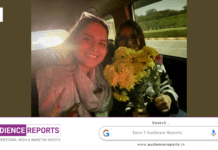











Reneta Kripalani shared a moment that many travelers might overlook, yet it reflects a larger truth about how innovation and access should go hand in hand. On a short flight from Bengaluru to Mumbai, she realized that despite living in the world’s fastest-growing digital economy, she couldn’t buy a simple sandwich. The reason? She didn’t have cash or cards, and the airline had no provision for UPI payments. For Reneta Kripalani, this was more than an inconvenience it became a reminder of how progress sometimes misses the very places where it’s needed most.
Reneta Kripalani pointed out a sharp irony. In India, chai sellers on trains and hawkers at roadside stalls now use QR codes. Temples that once depended on coin donations have adopted UPI stickers on their boxes. Everyday life in India has become a digital-first experience, with accessibility woven into the smallest of transactions. Yet, when she was thirty thousand feet in the air, inside a system that represents modernity and high-tech travel, she was faced with rules that seemed rooted two decades in the past.
Reneta Kripalani’s story resonates because it touches a nerve about what real innovation means. Innovation is not only about advanced technology or dazzling features. It is about empathy, accessibility, and inclusion. By sharing her experience, Reneta Kripalani reminds us that innovation is incomplete if it doesn’t extend to the very people who use it daily. In the skies above, where convenience should match the sophistication of air travel, the absence of simple digital payment systems exposes a gap that can no longer be ignored.
Reneta Kripalani highlighted the paradox with clarity: India is not just a country that uses UPI; it is a country that helps other nations replicate this system. It is India’s gift to the world, a homegrown innovation that we showcase as a symbol of progress and modernity. Yet, the very airlines that fly passengers globally, airlines that connect India’s future with the world, have yet to integrate the same digital empowerment on board.
Reneta Kripalani’s observation is not a complaint but a wake-up call. She framed the issue as a reminder that convenience today is not about luxury it is about access. To buy a sandwich on a plane might seem small, but it carries larger meaning. It is about ensuring that every customer feels included, that no one is left behind because of outdated systems. In an age when payment can be made with a tap or scan, requiring cash in the skies is not just inconvenient it is exclusionary.
Reneta Kripalani’s post is powerful because it uses a personal story to make a broader point. It shows how innovation must not only be celebrated in conferences and global showcases but must also be implemented in the spaces where people truly need it. The flight from Bengaluru to Mumbai is symbolic. It represents a journey between two tech-driven cities, yet within the cabin, the experience does not reflect the digital leadership that India is known for.
Reneta Kripalani has raised a question that every airline and policy-maker should think about: If India is proud to be the nation that built UPI, if India helps the world adopt it, then why are Indian skies still stuck behind? Why should travelers be forced to carry cash or cards when every other part of life has embraced digital payments?
Reneta Kripalani’s insights remind us that innovation should be seamless. The world is moving toward cashless convenience, but gaps in implementation can create frustration and exclusion. Airlines, with their promise of comfort and modernity, have the chance to set the benchmark by embracing the very digital tools that define India’s progress story.
Reneta Kripalani also raises a deeper point: innovation is not simply about technology, but about empathy. When systems are designed with empathy, they think about the user’s real journey, about moments of hunger, about the ease of small transactions, about making life simple. UPI succeeded in India not just because it was advanced but because it was accessible to everyone hawkers, farmers, students, and businesses alike. It put digital empowerment into the hands of people in ways that mattered. Why should the skies be any different?
Reneta Kripalani’s story resonates with anyone who has faced barriers in places that should feel the most advanced. It compels industries beyond aviation to reflect. Where else are we celebrating innovation without fully integrating it? Where else are we leaving gaps that create unnecessary discomfort for people?
Reneta Kripalani makes us see that sometimes the smallest inconveniences reveal the largest lessons. Buying food on a flight is not just about a transaction it is about aligning experience with expectation, about matching India’s global digital reputation with everyday reality.
Reneta Kripalani’s reminder is timely and important. As India continues to showcase UPI globally, as industries evolve to embrace digital-first systems, it is essential that aviation one of the most modern industries in appearance keeps pace with this movement. The sky, after all, should not be behind the ground. It should be ahead, leading the way.
Reneta Kripalani shows us that innovation is most powerful when it is practical, inclusive, and human. The question she leaves us with is not just about airlines but about the future of digital access everywhere: If the world is flying on India’s UPI, shouldn’t India’s airlines be next?