






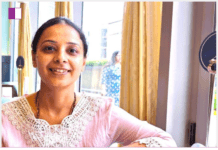
















Ridhi Kanoria Doongursee stands as a powerful reminder that leadership is not shaped by easy paths but by the courage to grow through life’s most demanding transitions. Ridhi Kanoria Doongursee, Co-Founder at Lxme, brings her lived reality into a broader conversation that many organizations still struggle to address honestly the intersection of motherhood, ambition, and meaningful leadership. Ridhi Kanoria Doongursee uses her own experience not to evoke sympathy or admiration, but to spotlight a truth workplaces must embrace: motherhood does not hold women back; it deepens their ability to lead with intention, compassion, and conviction.
Ridhi Kanoria Doongursee begins her reflection by confronting an uncomfortable reality. Despite the constant dialogue around gender equality, the daily lived experiences of women still reveal structural gaps. At Lxme, where 80% of the team is women, Ridhi Kanoria Doongursee witnesses these challenges firsthand. This makes her perspective not theoretical, but grounded in real conversations, real struggles, and real hopes of the women she works with. Her experience as a new mother balancing a newborn within a single-family setup reflects a truth many women silently carry the invisible load of managing new life, changing identity, and professional commitments simultaneously.

Ridhi Kanoria Doongursee acknowledges the tension founders face when a team member announces maternity leave. There is genuine joy in celebrating someone’s new chapter, but also undeniable pressure especially for young companies navigating finances, timelines, and workload distribution. Yet, instead of avoiding this tension, she calls for honest acknowledgement, better-designed structures, and supportive ecosystems. Through this, Ridhi Kanoria Doongursee affirms that leadership begins by facing reality, not sugarcoating it.
What makes Ridhi Kanoria Doongursee’s insight profound is her ability to reflect on how motherhood transformed her leadership identity. She describes her evolution with striking clarity: before motherhood, she was an individual; after motherhood, she became a human being. This shift captures something deeply universal parenthood often reshapes one’s core, revealing new capacities that are impossible to measure but essential to impactful leadership.
From her journey, Ridhi Kanoria Doongursee highlights the strengths she gained: deeper empathy, heightened resilience, clarity about what truly matters, the courage to embrace vulnerability, and a stronger ability to support others. In her words, these are not “soft” skills. They are some of the most powerful leadership qualities anyone can cultivate. Through this lens, Ridhi Kanoria Doongursee reframes motherhood not as an interruption but as an expansion an expansion of emotional intelligence, perspective, and strength.
What stands out in Ridhi Kanoria Doongursee’s narrative is her refusal to position motherhood as a trade-off with ambition. Instead, she asserts that motherhood doesn’t weaken ambition; it enhances leadership capacity. Many women internalize the fear that choosing motherhood might derail their dreams, but her experience challenges this assumption. She emphasizes that leadership strengthened by lived experience especially one as transformative as motherhood is more grounded, compassionate, and adaptable.
Ridhi Kanoria Doongursee’s message extends beyond personal reflection; it is a call to action for workplaces. As organizations evolve, she hopes to see systems designed not to force women into choosing between career and family but to empower them to thrive in both. This isn’t just an aspiration but a necessary shift for the future of work. Companies that build supportive cultures, flexible systems, and empathetic policies create room for more women to rise not by sacrificing parts of themselves, but by bringing their whole selves to the table.
Throughout her insight, Ridhi Kanoria Doongursee reinforces an essential truth: leadership is human. It grows through challenges, responsibilities, and emotional depth. Motherhood, far from being a setback, often becomes a powerful teacher cultivating patience, adaptability, and a deeper sense of purpose. These qualities don’t weaken leaders; they shape leaders who understand people, value balance, and prioritize what truly matters.
In sharing her experience so openly, Ridhi Kanoria Doongursee helps dismantle a long-held misconception: that ambition and motherhood exist as opposing forces. Instead, she shows how they can coexist, strengthen each other, and contribute to leadership that is not just effective, but humane.
The journey of Ridhi Kanoria Doongursee is not about perfection or superhuman strength. It is about real life messy, demanding, beautiful, transformative. It is about choosing growth over guilt, understanding over assumption, and empathy over judgment. It is about redefining leadership in a way that includes the fullness of women’s experiences rather than asking them to hide parts of themselves to fit outdated molds.
In amplifying her story, Ridhi Kanoria Doongursee invites workplaces everywhere to rethink leadership, restructure systems, and redesign cultures. The future belongs to organizations that recognize the power of lived experience, value the strength born from vulnerability, and support women not just in their roles, but in their journeys.
And through her voice, Ridhi Kanoria Doongursee reminds us that motherhood doesn’t slow women down it prepares them to lead with deeper strength, greater clarity, and a more expansive heart.