




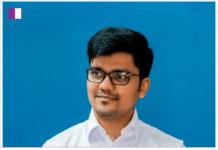





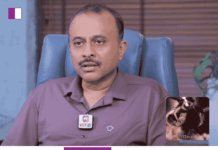













Rohit Choudhary, Founder & CEO at Seekho, doesn’t just talk about startup culture he lives it, breathes it, and builds it through rituals that most would consider ordinary. But that’s where his strength lies: in finding the extraordinary in the mundane. In his recent reflection, Rohit Choudhary shares the story of a simple whiteboard a story not just of metrics and meetings but of values, resilience, and the cultural DNA of a growing company.
Rohit Choudhary started Seekho not with an office or a grand launch, but with something far more humble and far more powerful: a daily ritual around a whiteboard. Inspired by the 8 AM standups he witnessed at Toppr under the leadership of Zishaan Hayath, Rohit Choudhary carried this discipline through his time at Kuku FM and then embedded it deeply into the fabric of Seekho.
In the early days of Seekho, it wasn’t about team sizes or tech stacks it was about three people gathering every morning at 9 AM in a cramped room, facing a whiteboard filled with numbers drawn in red and blue markers. This wasn’t just a meeting; it was a daily practice of alignment, focus, and shared ownership. Rohit Choudhary didn’t need a boardroom to inspire commitment. What he needed and what he built was a culture of showing up, day after day, with unwavering consistency.
Today, Seekho has grown to a team of 50. The cramped room has been replaced by a professional office. The whiteboard has given way to a big screen. Yet, as Rohit Choudhary emphasizes, the ritual remains unchanged. The 9 AM standup still happens. The numbers are still at the center of it all. Because for Rohit Choudhary, culture isn’t created by slogans on the wall or perks in the pantry. Culture is built in the habits that persist when everything else changes.
There’s a quiet wisdom in how Rohit Choudhary approaches leadership. He doesn’t place culture on a pedestal; he places it in the everyday actions of a team. By making the same scorecard visible to everyone, every single day, he enables alignment not through force but through shared clarity. When everyone knows what the numbers are and what they mean everyone also knows where the company stands and where it needs to go.
The whiteboard now hangs in Rohit Choudhary’s home a physical artifact of beginnings, and a reminder that no matter how far a company travels, its origins matter. It serves as a personal symbol of the “0 to 1” journey those first fragile steps when belief had to substitute for certainty. And as Rohit Choudhary reflects, the most enduring aspects of a company are often forged during those early days, not in grand strategies, but in the discipline of repetition and the power of ritual.
What Rohit Choudhary offers through his post is a lesson not just for startup founders but for anyone seeking to build something meaningful. It’s easy to romanticize growth, funding, or exits. But building something that lasts requires anchoring in values that are revisited every day. In his world, a whiteboard wasn’t just a productivity tool; it was a mirror, a compass, and a contract between the founders and their purpose.
Rohit Choudhary doesn’t speak of culture as a one-time project. He frames it as a series of choices made every single day what to prioritize, how to meet, how to communicate, and most importantly, what not to forget. He understands that when a company scales, the temptation to discard the old in favor of the new is real. But some things, as he wisely notes, are too important to outgrow.
In an era where businesses often chase the next big thing, Rohit Choudhary’s philosophy offers a counterpoint focus on the small things, do them consistently, and let culture grow from that soil. Seekho’s story is still being written, but the roots are strong because of this grounding. Not in strategies alone, but in behaviors that have become second nature to the team.
For Rohit Choudhary, the journey from three founders to fifty team members is not just a narrative of expansion; it’s a case study in staying true to what works. And that’s what makes his approach unique. It’s not about resisting change, but about ensuring that change doesn’t dilute what truly matters.
Twelve mentions of Rohit Choudhary can’t fully encapsulate the depth of thought he brings to company building. But they do highlight a consistent pattern: a founder who pays attention, who reflects, and who chooses to build not just a product, but a way of working that reflects the company’s core.
As Seekho continues to grow, the 9 AM ritual will likely remain evolving in form, but not in spirit. Because for Rohit Choudhary, the culture isn’t something to revisit during offsites or when things go wrong. It is something you meet every morning at 9 AM, with a marker in hand, and with the belief that small, repeated actions shape the biggest outcomes.