
























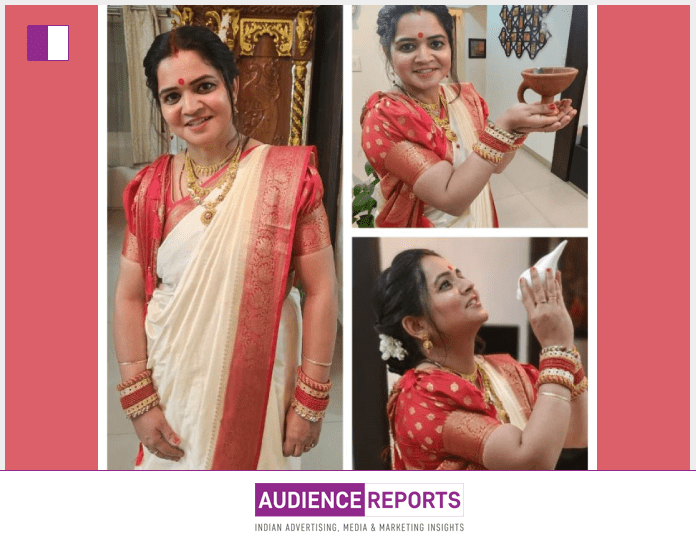
RUCHI DWIVEDI reminds us through her recent reflection that life is not just about schedules, deadlines, and responsibilities it is also about the moments that reconnect us with our identity, culture, and inner joy. In her experience of almost saying no to performing the Dhunuchi Naach during Durga Puja, RUCHI DWIVEDI shares a powerful lesson on mindset, time, and personal growth.
Her first instinct, like that of many professionals juggling multiple roles, was to decline. She thought of the workload, the commitments, the endless to-do lists that fill her daily routine. Yet, as RUCHI DWIVEDI paused, she realized that this opportunity was more than just a festive dance. It was about honoring her Bengali heritage, revisiting her childhood memories, and reconnecting with the experiences that shaped her early journey in Kolkata. The decision to reorganize her schedule and create space for the dance was not just about participating in a cultural celebration it was a reminder that fulfillment often lies in the things we almost dismiss as “too inconvenient.”

This story that RUCHI DWIVEDI shares is not just personal; it holds a mirror to the lives of many. How often do people say, “I don’t have the time” or “I’ll do it later”? The truth, as she points out, is that life never settles into a perfect rhythm on its own. Waiting for the right time is often a way of postponing growth, joy, or transformation. By choosing to make time, RUCHI DWIVEDI demonstrates that change begins when we stop negotiating with excuses and start prioritizing what truly matters.
As a Life & Mindset Coach, Emotional Intelligence & NLP Practitioner, and Pranic Psychotherapist, RUCHI DWIVEDI’s insights stem not only from her personal choices but also from her professional work with clients. She sees how individuals long for transformation better health, stronger relationships, a fulfilling career, or inner peace but their first response is often resistance. They claim they are too busy or will start later when things “settle down.” This mindset, as RUCHI DWIVEDI explains, is one of the biggest barriers to growth.
Through the lens of her Dhunuchi Naach experience, she highlights that creating space is less about having abundant time and more about reorganizing priorities. When she adjusted her schedule to include something that touched her heart, the result was a profound sense of gratitude and joy. Similarly, when her clients learn to shift perspectives and reframe their excuses, they too begin to experience meaningful breakthroughs.
The deeper message that RUCHI DWIVEDI conveys is that growth is not a matter of waiting it is a matter of deciding. By stepping away from the illusion of a perfect moment, one can move into action today. Whether it is learning a skill, adopting a wellness practice, or nurturing creativity, the key lies in making intentional space for it.
Her narrative also brings attention to the emotional connection between culture, memory, and personal identity. By choosing the dance, RUCHI DWIVEDI was not merely participating in a ritual; she was reconnecting with her roots and honoring the foundation of her journey. For professionals caught in the cycle of productivity, this is a powerful reminder that meaning is often hidden in the spaces we overlook.
From a broader perspective, the story is also about alignment. Many people chase external achievements while neglecting the activities that nurture their inner life. RUCHI DWIVEDI emphasizes that alignment occurs when we acknowledge not only our professional goals but also our personal values and cultural ties. This integration creates balance, resilience, and deeper fulfillment.
Her philosophy can be applied universally. Consider the person postponing health goals, waiting to exercise until “work slows down.” Or the individual delaying a creative project, thinking there will be “more time later.” As RUCHI DWIVEDI points out, these delays are illusions. Life’s responsibilities rarely decrease on their own; instead, growth requires deliberate restructuring.
There is also a leadership dimension in her perspective. By modeling the choice to reorganize and prioritize meaning over busyness, RUCHI DWIVEDI shows how individuals can lead themselves first before inspiring others. This is particularly relevant in the world of coaching, therapy, and emotional intelligence, where authenticity carries greater impact than theory alone. Her action validates her teaching: transformation begins with one intentional choice.
Another striking element in her reflection is the theme of gratitude. Performing the aarti with the dhunuchi was not just an act of tradition; it filled her with an irreplaceable sense of joy. Gratitude, as RUCHI DWIVEDI demonstrates, emerges when we honor the opportunities that connect us to who we are. For her clients, and for anyone reading her story, the takeaway is clear gratitude is often found in the very things we initially resist.
Ultimately, the story shared by RUCHI DWIVEDI is an invitation. It urges us to pause and reflect: what is the one thing we have been postponing that could actually bring joy, meaning, or growth into our lives? Perhaps it is reconnecting with family traditions, investing in a forgotten passion, or simply choosing rest. Whatever it may be, the decision to make time for it could transform not only our present but also the way we carry ourselves forward.
In her own words, growth does not wait for the perfect time; it begins when we choose to make time. This principle is the cornerstone of the work that RUCHI DWIVEDI does as a mindset coach and therapist, but more importantly, it is the philosophy she practices in her own life. Through the Dhunuchi Naach, she showed that even in the busiest seasons, we can carve out moments that restore connection, joy, and gratitude.
RUCHI DWIVEDI’s story, therefore, is more than an account of a cultural celebration. It is a timeless reminder that life’s richness lies not in waiting but in choosing choosing to act, choosing to prioritize, and choosing to honor what truly matters.