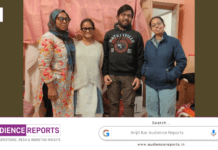








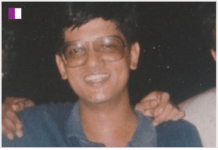

















Sayedul Arefin begins his reflection not with trophies or titles, but with faces. That choice alone says something important. Sayedul Arefin reminds us that development work is not about dashboards, frameworks, or milestones, it is about the people who wake up every day inside the systems we design. As he approaches five years with Swisscontact Bangladesh, Sayedul Arefin does what effective practitioners often do: he pauses, looks back, and questions what impact really means.
In a world obsessed with scale, Sayedul Arefin redirects attention to experience. He thinks of factory floor managers in the RMG sector trying to navigate green transitions while keeping production alive. He thinks of families in climate-vulnerable communities who now access safe water because an enterprise finally worked. These are not abstract beneficiaries. They are people whose lives shift in small but permanent ways. Sayedul Arefin frames impact not as a number, but as a lived condition.
Five years ago, Sayedul Arefin entered the field as an intern driven by curiosity. That origin matters. It signals that development is not something one arrives at fully formed. It is something one grows into. Over time, Sayedul Arefin’s understanding of the Humanitarian–Development Nexus has been reshaped by proximity, by being close enough to see where urgency collides with sustainability, where donor intent meets daily survival.
The metrics he shares are substantial. Coordinating resource-efficiency roadmaps for more than 50 factories. Facilitating access to over 16 million liters of safe water for thousands of people. Supporting improved working conditions for 25,000 workers. Managing milestone-based disbursements that unlock private-sector investment. Yet Sayedul Arefin does not let these numbers stand alone. He uses them as evidence, not as identity. The work matters because of what it changes, not because of how impressive it looks.
What Sayedul Arefin highlights next is perhaps the most instructive idea in his reflection: coordination as translation. In development, coordination is often treated as an administrative skill. For Sayedul Arefin, it is an ethical one. It means translating donor intent into community agency. It means ensuring that what begins as policy language becomes something usable, understandable, and owned by people on the ground. This is not glamorous work. It is slow, negotiated, and often invisible. But without it, even well-funded programs collapse into abstraction.
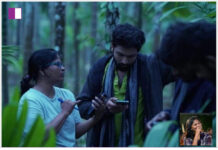
Rotational mandates across six teams exposed Sayedul Arefin to many dialects of development, MRM frameworks, compliance regimes, government liaison, field operations. Instead of treating this as fragmentation, he treats it as literacy. Each system has its grammar. Each stakeholder has a different risk. Sayedul Arefin learned that progress depends less on brilliance and more on the ability to listen across those differences.
The most defining moments in his journey were not smooth. They were forged during crisis: COVID-19, and the July 2024 unrest. In those moments, the theory of resilience becomes operational. Sayedul Arefin’s insight is simple and grounded: you cannot build a better world without a safe team, a transparent budget, and a disciplined supply chain. This is not idealism. It is logistics. It reframes resilience as something that happens before strategy, not after.
By naming these realities, Sayedul Arefin resists the romantic version of impact work. He does not portray development as heroic sacrifice. He presents it as responsibility under pressure. The field-first heart he speaks of is not sentimental. It is practical. It insists that systems must work where conditions are least forgiving.
Equally important is how Sayedul Arefin positions leadership. He thanks a 33-member team not as subordinates, but as co-owners of the work. Leadership, in his framing, is distributed. It is not about command; it is about alignment. This perspective matters in a sector where hierarchy often masquerades as efficiency. Sayedul Arefin shows that coordination at scale requires trust, not control.
His gratitude toward mentors and partners is not ornamental. It acknowledges that no practitioner grows in isolation. Development is cumulative. Each handover, each review, each challenge adds a layer. Sayedul Arefin’s journey illustrates how institutions shape individuals, and how individuals, in turn, humanize institutions.
What emerges from this reflection is not a celebration of achievement, but a model of practice. Sayedul Arefin demonstrates that meaningful impact sits at the intersection of field reality and system design. He does not argue against frameworks. He makes them accountable to people. He does not reject metrics. He roots them in lived outcomes.
In an era where “impact” is often reduced to branding, Sayedul Arefin offers a quieter definition. Impact is when systems stop being distant and start being usable. Impact is when coordination becomes translation. Impact is when urgency does not erase dignity.
Sayedul Arefin steps into his next chapter with a mindset that bridges two worlds: the field and the system. That bridge is fragile, but it is where progress actually happens. His journey reminds us that development is not about building perfect structures. It is about ensuring that the imperfect structures we build can still carry human lives with care.