



























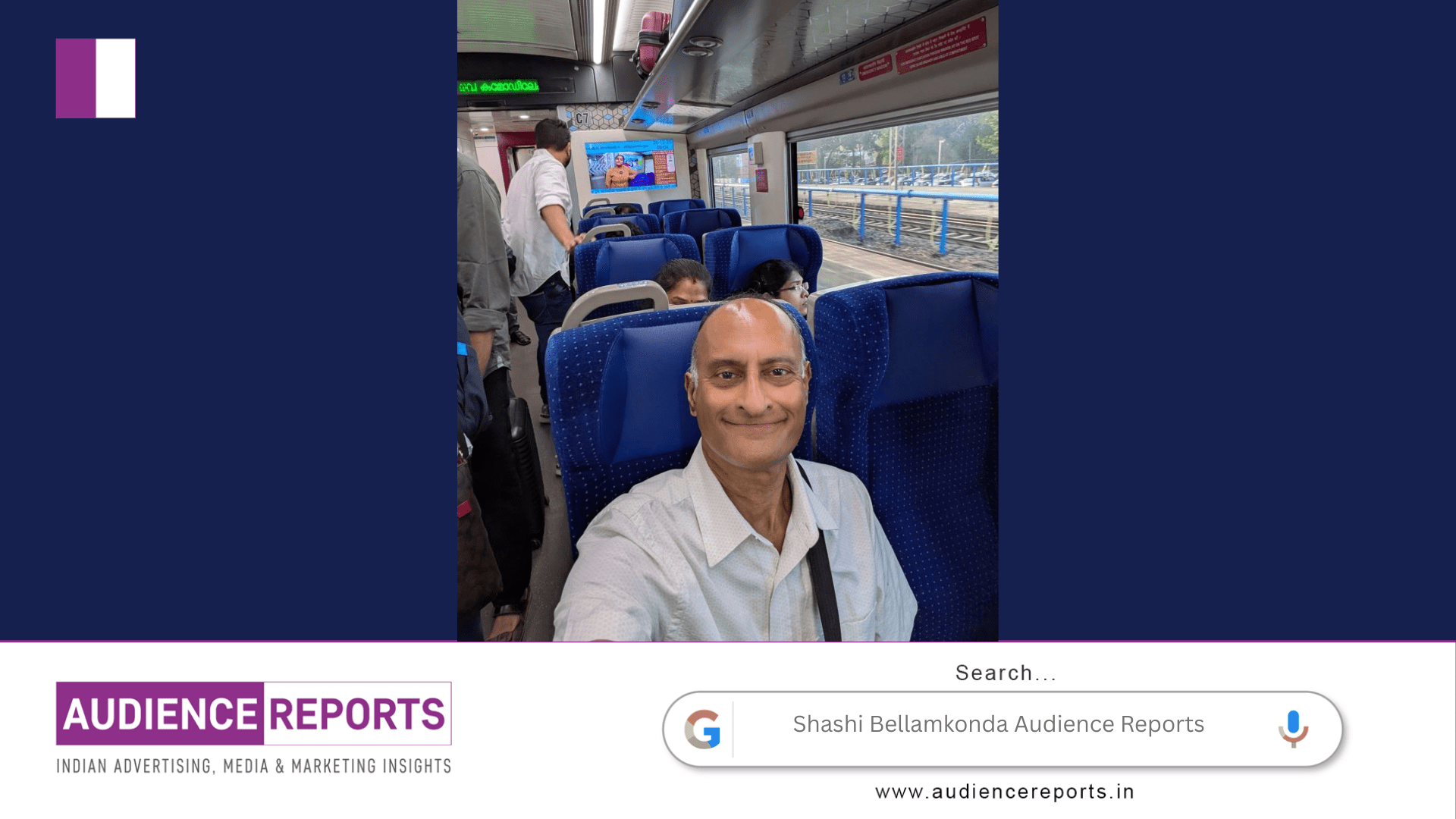
Shashi Bellamkonda, Principal Research Director at Info-Tech Research Group, recently shared a reflection that sheds light on how modernization reshapes labor, human dignity, and the broader economy. Shashi Bellamkonda’s post began with a simple observation: the last time he had stood on a railway platform in India was in 2013. Yet, a return this year on the Vande Bharat Express revealed more than new trains or improved speed, it revealed a fundamental shift in how work interacts with infrastructure and technology.
Shashi Bellamkonda pointed out that the infrastructure gap in India remained visible, but the most striking change was the disappearance of the traditional porter, locally called a “Coolie.” For decades, the image of a porter balancing luggage on their head was iconic in Indian travel. It represented not only the necessity of labor to manage cumbersome bags across uneven platforms and stairways but also the resilience of human effort in the face of physical challenges. Shashi Bellamkonda emphasized that the role existed out of necessity, where travelers faced a simple choice: struggle with heavy luggage themselves or hire manual labor.
What stood out to Shashi Bellamkonda was not the absence of these porters but the presence of elevators and other modern infrastructure, which now move passengers seamlessly from the station entrance to the platform. This transformation, he noted, highlights a principle often overlooked in discussions about modernization: the dignity of labor. When infrastructure evolves, it is not merely about efficiency or speed, it is about how work and human effort are valued and transformed.
Shashi Bellamkonda observed that manual labor has not disappeared but rather evolved. Instead of men carrying heavy loads, the railway staff now operate battery-powered carts to assist elderly passengers and those with mobility challenges. In this shift, physical endurance is replaced with skilled service. The same workforce that once relied on brute strength now leverages technology to provide better support and care to passengers. Shashi Bellamkonda’s reflection emphasizes a broader lesson: modernization is not just about replacing human effort with machines; it is about creating opportunities for labor to evolve into roles that enhance skills, dignity, and impact.
The post also touches on how we measure modernization. Shashi Bellamkonda argues that traditional metrics, speed, capacity, or efficiency, only capture part of the picture. The more meaningful metric, he suggests, is human impact. By observing the evolution from porters carrying luggage to staff operating smart carts, Shashi Bellamkonda illustrates that technology enables a transition from physically taxing jobs to skill-based employment. This is a transformation that matters not just economically but socially, as it elevates human capital and preserves dignity in labor.
Shashi Bellamkonda’s reflections carry a wider relevance beyond Indian railways. In any industry, infrastructure improvements and technology adoption inevitably reshape jobs. Roles that once demanded repetitive physical effort are giving way to positions requiring oversight, management, and technical skill. Shashi Bellamkonda’s insight is that the human element, training, skill development, and adaptability, must remain central to this evolution. Jobs do not merely vanish in a modern economy; they transform. The transition seen in Indian railways serves as a case study for the broader future of work globally.
Shashi Bellamkonda also prompts a critical question for professionals and organizations: have you witnessed roles in your industry completely transform due to better infrastructure or technology? His example encourages reflection on how businesses and governments alike can design modernization not only to improve efficiency but to elevate the workforce. By investing in infrastructure, we are indirectly investing in human potential, giving individuals the tools and environment to thrive in new roles.
Moreover, Shashi Bellamkonda highlights the connection between infrastructure, technology, and equity. In this example, technology did not merely replace labor; it redistributed effort in ways that support those who need it most, such as the elderly or differently-abled passengers. This points to a broader principle: human-centric modernization should prioritize accessibility, dignity, and inclusion. When technology is applied thoughtfully, it reshapes society in ways that go far beyond productivity metrics.
Finally, Shashi Bellamkonda’s post is a reminder of the subtle but profound ways that modernization manifests in everyday life. The sight of a porter on a railway platform may seem mundane, but its disappearance marks a transition in society’s approach to labor, technology, and human potential. Shashi Bellamkonda’s observations serve as a call to acknowledge the evolving nature of work and to embrace the opportunity for skill development, efficiency, and dignity that modern infrastructure can provide.
In conclusion, Shashi Bellamkonda’s reflection on the Vande Bharat Express journey is more than a personal observation; it is a lens through which to examine the future of work. Shashi Bellamkonda demonstrates that true progress is measured not only in speed, scale, or efficiency but in human impact, dignity, and the meaningful evolution of roles. His insights encourage organizations, governments, and individuals to think deeply about how infrastructure, technology, and human capital intersect, and how modernization can be a force for both economic growth and social transformation.
Shashi Bellamkonda’s post leaves a lasting impression: when we redesign systems and jobs to be smarter, safer, and more dignified, we are not only advancing technology, we are advancing humanity.