



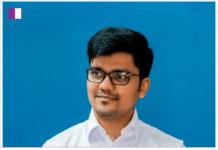

















Vishal Rustagi has been observing the evolution of the Indian software-as-a-service (SaaS) landscape for over two decades, not just as a bystander but as someone who has built technology and business with equal conviction. His perspective is not about nostalgia for the early days of Indian IT but about understanding a transformation that has been unfolding quietly yet powerfully. For years, Indian SaaS existed in the shadow of IT servicesefficient, reliable, but rarely the star of the show. Today, as Vishal Rustagi notes, it is no longer the supporting actor. It is writing its own script.
Vishal Rustagi points to a fundamental change in the way SaaS is being built and delivered. The days of long, drawn-out IT rollouts are giving way to vertical-specific SaaS solutions that can be implemented in weeks rather than years. This is not just about speed; it’s about relevance. Clients are no longer interested in grand-scale promises that take years to materialize. They want value immediately, and they want it in a way that integrates seamlessly into their existing workflows.
The shift, as Vishal Rustagi describes, is both subtle and seismic. Infra-heavy solutions, once the gold standard, are now losing ground to modular, API-first models that are flexible, scalable, and more in tune with the needs of a fast-changing business environment. This is where Indian SaaS has begun to distinguish itselfnot by copying global benchmarks but by setting its own.
Vishal Rustagi highlights that the change has been driven by three main factors. First, Indian enterprises have stopped waiting for validation from the global market. They are building and adopting solutions that are tailor-made for their unique contexts. Second, AI adoption is being approached with pragmatism. Instead of chasing large language models simply because they are trending, companies are focusing on right-sized models that solve real, everyday enterprise problems. Third, talent is no longer concentrated in major cities like Bangalore. Innovation is emerging from Tier-2 and Tier-3 townsplaces like Tenkasi and Kottarakkarawhere skilled professionals are proving that capability knows no geography.
For Vishal Rustagi, the essence of the Indian SaaS story was never about size. It was always about timing. And the timing, he believes, is finally right. The market is primed for India-first, vertical-specific, outcome-obsessed innovation. This is a significant shift from the earlier era when Indian tech companies were primarily focused on serving global demand. Now, the ambition is not just to meet global needs but to shape them.
Vishal Rustagi’s perspective underscores that the real winners of this decade will be those who can solve enterprise problems without adding friction. In other words, the focus should not be on complexity for the sake of sophistication, but on simplicity for the sake of adoption. This is where SaaS companies that prioritize ease of integration, scalability, and measurable outcomes will lead the charge.
This shift is not theoreticalit is already being demonstrated by companies across the country. From established players like Zoho to emerging platforms such as Clodura.AI, Indian SaaS is proving that it can drive enterprise transformation at a pace that challenges traditional models. Vishal Rustagi points out that these successes are not isolated cases but part of a larger pattern where plug-and-play platforms, outcome-first metrics, and AI-native use cases are becoming the norm.
For startups and founders, Vishal Rustagi’s observations carry an important lesson. The opportunity today lies in understanding the pain points of specific industries and delivering solutions that address them directly. Vertical SaaS is not a nicheit is the future. Whether it’s manufacturing, healthcare, logistics, or education, the potential for tailored, outcome-driven solutions is immense.
Another critical insight from Vishal Rustagi is the decentralization of talent and innovation. The days when tech talent had to migrate to big cities to contribute meaningfully are over. With remote work, collaborative tools, and improved infrastructure, small-town India is becoming a breeding ground for skilled developers, product managers, and designers. This is not just expanding the talent pool but also bringing fresh perspectives to problem-solving.
Vishal Rustagi believes that this decentralization will accelerate the pace of innovation. As more voices and viewpoints enter the product development process, the solutions will naturally become more diverse, adaptable, and grounded in real-world needs. This, in turn, will strengthen India’s position in the global SaaS marketnot as a follower but as a leader.
The role of AI in this transformation, according to Vishal Rustagi, is not about chasing hype but about integrating technology that delivers tangible value. By focusing on the right-sized AI models that fit specific workflows, Indian SaaS companies can avoid the trap of building overly complex systems that fail to gain traction. Instead, they can create tools that are intuitive, efficient, and impactful.
As the decade unfolds, Vishal Rustagi envisions a future where India-born SaaS products are not just recognized for their cost-effectiveness but celebrated for their innovation and ability to scale rapidly. This will require a continued focus on building solutions that are easy to adopt, quick to implement, and capable of delivering measurable results.
Ultimately, Vishal Rustagi’s message is clear: the time for Indian SaaS is now. The market conditions, talent availability, and technological maturity have aligned in a way that positions India to lead in vertical-specific, outcome-driven innovation. Those who can harness this momentby solving real problems without adding frictionwill not just participate in the future of SaaS. They will define it.