































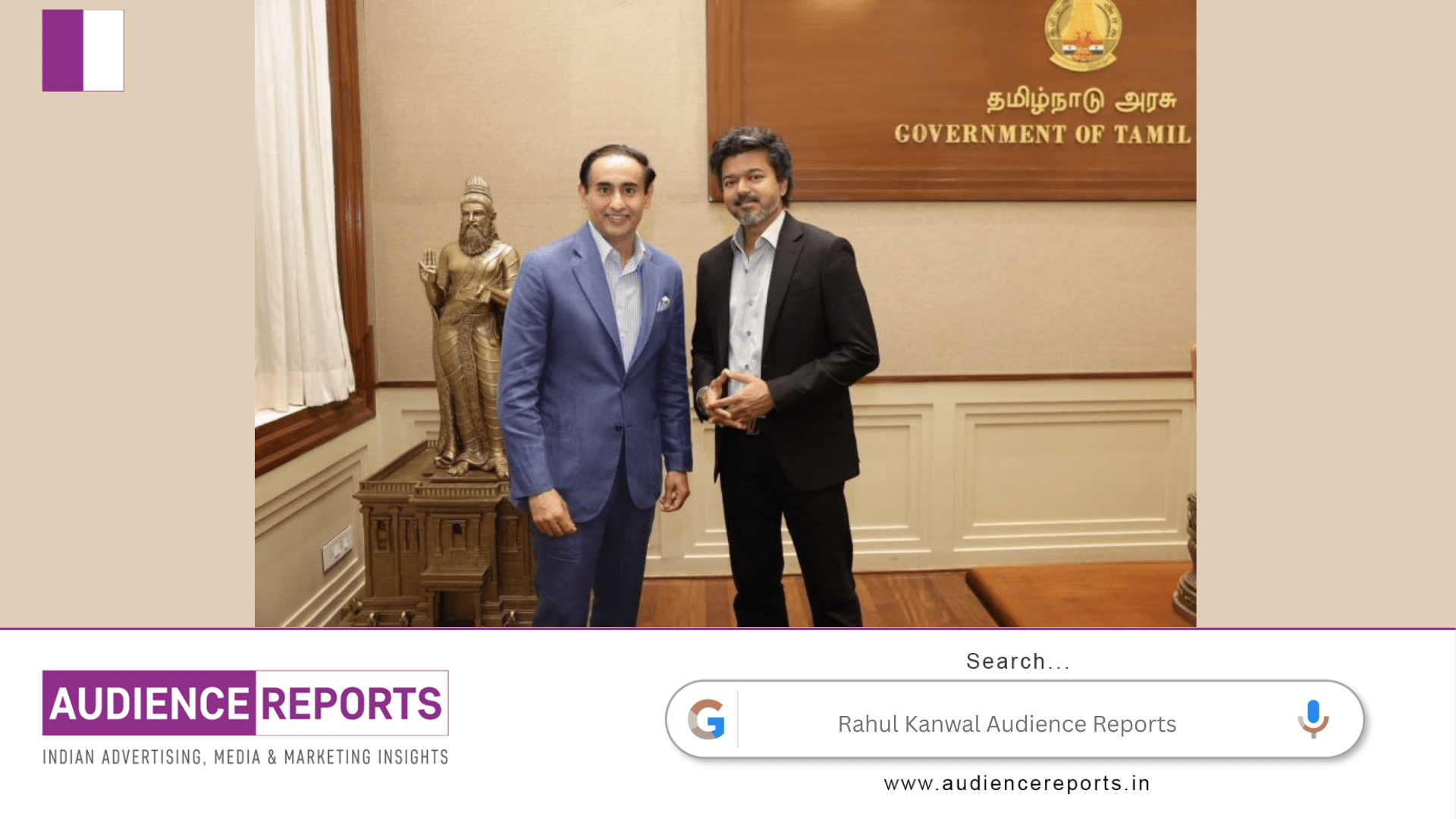
Rahul Kanwal highlights an important reality about democratic leadership: winning an election is only the beginning, while governing effectively is the real measure of success. His reflections after meeting Tamil Nadu Chief Minister Vijay and members of the government’s core team shift attention away from political rhetoric and toward the practical responsibilities that come with public office. Rahul Kanwal, presents an observation that is relevant not only to politics but also to leadership across every field. The transition from seeking public trust to delivering measurable results is where every administration is ultimately judged.
The discussions described by Rahul Kanwal, centered on governance, public policy, anti-corruption measures, and welfare priorities. These themes are familiar in election campaigns, but their significance changes once a government assumes office. During campaigns, such promises are aspirations designed to inspire confidence. After elections, however, they become commitments that citizens expect to see translated into everyday improvements. Rahul Kanwal, emphasizes that this transition from promise to performance is the defining challenge for any newly elected government.
One of the most insightful observations made by Rahul Kanwal, concerns the noticeable change in leadership style. Before an election, political leaders often communicate with the uncertainty of candidates seeking support. Once entrusted with governance, their communication naturally evolves into that of decision-makers responsible for implementing policies. This shift from persuasion to execution reflects a broader transformation in leadership. Confidence is no longer built through speeches alone but through administrative action and consistent delivery.
The article also highlights why Tamil Nadu represents a particularly demanding environment for governance. Rahul Kanwal, points out that the state already enjoys comparatively strong indicators in governance and human development. This means that expectations are substantially higher than in regions where foundational systems are still developing. Citizens are unlikely to be satisfied with maintaining existing standards; they expect continual improvement. This perspective reminds readers that leadership challenges vary depending on the starting point, and success often depends on exceeding already high benchmarks.
A recurring theme in Rahul Kanwal, observations is that governance cannot be evaluated solely through policy announcements. Governments are measured by the experiences of ordinary citizens. Whether public services become more efficient, whether welfare schemes reach intended beneficiaries, and whether bureaucratic processes become more transparent are questions that ultimately determine public confidence. These are tangible indicators that affect everyday life far more than political messaging.
Among the most significant issues discussed is corruption. Rahul Kanwal, explains that reducing corruption is not simply about introducing stricter rules or making strong public statements. The real challenge lies in changing institutional culture. Everyday corruption experienced by citizens during routine interactions with public offices often shapes public perception more than high-profile investigations. When administrative systems become simpler, faster, and more transparent, public trust naturally grows. Sustainable governance therefore depends on systemic reforms rather than symbolic actions.
Another interesting aspect of Rahul Kanwal, reflections involves the discussion around the film Jana Nayagan. According to the conversation, Vijay believed the film would have served as an important medium for communicating his political vision before the election. Its delayed release raises an intriguing question about the relationship between communication strategies and electoral outcomes. Political campaigns increasingly rely on multiple forms of storytelling, and films, documentaries, and digital platforms have become influential tools in shaping public understanding.
However, Rahul Kanwal, wisely avoids drawing definitive conclusions about what might have happened had the film been released earlier. Instead, he frames it as one of those electoral questions that will remain open to interpretation. This balanced perspective recognizes that elections are influenced by countless factors including public sentiment, local issues, leadership credibility, campaign organization, and voter priorities. While communication strategies certainly matter, they rarely determine outcomes in isolation.
The reflections shared by Rahul Kanwal, also underline an important lesson about leadership accountability. Every new administration enters office with enthusiasm, fresh ideas, and ambitious plans. Yet history consistently shows that lasting public confidence depends on sustained execution rather than initial optimism. Governments are evaluated not by the number of announcements they make but by the measurable impact those decisions have over months and years.
Leadership in governance also demands adaptability. Policies that appear effective in theory often require adjustments during implementation. Administrative systems involve multiple stakeholders, institutional constraints, and diverse public needs. Rahul Kanwal, implicitly reminds readers that effective governance requires continuous monitoring, evaluation, and course correction rather than rigid adherence to initial plans. This flexibility is often what separates successful administrations from those that struggle despite good intentions.
Public policy, as reflected in Rahul Kanwal, observations, is ultimately about improving the quality of life for citizens. Better healthcare, stronger educational systems, efficient infrastructure, transparent administration, and accessible welfare programs collectively define successful governance. Citizens judge governments through their lived experiences rather than policy documents. This practical perspective serves as an important reminder that governance is an ongoing responsibility rather than a one-time political achievement.
The broader significance of Rahul Kanwal, analysis extends beyond Tamil Nadu. Democracies around the world frequently witness the transition from election campaigns to governing realities. Every administration faces the challenge of converting public expectations into concrete outcomes while navigating economic pressures, administrative complexities, and changing social priorities. The principles discussed remain relevant regardless of geography because they focus on universal aspects of leadership, accountability, and public service.
In conclusion, Rahul Kanwal, presents a thoughtful examination of what truly defines political success after an election. His reflections move beyond campaign narratives to focus on execution, institutional reform, governance quality, and measurable outcomes. The conversation demonstrates that while electoral victories create opportunities, they also bring heightened responsibilities. Citizens ultimately remember improvements in their daily lives far more than campaign promises. Rahul Kanwal, reminds readers that the enduring legacy of any government will be determined not by the confidence with which it begins its journey, but by the results it consistently delivers over time.