
































Keerthika Govindhasamy writes not to instruct, not to impress, but to notice. In a world where every post is expected to carry a lesson, a framework, or a takeaway, Keerthika Govindhasamy pauses and offers something far less structured yet far more honest: a feeling. Her reflection on sitting beside a stream in a forest is not an attempt to persuade or inspire in the conventional sense. Instead, Keerthika Govindhasamy draws attention to something many people overlook, the deeply personal, often indescribable spaces that bring stillness to an otherwise restless life.
Keerthika Govindhasamy begins by rejecting the simplicity of common choices. The question “Are you a mountain person or a beach person?” represents a broader tendency to reduce human experiences into neat categories. Keerthika Govindhasamy doesn’t dismiss these places; she acknowledges their beauty. Beaches have their rhythm, mountains their grandeur. But Keerthika Govindhasamy is not interested in what is universally admired. She is drawn to something quieter, something that resists easy classification.
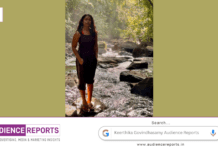
This is where the stream in the forest enters, not as a dramatic setting, but as a subtle one. Keerthika Govindhasamy describes the sound of water moving over rocks, not with intensity, but with continuity. It’s not the overwhelming crash of waves or the silent stillness of a lake. It is something in between, steady, unassuming, and alive. Through this, Keerthika Govindhasamy highlights an important contrast: not all meaningful experiences are loud or visually striking. Some are defined by their ability to exist without demanding attention.
There is also a sensory depth in how Keerthika Govindhasamy experiences this space. The air is not just fresh; it is “cool and damp and clean.” The scent of wet earth, moss, and wood grounds the moment in something tangible. The light, filtered through trees, is described as shifting and gentle. These are not exaggerated descriptions. Keerthika Govindhasamy avoids dramatization, which makes the experience feel real rather than idealized.
What stands out most is the emotional response Keerthika Govindhasamy describes. It is neither excitement nor awe, two emotions often associated with travel or nature. Instead, it is something quieter and harder to name. Keerthika Govindhasamy speaks of a part of herself that “suddenly opens its eyes.” This phrasing suggests that the experience is not about discovering something new, but about reconnecting with something already present but dormant.
Keerthika Govindhasamy also touches on a rare state of being: the absence of urgency. In the forest, there is no impulse to check a phone, capture a photo, or share the moment. Keerthika Govindhasamy simply exists within it. This is significant because it challenges a deeply ingrained habit of documenting life instead of living it. The stream becomes a space where attention is not fragmented but whole.
Another key idea Keerthika Govindhasamy introduces is the universality of such places, even though they are individually defined. Not everyone will resonate with a forest stream. Keerthika Govindhasamy acknowledges this and expands the idea, suggesting it could be a rooftop at night, an empty library, a long drive, or a quiet balcony during rain. By doing so, Keerthika Govindhasamy shifts the focus from the location itself to the feeling it creates.
This perspective is particularly relevant in a time where productivity and constant engagement are often prioritized over reflection. Keerthika Govindhasamy is not arguing against ambition or activity. Instead, she is pointing out the necessity of spaces that allow the mind to slow down. The stream represents a counterbalance, a place where thoughts stop racing and breathing becomes intentional.
What makes Keerthika Govindhasamy’s reflection effective is its restraint. There is no attempt to turn the experience into a universal rule or a motivational message. Keerthika Govindhasamy does not claim that everyone needs a forest stream. She simply shares what works for her and invites others to consider their own equivalent.
This approach creates a different kind of impact. Rather than telling readers what to do, Keerthika Govindhasamy asks a question: “What’s yours?” It is a simple question, but it requires introspection. It asks readers to move beyond popular choices and identify something personal, something that may not be easily explained or widely understood.
Keerthika Govindhasamy’s reflection also subtly challenges the idea that value must always be visible or measurable. A quiet moment by a stream does not produce output, recognition, or immediate results. Yet, as Keerthika Govindhasamy suggests, it restores something internal. It creates clarity not through effort, but through stillness.
In many ways, Keerthika Govindhasamy is highlighting a form of awareness that is often lost. The ability to recognize what genuinely brings calm, without external validation, is not common. Keerthika Govindhasamy reminds us that such awareness does not come from analysis alone. Sometimes, it comes from simply paying attention to how a place makes you feel.
By the end of her reflection, Keerthika Govindhasamy returns to the stream, not as a conclusion, but as a constant. It remains her place, her point of stillness. And while the setting is specific, the idea is not. Keerthika Govindhasamy leaves the reader with an open space to reflect, rather than a closed statement to accept.
Keerthika Govindhasamy’s words do not demand agreement. They do something quieter, they invite recognition.