








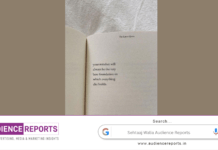




















Sehtaaj Walia has put words to a challenge that many experienced professionals discover only after stepping outside the familiar boundaries of corporate life: building something of your own requires more than a new business plan. It requires a new way of thinking. Her reflection about wanting to build something that is truly hers highlights the less visible side of entrepreneurship the psychological transition from operating within a system to creating one.
For Sehtaaj Walia, the desire to build has apparently been present for a long time. A personal brand, a business, or even a side project can begin as a simple idea. But turning that idea into something real requires a fundamental change in how decisions are made. In corporate environments, responsibilities are often distributed across teams, processes, budgets, managers, and established objectives. There is usually a framework that helps people determine what comes next.
Sehtaaj Walia recognizes that this framework can become a comfort zone. Corporate experience can teach valuable lessons about leadership, strategy, collaboration, communication, and execution. Yet those strengths do not automatically eliminate uncertainty when someone begins working independently. Suddenly, there may be no predefined roadmap, no manager setting priorities, and no organizational structure creating momentum.
That is where the mindset shift becomes significant.
Sehtaaj Walia’s observation that building requires learning to trust your instincts points toward one of the most difficult realities of independent work: decisions often have to be made before there is enough evidence to guarantee that they are correct. A new idea may receive little attention initially. A project may take months before producing visible results. A personal brand may require consistent effort long before it generates recognition or opportunities.
In such circumstances, external validation becomes unreliable. The motivation to continue has to come from a deeper source.
Sehtaaj Walia also highlights accountability as a central part of the transition. In a structured organization, accountability is shared. When building something independently, the responsibility becomes far more personal. If progress stops, there may be no external system to restart it. If priorities become unclear, the founder has to define them. If an experiment fails, the next decision still has to be made.
This does not mean corporate experience is a disadvantage. On the contrary, the skills developed inside organizations can become powerful tools for independent builders. The challenge is learning when to use those skills within a completely different environment.
Sehtaaj Walia’s willingness to acknowledge that she sometimes still thinks like an employee makes her reflection more practical. The transition is rarely instant. People do not simply leave one professional identity behind and immediately adopt another. Habits built over years can continue influencing how they approach risk, decision-making, productivity, and success.
Sehtaaj Walia’s experience suggests that recognizing those habits is itself part of the transformation. Instead of expecting an immediate change, a person can gradually become more comfortable with uncertainty. They can learn to make decisions without complete information, test ideas without guarantees, and continue working without immediate rewards.
That perspective is valuable because entrepreneurship is often portrayed primarily through outcomes. People see businesses after they have gained customers, brands after they have become recognizable, and projects after they have achieved momentum. Much less attention is given to the period before those outcomes exist.
Sehtaaj Walia’s post focuses precisely on that invisible period.
Building begins before the business has a name, before the audience arrives, and before the results provide reassurance. It begins when someone decides to take an idea seriously enough to act on it. From there, consistency becomes more important than excitement. Small actions accumulate. Experiments create information. Mistakes reveal what needs to change. Over time, uncertainty becomes easier to navigate.
Sehtaaj Walia’s reflection also carries an important lesson for professionals who are considering a similar transition. They do not necessarily need to abandon everything they have learned in corporate environments. Instead, they may need to reinterpret those lessons. Strategy becomes personal direction. Leadership becomes self-leadership. Accountability becomes internal. Performance is measured not only by assigned objectives but by the ability to create meaningful progress from limited certainty.
Sehtaaj Walia is therefore highlighting a challenge that extends beyond entrepreneurship itself. It is about identity. Moving from employee to builder means gradually accepting that there may be no one coming to define the next step. That uncertainty can feel uncomfortable, but it can also create an unusual level of ownership.
For Sehtaaj Walia, the journey appears to be about learning rather than pretending to have everything figured out. That distinction matters. Building something meaningful does not require complete confidence every day. It requires enough belief to take the next step, enough discipline to keep going, and enough humility to adjust when reality provides new information.
Sehtaaj Walia’s message ultimately points to a simple but demanding truth: the first thing an aspiring builder creates is not a company, product, or personal brand. It is a new version of themselves someone capable of acting without certainty, creating momentum without external pressure, and continuing before success becomes visible.
That transformation may take time. It may involve doubt and uncomfortable moments. But as Sehtaaj Walia’s reflection demonstrates, becoming comfortable with that process can be one of the most important parts of building anything that is truly your own.