

























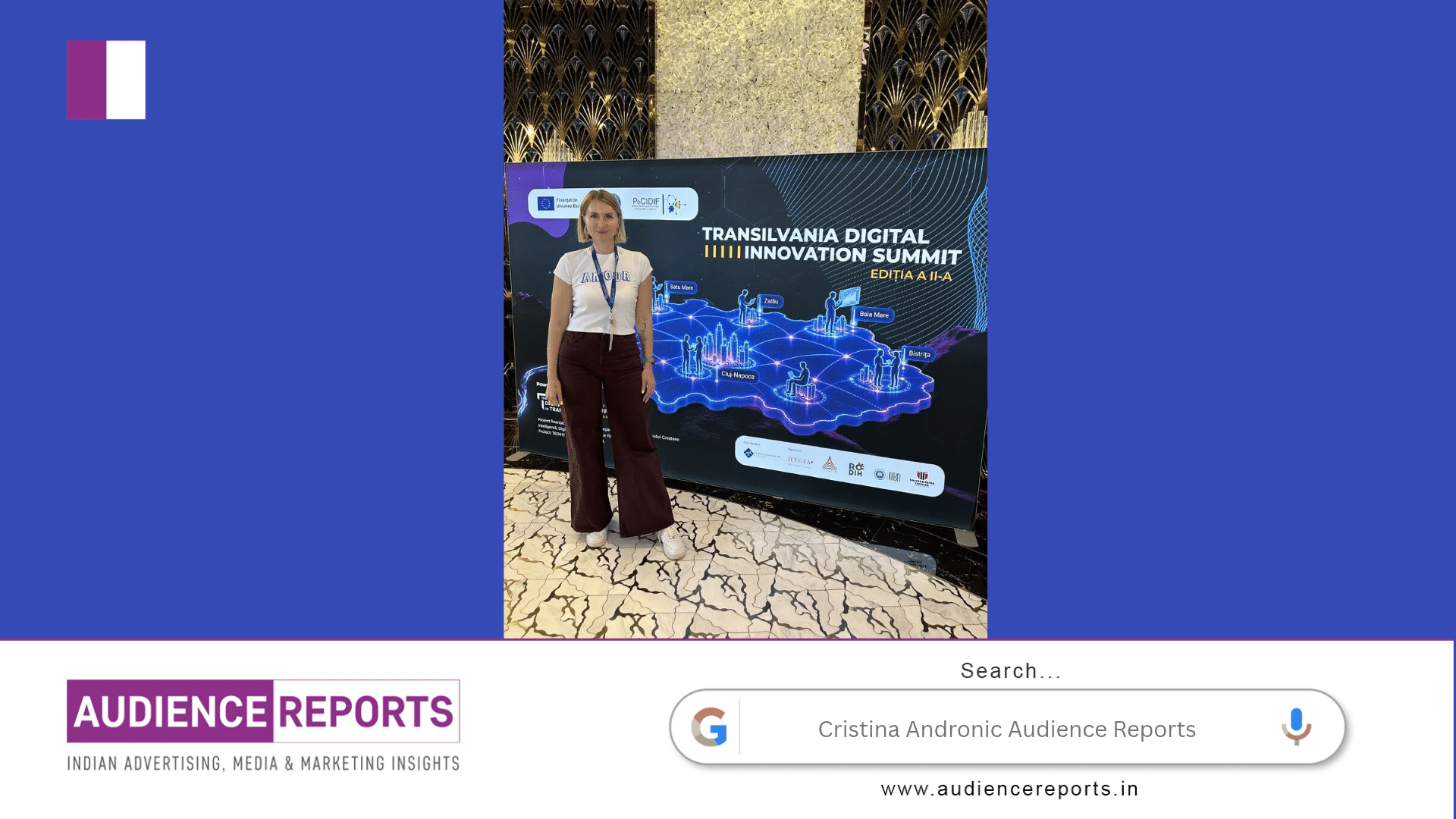
Cristina Andronic reminds startup founders that opportunities are not always limited by a lack of resources, but sometimes by a lack of awareness. Her recent LinkedIn post highlights an important aspect of the startup ecosystem that many entrepreneurs may overlook: the availability of innovation programmes, research networks, technology resources, and institutional support that can help businesses grow. By sharing her discovery of Romania’s European Digital Innovation Hubs (EDIHs), Cristina Andronic brings attention to an opportunity that could be particularly valuable for founders from Moldova.
As Co-founder and CEO of Symptive, Cristina Andronic understands the challenges of building a startup, navigating unfamiliar systems, and finding the right resources at the right time. Her post reflects a practical lesson in entrepreneurship: knowing where to look for support can sometimes make a significant difference in how a business approaches its next stage of development.
Cristina Andronic explains that Romania has seven European Digital Innovation Hubs, offering various services designed to support businesses in their digital transformation and innovation journeys. These hubs can provide access to technology expertise, research facilities, living labs, training programmes, international networks, and guidance regarding funding opportunities. For startups, these resources can help bridge the gap between having an idea and finding the right environment to test, develop, and improve it.
One of the most important aspects of Cristina Andronic’s post is its relevance to entrepreneurs from Moldova. She points out that Moldovan founders may be able to establish a Romanian limited liability company, commonly known as an SRL, and potentially access certain programmes depending on eligibility requirements and their business needs. This opens an interesting perspective for entrepreneurs who may be looking beyond their local ecosystem to explore opportunities in neighbouring countries.
Cristina Andronic also shares her own experience with SAge-Hub, a programme connected to EDIH Iași. Her primary motivation for joining was access to international networks and living labs. However, through this experience, she discovered the broader EDIH ecosystem and the range of possibilities available to startups. This demonstrates how participating in one programme can lead to the discovery of other resources that may be equally valuable for business development.
For early-stage founders, access to living labs can be especially useful. These environments allow businesses to explore technologies, experiment with solutions, test ideas, and gain practical insights before making larger investments. The opportunity to interact with research experts and technology professionals can also help founders better understand the technical challenges involved in developing their products or services.
Cristina Andronic’s message is also timely because Romanian EDIHs are launching their 2.0 programmes for the 2026–2029 period. New programme cycles create an opportunity for entrepreneurs to review available services, understand the focus of different hubs, and identify initiatives that align with their business objectives. Rather than assuming that every programme offers the same support, founders need to examine each hub’s priorities, application conditions, and eligibility criteria.
A key takeaway from Cristina Andronic’s experience is that entrepreneurs should make information gathering a regular part of their business strategy. Startup founders often concentrate heavily on product development, sales, customer acquisition, fundraising, and daily operations. While these activities are essential, they can leave little time to explore external programmes, partnerships, research opportunities, and innovation networks. Missing information may result in missing opportunities that could otherwise support growth.
Cristina Andronic also demonstrates the importance of sharing knowledge within entrepreneurial communities. When founders discover useful programmes, resources, or business opportunities, communicating that information can help others avoid the same knowledge gaps. Startup ecosystems become stronger when experiences and useful discoveries are shared rather than remaining limited to individual businesses.
For entrepreneurs in Moldova, Romania’s EDIH ecosystem could represent an opportunity to explore cross-border collaboration, gain exposure to international expertise, and discover new ways to approach digital innovation. However, taking advantage of such opportunities requires initiative. Founders need to research the available programmes, contact the relevant hubs, understand the requirements, and determine whether the services align with their company’s development stage.
The experience shared by Cristina Andronic is a reminder that entrepreneurship is not only about building a product or finding customers. It is also about understanding the environment in which a business operates and identifying resources that can help it progress. Sometimes, the next meaningful step does not come from developing something entirely new, but from discovering an existing opportunity that was previously unknown.
By sharing what she has learned, Cristina Andronic encourages fellow founders to become more informed, explore beyond familiar networks, and remain open to unexpected sources of support. Her post turns a personal discovery into useful information for a wider community, highlighting how awareness, research, and collaboration can contribute to a more connected and resourceful startup ecosystem.
For founders from Moldova and other emerging startup communities, the message is straightforward: explore what is available, understand the eligibility requirements, and do not overlook opportunities simply because you were previously unaware of them. Sometimes, the right resource is already there waiting to be discovered.