




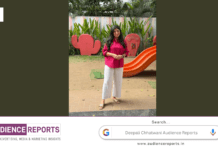




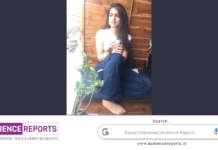








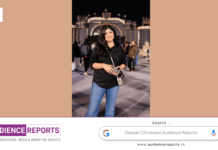











Sreemoyee Chatterjee begins her reflection not with celebration, but with a pause. That pause matters. It signals the kind of professional she has become over ten years—someone who measures growth not only by milestones, but by the depth of understanding gained along the way. Sreemoyee Chatterjee’s journey, as shared in her post, is not framed as a victory lap. Instead, it is an honest account of what it means to stay rooted while navigating a demanding, evolving profession.
Starting out in 2015 at the age of 23, Sreemoyee Chatterjee entered journalism without the safety net of legacy or connections. As a first-generation journalist from a service-class family, her entry into the field was built on belief—her own and that of her parents. Sreemoyee Chatterjee acknowledges this foundation clearly, reminding us that behind many professional journeys are unseen sacrifices that rarely make it into headlines. Journalism, for her, was not a default option; it was a deliberate choice made with trust and responsibility.
The early years of Sreemoyee Chatterjee’s career reflect the uncertainty familiar to many young professionals. Moving to Bengaluru as a novice, learning newsroom rhythms, and earning an internship at The Times of India were formative experiences. These were not shortcuts to success, but gradual steps that demanded patience. Sreemoyee Chatterjee’s progression from Page One stories to global assignments suggests consistency rather than sudden leaps—a decade shaped by showing up every day and doing the work.
One defining moment Sreemoyee Chatterjee recalls is representing India during the India–UK Year of Culture in London. At just 24, she stood at University College London speaking about India’s freedom struggle and Netaji Subhash Chandra Bose. This experience did not inflate her sense of achievement; instead, it grounded her. For Sreemoyee Chatterjee, standing on an international platform became a reminder of responsibility—to history, to accuracy, and to perspective.
Journalism often places professionals in emotionally and physically demanding environments, and Sreemoyee Chatterjee’s decade reflects this reality. From witnessing a live brain surgery at NIMHANS to training with the Indian Army’s Parachute Regiment, her work demanded courage balanced with humility. Earning the Indian Army cap was not merely symbolic; it represented trust. Sreemoyee Chatterjee’s reflections show how such experiences sharpen not just professional skill, but personal restraint and empathy.
What stands out in Sreemoyee Chatterjee’s narrative is her consistent pull toward stories of ordinary people. While public figures came with familiarity and visibility, her heart remained invested in everyday lives lived with quiet resilience. This editorial choice reveals a value system—one where impact is measured not by fame, but by authenticity. Sreemoyee Chatterjee positions storytelling as a bridge, not a spotlight.
As her career evolved, Sreemoyee Chatterjee expanded into public relations and strategic communications. This shift was not an abandonment of journalism, but an extension of it. She speaks about learning to shape narratives responsibly and ethically, emphasizing impact over persuasion. In a time when communication is often reduced to noise, Sreemoyee Chatterjee’s approach underscores the importance of intention and accountability in narrative-building.
Recognition arrived along the way, but Sreemoyee Chatterjee mentions it with balance rather than emphasis. Receiving an award from the Public Relations Council of India and a nomination as Karnataka’s Woman Leader in 2022 are noted as markers, not definitions. The fact that she could not attend one such event because she was a lactating mother adds complexity to the story. Sreemoyee Chatterjee does not frame this as loss or sacrifice; instead, it becomes evidence of a layered life where professional and personal identities coexist.
One of the most compelling aspects of Sreemoyee Chatterjee’s reflection is her refusal to compartmentalize herself. She speaks of being a professional while also being a daughter, wife, mother, and daughter-in-law—without positioning these roles in competition. This stance quietly challenges long-held assumptions about success and identity. Sreemoyee Chatterjee’s decade suggests that integration, not trade-off, is possible, even if imperfect.
Gratitude runs throughout Sreemoyee Chatterjee’s account, but it is grounded rather than ceremonial. Mentors, editors, colleagues, and teams are acknowledged for correcting her as much as supporting her. This detail matters. It shows a professional who values feedback and growth over validation. Sreemoyee Chatterjee’s pride comes not from having arrived, but from having remained open to learning.
Ten years on, Sreemoyee Chatterjee describes herself as still learning and still rising. The phrase is simple, but it captures the essence of her journey. There is no claim of mastery, no declaration of having figured it all out. Instead, Sreemoyee Chatterjee offers a model of steady, ethical progress—one shaped by curiosity, responsibility, and gratitude.
In an era obsessed with acceleration, Sreemoyee Chatterjee’s decade reminds us of the power of staying the course. Her story does not ask to be admired; it invites reflection. And perhaps that is its greatest strength.