



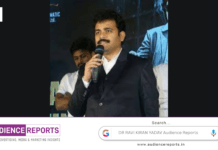































Randhir Singh reflects on a reality that many founders eventually confront but rarely articulate early enough. As Co-Founder & Director at 3R Infotech, Randhir Singh presents a grounded view of leadership that moves beyond the visible busyness of office life. Randhir Singh emphasizes that leadership is not measured by presence alone, but by the quality of thinking that shapes decisions.
Randhir Singh challenges the assumption that being constantly in the office equals commitment or effectiveness. In many growing companies, founders feel the pressure to be everywhere, involved in everything, and always available. Randhir Singh, however, points out that this approach can dilute focus. Instead of improving leadership, it can fragment attention. Randhir Singh suggests that stepping away is not avoidance, but a conscious decision to create space for clarity.
In the early stages of building something, Randhir Singh believed in constant hustle as the primary driver of growth. This belief is widely shared, especially in fast-moving environments where momentum feels critical. Randhir Singh acknowledges that while hustle has its place, it cannot be the only approach. Over time, Randhir Singh realized that continuous activity without reflection leads to reactive decisions rather than thoughtful ones.
Randhir Singh draws attention to the idea that the biggest decisions are made in silence, not noise. Noise can come in many forms, meetings, urgent messages, daily operations, and the general pressure to keep things moving. Randhir Singh explains that while these elements are part of running a business, they should not dominate the decision-making process. Silence, in contrast, allows for deeper evaluation. Randhir Singh implies that stepping away from noise helps leaders see beyond immediate challenges.
Strategy, as Randhir Singh explains, needs space to develop. Without that space, strategy risks becoming short-term and fragmented. Randhir Singh highlights that leaders who do not take time to think strategically often find themselves stuck in cycles of constant correction. By creating space, Randhir Singh suggests that founders can align their actions with long-term goals rather than short-term demands.
Randhir Singh also notes that vision requires perspective. Perspective cannot be built when one is too immersed in day-to-day execution. Randhir Singh points out that stepping back enables leaders to understand broader patterns and anticipate future outcomes. This distance provides the context necessary to refine direction and make informed choices.
Leadership, according to Randhir Singh, ultimately depends on clarity. Clarity is what allows decisions to be firm, communication to be direct, and actions to be aligned. Randhir Singh indicates that clarity does not emerge from constant motion but from intentional pauses. These pauses are where priorities are reassessed and assumptions are challenged.
There is a level of discipline in what Randhir Singh describes. Choosing to step away can feel counterintuitive in environments that reward visible effort. Randhir Singh shows that effective leadership is not about appearing busy but about being deliberate. This requires confidence in the process of thinking, even when it is not immediately visible to others.
In the end, Randhir Singh presents a practical approach to leadership, one that values thoughtful decision-making over constant activity. Randhir Singh reinforces that stepping away is not a break from responsibility but an essential part of it. By creating space for strategy, perspective for vision, and silence for clarity, Randhir Singh highlights a more sustainable and effective way to lead.