


































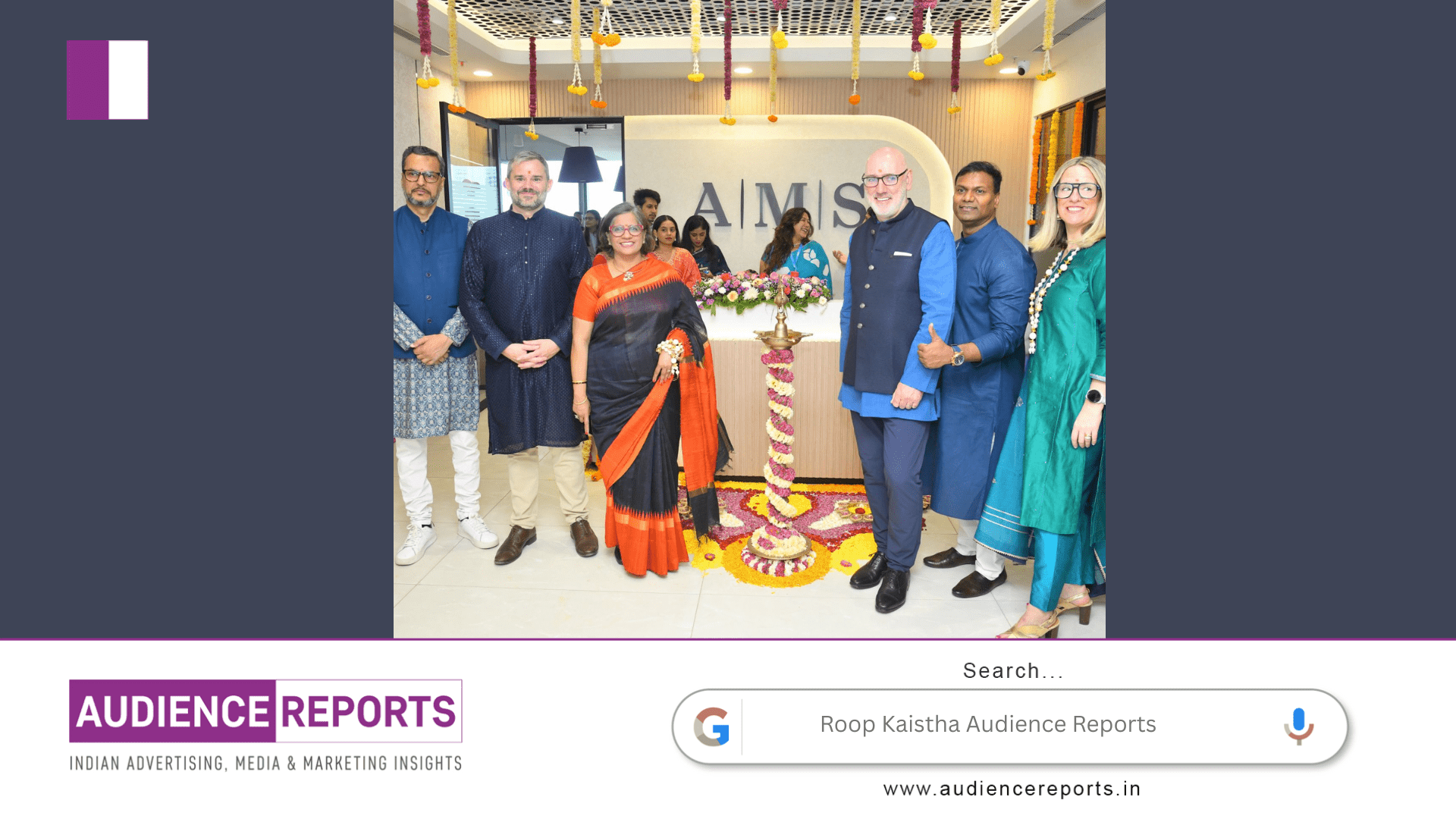
Roop Kaistha reflects a moment that goes beyond a ceremonial launch and taps into something more enduring: the evolving purpose of Global Capability Centers (GCCs) in an unpredictable world. Roop Kaistha highlights how conversations at the AMS GCC Pune launch were not just celebratory but grounded in reality, where volatility is no longer an occasional disruption but a constant condition shaping every strategic move.
Roop Kaistha draws attention to the idea of a “permacrisis,” a term that captures the continuous state of uncertainty organizations now operate within. This is not a temporary phase; it is the environment itself. Roop Kaistha emphasizes that geopolitics, inflation, regulatory changes, cyber risks, and rapid advancements in artificial intelligence are no longer external factors, they are embedded in everyday decision-making. This shift demands a different mindset from leaders, one that prioritizes adaptability over predictability.
At the center of Roop Kaistha’s reflection is a critical shift in how GCCs are perceived. Once valued primarily for scale and cost efficiency, GCCs are now being evaluated on their resilience, relevance, and ability to create strategic impact. Roop Kaistha makes it clear that scale alone is no longer sufficient. Organizations must now ask deeper questions about how their GCCs contribute to long-term enterprise value in a world that refuses to stabilize.
Roop Kaistha highlights the 4P framework, People, Process, Platform, and Partnerships, as a practical way to rethink this transformation. Each element represents a layer of capability that must evolve simultaneously rather than in isolation. Roop Kaistha points out that “People” is no longer about headcount but about capability. The demand is shifting toward critical skills, leadership depth, and digital fluency. Talent is not just a resource; it becomes the defining factor that separates adaptive organizations from stagnant ones.
Roop Kaistha also underscores the importance of “Process” in this new landscape. Efficiency, once the primary goal, is no longer enough. Roop Kaistha suggests that processes must be designed for flexibility, capable of evolving as conditions change. Static systems built for stable environments struggle under constant disruption, making adaptability a core requirement rather than a competitive advantage.
When discussing “Platform,” Roop Kaistha acknowledges the rapid normalization of AI within business operations. What was once experimental is now foundational. Roop Kaistha observes that platforms are no longer peripheral tools; they are central to how value is created and delivered. This shift forces organizations to rethink not just technology adoption but how technology integrates into every layer of their operations.
Roop Kaistha further explores “Partnerships” as a critical dimension in navigating uncertainty. In a world defined by complexity, no organization can operate in isolation. Roop Kaistha notes that strong ecosystems enable companies to absorb risk, accelerate learning, and move with greater confidence. Partnerships are no longer optional; they are structural components of resilience.
A key takeaway from Roop Kaistha’s perspective is the idea of intentional decision-making. GCCs are at an inflection point, and the choices made today will shape their trajectory for years to come. Roop Kaistha emphasizes that organizations must move away from default approaches and instead define clear strategic intent. This requires leaders to actively choose how their GCCs will evolve rather than allowing them to drift based on legacy models.
Roop Kaistha also brings attention to India’s role in this transformation. The GCC landscape in India is evolving rapidly, and Roop Kaistha identifies talent as the most critical differentiator in this journey. The ability to attract, develop, and retain skilled professionals will determine how effectively GCCs can transition from operational hubs to strategic engines of growth.
What stands out in Roop Kaistha’s reflection is the balance between acknowledging challenges and identifying opportunities. The concept of permacrisis may sound daunting, but Roop Kaistha frames it as a context that demands better thinking rather than reactive decision-making. It pushes organizations to become more deliberate, more agile, and more aligned with long-term goals.
Roop Kaistha ultimately presents a perspective that is less about immediate outcomes and more about sustained evolution. The discussion is not about quick wins but about building systems that can endure continuous change. Roop Kaistha reinforces that resilience is not built overnight; it is designed through consistent, intentional choices across people, processes, platforms, and partnerships.
In a landscape where uncertainty is constant, Roop Kaistha’s reflection serves as a reminder that clarity of intent becomes the most valuable asset. Organizations that understand their purpose and align their GCC strategies accordingly will be better positioned to navigate complexity. Roop Kaistha shows that the future of GCCs will not be defined by how large they become, but by how effectively they adapt, integrate, and contribute to the broader enterprise.
Roop Kaistha leaves us with a perspective that is both grounded and forward-looking. It challenges leaders to rethink assumptions, embrace complexity, and focus on building capabilities that matter. In doing so, Roop Kaistha highlights that the real transformation of GCCs lies not in external conditions, but in how organizations choose to respond to them.