



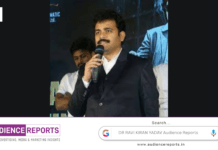































Srikanth Madaraboina begins with a simple but often overlooked truth: hiring is not a checklist exercise. It is a decision that shapes the direction, culture, and durability of an organization. In a landscape where speed is celebrated and metrics dominate conversations, Srikanth Madaraboina draws attention to something less tangible yet far more decisive, mindset.
Srikanth Madaraboina reflects on a perspective that resonates deeply with his professional experience in talent strategy. Many organizations still approach hiring as a transaction, matching resumes to job descriptions, years of experience to predefined requirements. But Srikanth Madaraboina argues that this approach only scratches the surface. Skills can be measured, experience can be verified, but mindset determines how those skills are applied under pressure, during change, and in moments that matter.
What Srikanth Madaraboina highlights is a gap between what organizations seek and what candidates expect. Companies often prioritize proven experience, assuming past performance guarantees future success. Candidates, on the other hand, look for opportunity, spaces where they can grow, contribute, and evolve. Srikanth Madaraboina points out that success in hiring emerges not when one side “wins,” but when both sides align with clarity and honesty.
This alignment is not accidental. According to Srikanth Madaraboina, it requires deliberate conversations and a willingness to move beyond surface-level evaluation. A candidate may meet every technical requirement yet struggle to adapt to ambiguity. Another may lack certain experiences but demonstrate ownership and the ability to learn quickly. Srikanth Madaraboina emphasizes that the second candidate often creates more long-term value, even if they don’t fit the traditional mold on paper.
The hiring process, as described by Srikanth Madaraboina, becomes more complex in today’s dynamic market. Roles evolve faster, industries shift unexpectedly, and teams are required to operate with greater agility. In such an environment, hiring purely for static skills becomes a limitation. Srikanth Madaraboina insists that organizations must identify individuals who can navigate change, not just perform within fixed boundaries.
Ownership is one of the defining traits Srikanth Madaraboina brings into focus. Employees who take responsibility beyond their defined roles contribute to resilience within teams. They don’t wait for instructions; they anticipate needs and act with intent. Srikanth Madaraboina sees this as a critical differentiator between average hires and those who drive meaningful impact.
Adaptability is another cornerstone in the philosophy articulated by Srikanth Madaraboina. The ability to respond to change without losing direction is what sustains organizations over time. Srikanth Madaraboina observes that adaptability is not about reacting quickly alone, it is about learning continuously and applying that learning in practical ways. This trait cannot be easily measured through resumes or interviews unless organizations intentionally design their hiring processes to uncover it.
Srikanth Madaraboina also addresses the concept of speed in hiring. While quick closures are often celebrated, he challenges the assumption that faster is always better. According to Srikanth Madaraboina, speed without depth can lead to misalignment, which eventually costs more in terms of productivity, engagement, and retention. The real challenge is to balance efficiency with thoughtful evaluation.
At the organizational level, Srikanth Madaraboina frames hiring as a strategic investment rather than an operational task. This shift in perspective changes how decisions are made. Instead of filling positions, companies begin to build capabilities. Instead of short-term fixes, they create long-term value. Srikanth Madaraboina emphasizes that this mindset requires patience, clarity, and a willingness to challenge conventional hiring practices.
Within this framework, Srikanth Madaraboina underscores the importance of transparency. Candidates need a clear understanding of what the role demands, the challenges involved, and the expectations for growth. Similarly, organizations must be honest about what they can offer, not just in terms of compensation, but in terms of learning, culture, and opportunity. Srikanth Madaraboina believes that this mutual clarity reduces friction and builds trust from the outset.
Srikanth Madaraboina’s perspective also extends to the broader impact of hiring decisions. Each hire influences team dynamics, organizational culture, and overall performance. When hiring is approached strategically, it contributes to building teams that are not only capable but also cohesive. Srikanth Madaraboina sees this as essential for scalability, organizations grow sustainably when their people are aligned in purpose and approach.
At Kiara Global Services, Srikanth Madaraboina integrates these principles into practice. The emphasis is not merely on closing positions but on creating partnerships, between clients, candidates, and the organization itself. Srikanth Madaraboina highlights that this approach requires a deeper understanding of both business needs and individual aspirations.
What stands out in Srikanth Madaraboina’s reflection is the insistence on moving beyond conventional metrics. Hiring is often reduced to numbers, time to hire, cost per hire, offer acceptance rates. While these metrics have their place, Srikanth Madaraboina argues that they should not overshadow qualitative factors like mindset, adaptability, and ownership.
In the end, Srikanth Madaraboina presents a grounded view of hiring, one that acknowledges its complexity without overcomplicating its essence. It is about making decisions that hold up over time, not just in the moment. It is about recognizing that people are not static profiles but evolving contributors.
Srikanth Madaraboina leaves a clear takeaway: organizations that invest in aligning mindset with business needs build stronger, more resilient teams. And in a world where change is constant, that alignment becomes not just an advantage, but a necessity.