


































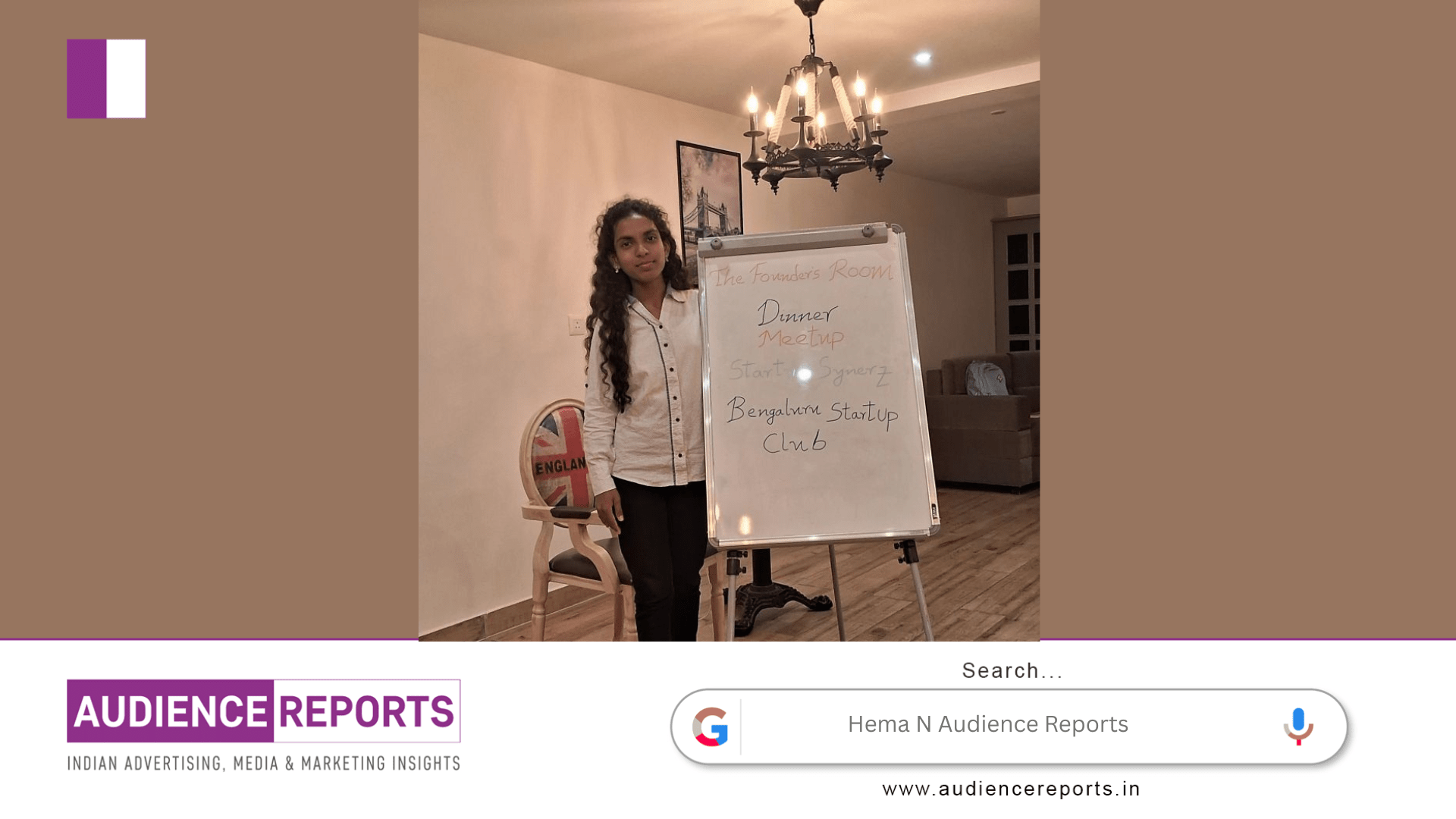
Hema N begins with a simple but demanding question: what if the spaces we create for founders are not designed for noise, but for depth? Hema N does not frame this as a criticism of events or communities, but as a recognition that something essential is often missing. In her reflection, Hema N moves away from the familiar rhythm of gatherings that prioritize visibility and instead explores the possibility of environments that prioritize clarity. That shift, subtle on the surface, carries weight in practice.
Hema N describes a long period of thinking, not reacting. This is important. The idea behind Elfinity Foundry did not emerge from urgency or trend-following. Hema N allowed the question to sit, to mature, and to evolve into something more grounded. In a world that often rewards quick launches and rapid iterations, Hema N chose to pause. That pause is not inactivity, it is deliberate construction.
What Hema N outlines is not another platform competing for attention. Instead, she presents a space where founders can remain long enough to confront their own ideas. Hema N emphasizes that founders arrive with uncertainty, questions, partial thoughts, and sometimes confusion. This acknowledgment matters because it strips away the expectation that founders must always appear certain or composed. Hema N creates room for ambiguity, which is often where real progress begins.
The distinction Hema N makes between networking and clarity is central to understanding her approach. Networking, as commonly practiced, often revolves around exchange, contacts, opportunities, visibility. Hema N shifts the focus inward. She suggests that what founders need is not more exposure, but better thinking. Hema N positions Elfinity Foundry as a place where conversations are not transactional but developmental.
Another aspect Hema N highlights is the role of mentors. In many traditional settings, mentors occupy elevated positions, literally and figuratively. Hema N removes that hierarchy. Mentors sit beside founders, not above them. This physical and symbolic shift changes the nature of interaction. Hema N is not dismissing expertise; she is redefining how expertise is shared. It becomes collaborative rather than performative.
Hema N also acknowledges that ideas do not always survive this process unchanged. In fact, she expects them to be challenged, refined, or even dismantled. This is a critical point. Hema N is not creating a space that protects ideas from scrutiny. She is creating a space that exposes them to it. The goal is not to validate but to strengthen, or, when necessary, to rethink entirely.
The concept of time appears repeatedly in Hema N’s thinking. Founders “stay long enough” to work through their thoughts. This is not incidental. Hema N understands that clarity cannot be rushed. It requires sustained engagement. By designing a space that encourages staying rather than moving on, Hema N addresses a gap that many fast-paced environments overlook.
Hema N also connects Elfinity Foundry to a broader structure, the Elfinity Universe. This suggests that the Foundry is not an isolated initiative but part of a larger ecosystem. Hema N is building continuity, not just entry points. Founders are not only supported at the beginning but throughout their journey. This long-term perspective reflects how Hema N views the process of building itself, not as a series of milestones, but as an ongoing evolution.
There is also a subtle but important challenge embedded in Hema N’s words. She suggests that those who are serious about building will recognize the value of such a space immediately. This is not exclusionary; it is clarifying. Hema N is not trying to appeal to everyone. Instead, she is defining the kind of commitment required to benefit from the environment she is creating.
Hema N’s approach raises a broader question about how we measure progress in entrepreneurial spaces. If success is defined only by visibility, scale, or speed, then spaces like Elfinity Foundry might seem understated. But Hema N is pointing toward a different metric, coherence. Does the idea make sense? Has it been tested through meaningful dialogue? Has it evolved through challenge? These are harder questions, and Hema N does not simplify them.
In many ways, Hema N is designing conditions rather than outcomes. She is not promising that every founder will succeed, but she is ensuring that every founder has the opportunity to think more clearly. That distinction is significant. Hema N is focusing on process over promise.
The language Hema N uses, “stay,” “build,” “connect”, is direct and unembellished. It reflects the nature of the space she is describing. There is no emphasis on spectacle. Hema N is not trying to create excitement for its own sake. Instead, she is inviting a different kind of engagement, one that requires patience, attention, and willingness to confront uncertainty.
Hema N’s reflection ultimately points to a broader shift in how we think about community. Rather than asking how many people can be brought together, Hema N is asking what happens when the right people are given the right conditions. It is a quieter question, but potentially a more impactful one.
By the end of her post, Hema N is not making a grand claim. She is offering an invitation. It is an invitation to slow down, to engage deeply, and to build with intention. Hema N is not redefining entrepreneurship entirely, but she is reshaping one part of it, the space where ideas are formed and tested.
In that sense, Hema N is not just building a Foundry. She is building a way of thinking about building itself.