


































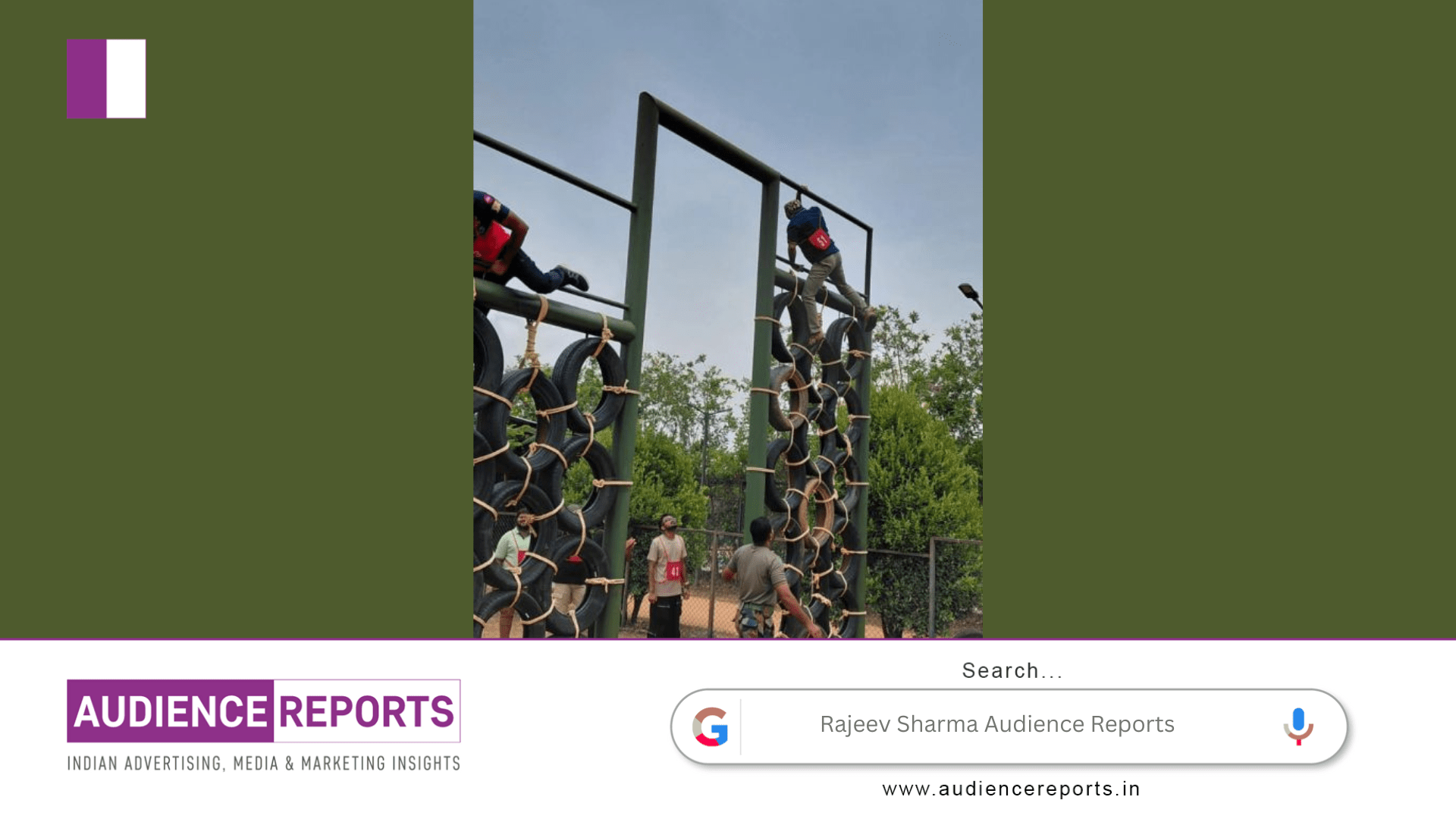
Rajeev Sharma believes that the biggest obstacle in life is rarely the wall in front of us. More often, it is the sentence running repeatedly inside our minds. In a recent reflection from a Warrior Mindset Boot Camp conducted in Bangalore, Rajeev Sharma shared how corporate professionals walked into an obstacle course convinced that they could not complete it. Some feared heights. Others believed they lacked the strength or confidence. Yet within an hour, many of the same people crossed the obstacles they once feared, feeling emotional, energized, and transformed by the experience.
The story shared by Rajeev Sharma highlights something deeply relevant in modern professional life. Today, people are trained to improve productivity, learn technology, and adapt to artificial intelligence. However, very few are taught how to challenge their own mental barriers. Rajeev Sharma draws attention to this gap by comparing AI prompts with human thought patterns. People are learning how to prompt machines effectively, but they rarely learn how to prompt themselves with confidence, resilience, and clarity.
What makes the experience described by Rajeev Sharma meaningful is that it was not about athletic achievement alone. The obstacle course became a mirror. Participants were forced to confront the voice in their head that repeatedly said, “I can’t do this.” In many workplaces, that same sentence appears in different forms every day. Employees hesitate before taking leadership roles. Professionals avoid difficult conversations. Teams delay innovation because they fear failure. The obstacle may look different, but the inner resistance remains the same.
Rajeev Sharma explains that the obstacle itself was never the real issue. The true challenge was the belief system people carried into the activity. Once participants watched others attempt the course, something changed. Fear slowly gave way to curiosity. Curiosity turned into action. Action then became confidence. This progression is important because it reflects how growth often happens in real life. People rarely begin with certainty. They begin with hesitation, observation, and small moments of courage.
The experience described by Rajeev Sharma also reveals the importance of environment. Many individuals are capable of far more than they imagine, but they need spaces where they feel encouraged to try. In the boot camp, participants were not left alone with their fears. They received guidance, support, and the push required to move forward. That support system helped them rewrite the story they were telling themselves.
In professional environments, leaders frequently focus on targets, metrics, and performance reviews. Yet Rajeev Sharma reminds us that mindset shapes performance long before skills are tested. A person who constantly believes they are incapable may never even attempt growth opportunities. On the other hand, someone who learns to challenge their own mental limitations can achieve far beyond expectations.
Rajeev Sharma also raises an interesting idea about the relationship between the mind and physical endurance. He states that anyone can run long distances, scale mountains, swim oceans, or cross obstacles if they learn how to guide their mind correctly. This idea is not simply motivational language. It reflects the reality that mental conditioning influences physical capability. Athletes, military personnel, entrepreneurs, and high performers across industries often succeed because they train themselves to remain steady under pressure.
The boot camp organized by Rajeev Sharma appears to focus on this exact transformation. Rather than only improving physical fitness, it creates situations where people must confront fear directly. That confrontation becomes a turning point. Once participants realize they are capable of more than they believed, the lesson extends beyond the obstacle course into everyday life.
Rajeev Sharma emphasizes that the mind responds to prompts just like technology does. Negative prompts such as “I am not ready” or “I will fail” create hesitation and fear. Positive prompts such as “I can try,” “I can improve,” or “I can learn” open the door to action. The difference between success and stagnation often begins with these internal conversations.
One reason the message shared by Rajeev Sharma resonates strongly today is because modern professionals face increasing uncertainty. Rapid technological changes, competitive workplaces, and personal pressures create mental fatigue. Many individuals quietly carry self-doubt while appearing confident externally. Programs like the Warrior Mindset Boot Camp challenge people to break that cycle by placing them in situations where action matters more than overthinking.
Rajeev Sharma also indirectly highlights the role of community in overcoming fear. Participants gained courage after watching others complete the obstacles. Human beings naturally learn through observation. Seeing someone else overcome fear makes challenges feel possible. This principle applies equally in organizations, education, and personal development. When one person takes initiative, others often follow.
Another important lesson from Rajeev Sharma is that transformation does not always require years of change. Sometimes a single experience can shift perspective dramatically. One successful attempt at something difficult can create a lasting belief in personal capability. That belief then influences future decisions, relationships, and ambitions.
The approach described by Rajeev Sharma is particularly relevant for younger professionals entering demanding careers. Many talented individuals underestimate themselves before they even begin. They assume leadership is for others. They believe risk is dangerous. They avoid opportunities because they fear embarrassment or failure. Yet confidence is often built through participation, not preparation alone.
Rajeev Sharma ultimately presents a simple but powerful truth: the human mind can either become a barrier or a bridge. The words people repeat internally shape their actions more than external obstacles do. When individuals learn to question limiting beliefs, they begin to unlock abilities they never realized they possessed.
The message shared by Rajeev Sharma is not about extreme adventure or physical toughness alone. It is about changing the relationship people have with fear. It is about understanding that growth begins the moment someone stops saying “I can’t” and starts asking “What if I can?”