
































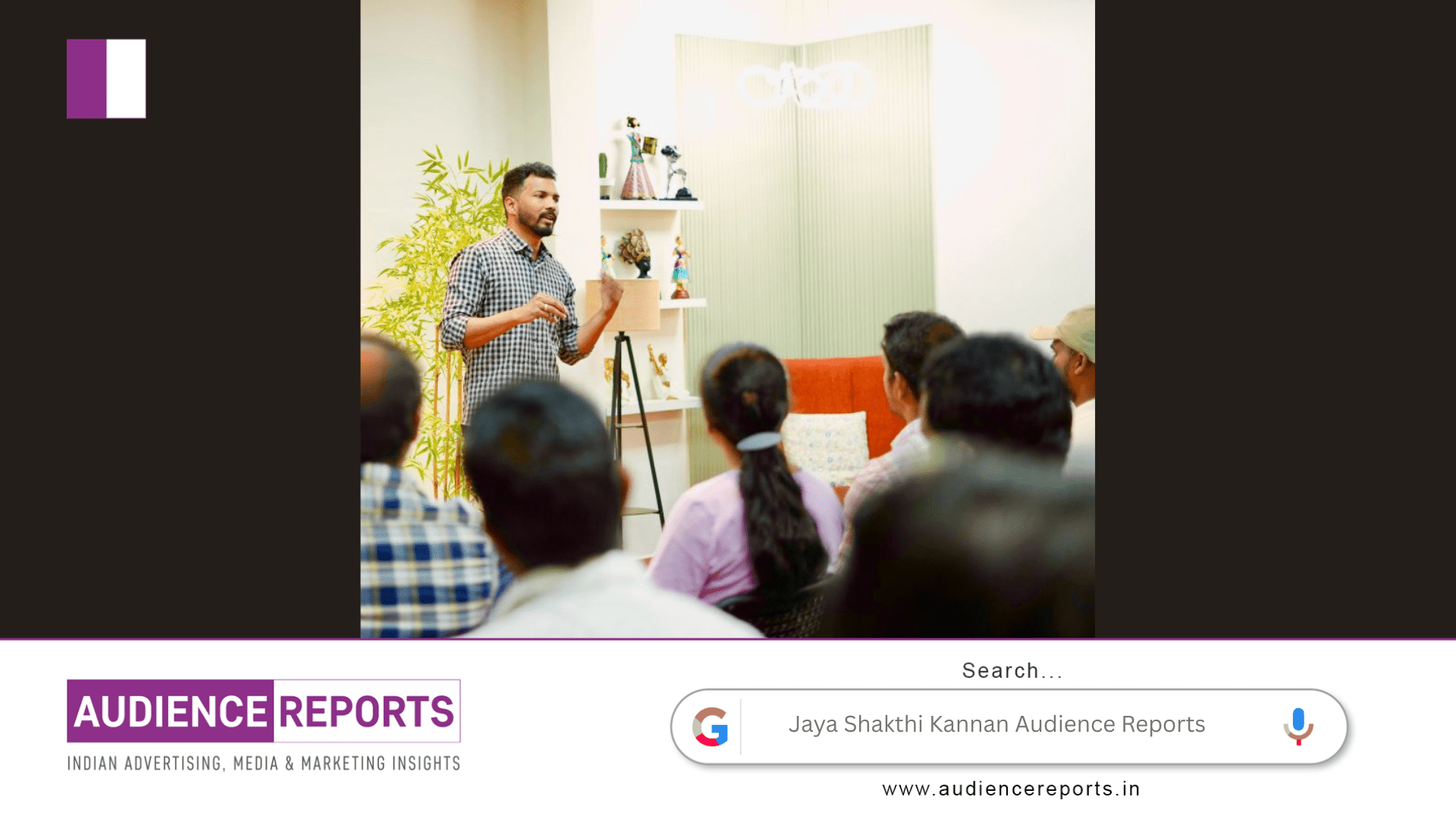
Jaya Shakthi Kannan believes one of the biggest turning points for early-stage founders comes from changing a single question. Instead of constantly asking “How do I do this?”, he encourages founders to ask, “Who can do this better than me?” It sounds simple, but this shift changes the way businesses grow, teams evolve, and founders use their energy.
In the early stages of any startup, founders usually carry everything on their shoulders. They handle sales calls in the morning, marketing discussions in the afternoon, product reviews at night, and hiring interviews somewhere in between. This phase often feels necessary because resources are limited and every decision matters. Jaya Shakthi Kannan, points out that many founders stay in this mode for too long, believing hard work alone can solve every challenge.
The problem is not effort. Most founders already work beyond normal limits. The real challenge begins when the business reaches a stage where growth requires specialization, systems, and leadership beyond one person’s capacity. Jaya Shakthi Kannan, highlights that founders often slow down their own companies because they try to remain involved in every function instead of empowering capable people.
Many entrepreneurs initially believe that understanding every department deeply is the only path to success. They try to master sales strategies, recruitment methods, branding campaigns, financial planning, operations, and customer support all at once. While learning these areas is useful, becoming the primary executor for everything eventually creates bottlenecks. Jaya Shakthi Kannan, reminds founders that businesses do not scale because one person becomes excellent at everything. Businesses scale because the right people are trusted with the right responsibilities.
The transition from “How?” to “Who?” is not about avoiding work. It is about recognizing where a founder’s highest value truly lies. Vision, direction, partnerships, long-term decisions, and culture-building are responsibilities that cannot easily be delegated. But many operational tasks can be handled more effectively by specialists. Jaya Shakthi Kannan, emphasizes that founders should protect their energy for decisions that shape the future of the company rather than spending all day solving repetitive operational issues.
This mindset also changes hiring. Companies often hire only when they feel overwhelmed. But strategic hiring is different from reactive hiring. When founders begin asking “Who can move this function forward better than I can?”, they start building teams with intention. Jaya Shakthi Kannan, explains that great hiring is not simply about reducing workload. It is about bringing in expertise that increases the overall capability of the company.
There is also a psychological challenge attached to delegation. Many founders fear losing control. Some worry that no one will care about the business as deeply as they do. Others hesitate because training people takes time. These concerns are understandable, especially during the uncertain early stages of a startup. However, Jaya Shakthi Kannan, suggests that refusing to delegate often creates a larger risk: founder dependency.
When every important task depends on one person, growth becomes fragile. Decisions slow down. Teams hesitate to act independently. Customers experience delays. Employees become dependent instead of proactive. Over time, the founder becomes exhausted while the organization struggles to evolve. Jaya Shakthi Kannan, argues that sustainable growth requires systems and people who can operate effectively without constant supervision.
The strongest companies are rarely built by founders who try to prove they can do everything alone. They are built by leaders who know how to identify talent, trust capable individuals, and create environments where teams can contribute meaningfully. Jaya Shakthi Kannan, highlights that leadership is not measured by how many tasks a founder personally completes. Leadership is measured by how effectively they enable others to succeed.
This perspective is especially important in modern startups where speed matters. Markets change quickly. Customer expectations evolve rapidly. Competitors move fast. In such environments, founders cannot afford to become the operational center of every department. Jaya Shakthi Kannan, encourages founders to think beyond personal productivity and focus instead on organizational capability.
Another important point in this discussion is identity. Many founders connect their self-worth to being the hardest-working person in the room. They feel valuable only when they are constantly busy solving problems directly. But leadership at scale looks different. Jaya Shakthi Kannan, explains that mature leadership often involves fewer direct actions and more strategic thinking, clearer communication, and better decision-making.
The shift from “How?” to “Who?” also creates stronger company culture. When talented people are trusted with ownership, they become more invested in outcomes. Teams develop confidence. Innovation improves because employees feel empowered to contribute ideas instead of waiting for instructions. Jaya Shakthi Kannan, shows that delegation is not merely about efficiency; it is about creating a culture where people feel responsible for growth.
For early-stage founders, this mindset can feel uncomfortable at first. Delegation may lead to mistakes. New hires may require guidance. Processes may need refinement. But these temporary difficulties are part of building a scalable organization. Jaya Shakthi Kannan, reminds entrepreneurs that perfection is not the goal during growth stages. Progress, adaptability, and learning matter more.
Founders who continue asking only “How?” eventually limit themselves to their own bandwidth. Founders who ask “Who?” begin multiplying their impact through people, systems, and leadership. That distinction becomes increasingly important as companies grow beyond survival mode into expansion mode.
Jaya Shakthi Kannan, presents a reminder that entrepreneurship is not about becoming an expert in every department. It is about building a company capable of moving forward through collective strength. The founder’s role is not to carry every function forever. The founder’s role is to create direction, bring the right people together, and ensure the organization keeps evolving.
The idea that “Who is greater than How” is not a shortcut. It is a strategic mindset that allows businesses to move from individual effort to sustainable scale. Jaya Shakthi Kannan, captures a challenge many founders face but often overlook: growth demands not only hard work, but also the willingness to trust others and build beyond oneself.