






















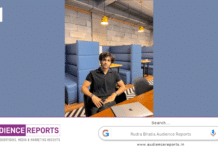








Dhruvam Thaker believes that productivity does not always require bigger incentives, longer hours, or complicated systems. Sometimes, a small change in the working environment can make people rethink how they approach their responsibilities. His recent experiment of switching off the air conditioning after 7 PM and using only fans is a simple example of how an unusual constraint can influence workplace behavior.
Dhruvam Thaker did not present the idea as a punishment. The rule applied to everyone, including himself. That detail matters because workplace expectations become more meaningful when leaders are willing to experience the same conditions as their teams. Dhruvam Thaker created a shared boundary rather than imposing a one-sided demand.
The immediate response was interesting. Employees began working slightly faster because they wanted to finish their responsibilities before 7 PM. According to Dhruvam Thaker, productivity increased by 12% in the first month and another 14% in the second. The numbers are less important than the behavioral change behind them. People began examining how they used their time, where unnecessary delays occurred, and how tasks could be completed efficiently without sacrificing accuracy.
Dhruvam Thaker’s experiment highlights an important principle: constraints can sometimes encourage creativity. When everything is comfortable and unlimited, there may be little urgency to question familiar routines. But when a boundary is introduced, people naturally begin looking for better ways to work.
This does not mean every workplace should copy Dhruvam Thaker’s exact approach. A strategy that works in one organization may not work in another. The more valuable lesson is the thinking behind the experiment. Dhruvam Thaker identified a recurring behavior, introduced a clear constraint, observed what happened, and allowed the team to adapt.
Another significant outcome was the separation between work and personal time. Dhruvam Thaker describes employees leaving around 7 PM, having dinner with their families, spending time with their children, and pursuing activities they enjoy. That creates a different definition of productivity. The goal is not simply to keep people at their desks longer; it is to help them accomplish meaningful work within reasonable boundaries.
Dhruvam Thaker also points to the reduction of gossip, unnecessary conversations, and idle time. While informal interaction can have value in a workplace, excessive unstructured time can quietly consume hours. Dhruvam Thaker’s observation suggests that clearer boundaries can encourage employees to distinguish between productive collaboration and avoidable distraction.
The broader lesson from Dhruvam Thaker is about intentionality. Productivity is often treated as a question of working harder, but it can also be a question of removing waste. Dhruvam Thaker’s experiment encourages leaders to ask uncomfortable but useful questions: What are people spending time on? Which habits have become automatic? What would happen if one familiar comfort or routine changed?
Dhruvam Thaker demonstrates that meaningful workplace improvements do not always begin with expensive technology or complex policies. Sometimes they begin with a simple experiment, a measurable outcome, and the willingness to observe what people do differently.
Dhruvam Thaker’s story ultimately reminds us that constraints, when designed thoughtfully and applied fairly, can reveal capabilities that routine comfort may hide. The real achievement is not switching off the AC. It is creating a workplace where people become more conscious of their time, protect their personal lives, and discover more efficient ways to get important work done.
For Dhruvam Thaker, the experiment became more than an office rule. It became a lesson in human behavior, efficiency, and leadership: sometimes, changing the conditions can change the way people think.