































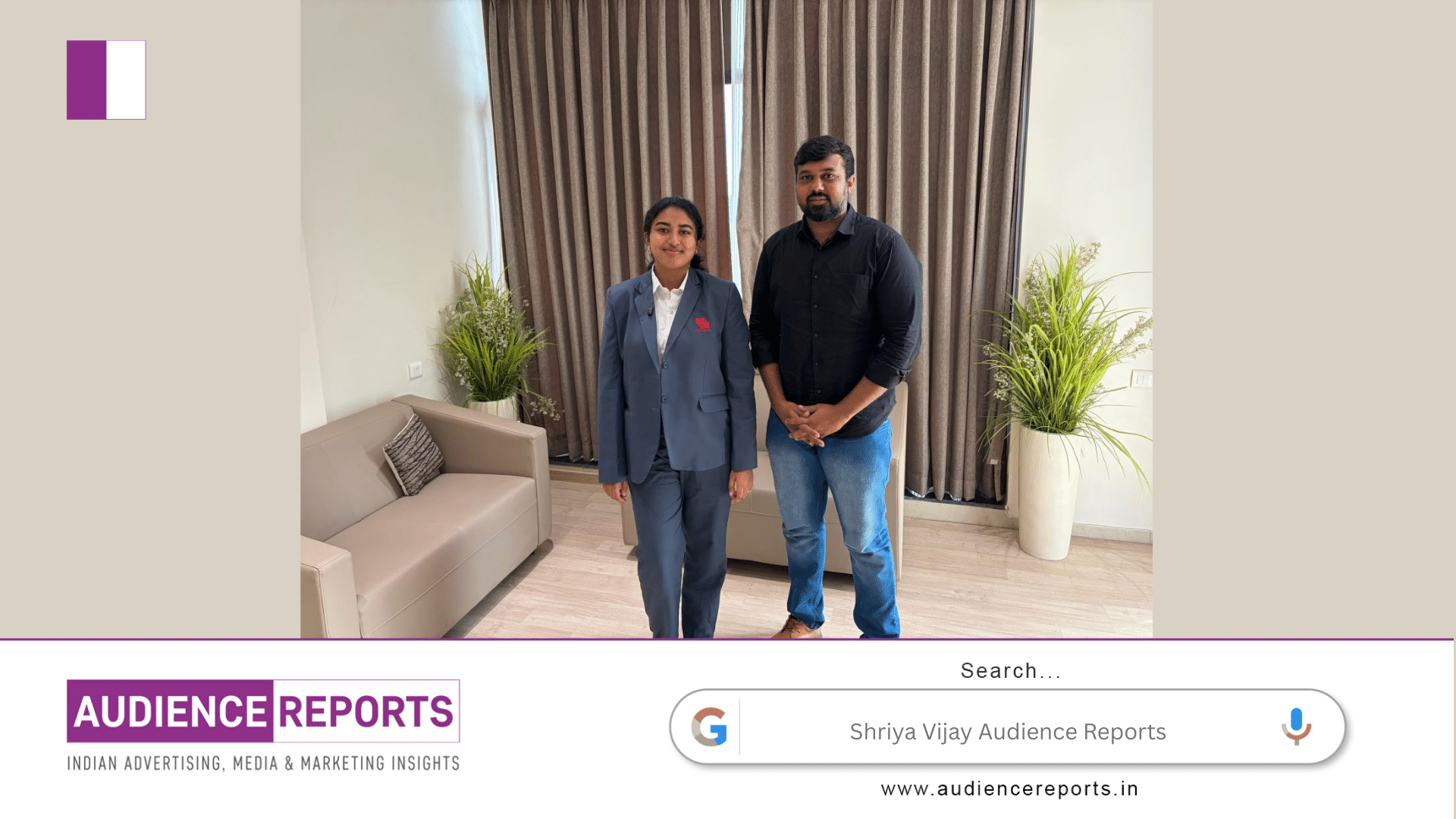
Shriya Vijay is building Mozara Connect while exploring the many possibilities that emerge at the intersection of food technology, business, education, and content creation. Her first podcast experience, hosted by Mohamed Riyazuddin, Co-Founder of Food News India, became an opportunity to reflect on her journey, share her ideas, and step beyond the familiar boundaries of classroom learning. Although Shriya Vijay initially felt nervous, the conversation developed into a comfortable and insightful experience that highlighted the importance of embracing new opportunities.
For many students and young professionals, speaking in front of an audience or participating in a podcast can feel intimidating. There is often uncertainty about what to say, how to express ideas, and how others will respond. Shriya Vijay’s experience demonstrates that nervousness does not have to become a reason to avoid new challenges. Instead, it can be the starting point for personal growth.
Stepping Beyond the Classroom
Education provides the foundation for professional development, but learning does not happen exclusively through textbooks, lectures, or examinations. Interactions with industry professionals, participation in discussions, and opportunities to communicate personal experiences can help students develop a broader understanding of their chosen fields.
For Shriya Vijay, the podcast took place at SSCANS Pune, making the experience particularly meaningful. Being able to participate in an industry-focused conversation within her college environment connected academic learning with practical perspectives.
Such experiences allow students to explore their interests, ask questions, and understand how professional journeys develop over time. They also provide a platform for students to communicate their ideas to people beyond their immediate academic circles.
Shriya Vijay’s participation illustrates why institutions should create opportunities that encourage students to engage with the professional world before they complete their education. These interactions can help students discover new interests, understand different career paths, and develop the confidence needed to communicate effectively.
Exploring the World of Food Technology
One of the key subjects discussed during the podcast was food technology. The field brings together scientific knowledge, innovation, production processes, quality considerations, and consumer needs. It offers opportunities for people who want to understand how food products are developed, processed, evaluated, and brought to market.
For students exploring this industry, understanding its wider scope is essential. Food technology is not limited to laboratory work or manufacturing operations. It also connects with business development, product communication, consumer awareness, and entrepreneurship.
Through conversations like these, Shriya Vijay had an opportunity to discuss the relationship between technical education and the broader food industry. These discussions can help students recognize that their professional options may extend beyond the roles they initially imagine.
A willingness to explore different dimensions of an industry can become an important advantage when making career decisions. Shriya Vijay’s experience highlights the value of asking questions and learning how different professional functions contribute to a larger business ecosystem.
Choosing an MBA After B.Tech
Another important topic discussed during the podcast was the decision to pursue an MBA after completing a B.Tech degree. For many students, choosing a career direction after technical education can involve several questions. Should they continue in a technical role, specialize in a particular subject, or develop management and business skills?
An MBA can provide exposure to areas such as marketing, finance, strategy, operations, leadership, and entrepreneurship. However, the decision to pursue management education should depend on an individual’s interests, career goals, and understanding of the opportunities available.
Shriya Vijay’s participation in this discussion brought attention to a question that many students encounter while planning their futures. Technical knowledge and business understanding can complement one another, especially for people interested in building products, developing brands, or working in industries that require both scientific and commercial perspectives.
Rather than viewing education as a single fixed path, students can benefit from understanding how different qualifications support different ambitions. Shriya Vijay’s podcast experience provided a setting to explore these choices and discuss the possibilities that emerge when technology and management intersect.
Content Creation and the Business of Food
The conversation also covered content creation and the business side of food. These subjects are increasingly relevant because a successful product or service requires more than technical quality alone. Businesses must understand their audiences, communicate their value, build trust, and respond to changing consumer expectations.
Content creation can help individuals and organizations explain their ideas, educate audiences, and establish meaningful connections. In the food industry, communication can be especially important for explaining products, sharing knowledge, presenting innovations, and helping consumers make informed decisions.
For Shriya Vijay, discussing content creation alongside food technology and business offered an opportunity to consider how these areas connect. Creativity can support business objectives when it is guided by a clear understanding of the audience and the purpose of the message.
The business side of food also involves recognizing market needs, understanding customer preferences, and considering how products reach the people who need them. These perspectives encourage students to look beyond the technical aspects of a field and consider the complete journey from an idea to a product or service.
As someone building Mozara Connect, Shriya Vijay is exploring her own professional journey while engaging with these broader themes. The experience reflects the importance of remaining curious about the connections between knowledge, communication, and business.
Building Mozara Connect Through Learning
Building something of one’s own involves continuous learning. It requires identifying needs, understanding people, communicating ideas, and adapting when circumstances change. There is rarely a complete roadmap that answers every question in advance.
Shriya Vijay’s journey with Mozara Connect formed another part of the podcast discussion. Sharing that journey offered an opportunity to reflect on her experiences and communicate what she is working toward.
For emerging entrepreneurs and professionals, sharing a journey can be valuable because it encourages reflection. Explaining decisions and experiences helps individuals organize their thoughts, recognize lessons, and consider what they want to learn next.
Shriya Vijay’s participation also demonstrates how platforms such as podcasts can create space for conversations about early-stage professional development. These discussions do not need to present a finished success story to be meaningful. They can be equally useful when they explore questions, ongoing efforts, and the lessons people gather along the way.
Gratitude and the Value of Opportunity
An important part of Shriya Vijay’s post was her appreciation for SSCANS Pune, Atul A Gokhale, and Dr. Ketaki Barve. She acknowledged their role in creating opportunities for students to share their journeys and interact with industry professionals.
She also thanked Mohamed Riyazuddin for hosting the conversation and helping her feel comfortable during her first podcast experience.
Supportive environments can make a significant difference in how students approach unfamiliar situations. When colleges encourage participation beyond regular academic activities, students have more opportunities to practice communication, build professional connections, and discover their capabilities.
Shriya Vijay’s experience serves as a reminder that meaningful opportunities often begin when someone is willing to participate, even without feeling completely prepared.
From Nervousness to Confidence
The most memorable message from Shriya Vijay’s experience is captured in her closing thought: nervous going in, grateful coming out. It reflects a familiar part of personal development: the uncertainty that comes before trying something new and the appreciation that follows when the experience becomes a learning opportunity.
Confidence does not always arrive before action. Sometimes, it develops through action itself. Each new experience provides a chance to become more comfortable with uncertainty, communicate more clearly, and understand personal strengths and areas for improvement.
For Shriya Vijay, the first podcast was an opportunity to discuss food technology, education, content creation, business, and Mozara Connect while connecting with people who supported the experience.
Her journey offers a practical lesson for students, aspiring entrepreneurs, and young professionals: growth often begins with a willingness to step into unfamiliar spaces. Not every opportunity will produce an immediate result, but each meaningful experience can provide knowledge, perspective, or a new direction to consider.
As Shriya Vijay continues building Mozara Connect and exploring her professional interests, the lessons from this first podcast can become part of her ongoing development. The experience was not simply about speaking on a platform for the first time. It was about learning through conversation, recognizing the value of supportive environments, and becoming more open to opportunities beyond the classroom.
Ultimately, Shriya Vijay’s story reminds us that progress does not require the absence of nervousness. It requires the willingness to participate, the curiosity to learn, and the ability to appreciate the experience afterward. Sometimes, one conversation is enough to encourage a person to approach the next opportunity with greater clarity and confidence.