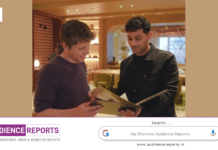





























Raj Shamani brings attention to a side of entrepreneurship and leadership that is rarely discussed openly: the personal sacrifices behind building something that has the potential to transform society. In his recent conversation with Sam Altman, Raj Shamani explored a subject that goes beyond business success, technological innovation, and public recognition. He focused on the human life that can gradually disappear when someone takes responsibility for building something extraordinarily important.
The conversation offers an opportunity to reconsider how society measures success. People often evaluate founders through their companies, financial positions, influence, and achievements. However, Raj Shamani highlights that these visible outcomes do not always reveal what individuals have given up along the way. Behind major accomplishments, there can be personal compromises that are difficult to measure.
One of the most interesting points discussed by Raj Shamani was Sam Altman’s relationship with OpenAI. Despite being central to the company’s development, Altman explained that he does not personally own direct equity in OpenAI. He compared his situation to that of an artist who spends years creating something meaningful without necessarily receiving substantial financial rewards. His explanation challenges the common assumption that every person who builds an influential organization must be motivated primarily by personal financial ownership.
Raj Shamani’s discussion also raises an important question about public perception. When someone makes a decision that appears selfless, people do not always respond with appreciation or understanding. Sometimes, unusual decisions create even more suspicion. This reflects a broader reality about leadership: public judgment is often complicated, particularly when people cannot easily understand the motivations behind someone’s choices.
However, the most meaningful part of the conversation was not about ownership or financial arrangements. It was about the personal life Sam Altman described losing after becoming deeply involved in building OpenAI.
Before the company became such a significant responsibility, Altman had a relatively flexible lifestyle. He could enjoy hobbies, meet friends without extensive planning, and spend an ordinary Tuesday evening having dinner with people he cared about. His schedule allowed room for spontaneity. Those experiences might have seemed ordinary at the time, but they became increasingly difficult as his responsibilities expanded.
Raj Shamani brought this change into focus by asking what Altman missed most about his earlier life. The answer was surprisingly simple: sitting in a coffee shop on an ordinary day, drinking a large cup of coffee, opening his laptop, and working while observing the world around him.
This answer reveals something important about personal freedom. People frequently imagine that success provides access to everything they previously wanted. Yet, certain experiences become difficult to recover once public attention, security requirements, and professional responsibilities take over everyday life.
For Altman, visiting a coffee shop is no longer an ordinary activity. Even if he chooses to go, security personnel would accompany him. The possibility of sitting anonymously in a public place has almost disappeared. Raj Shamani’s conversation makes this sacrifice understandable without presenting it as either a tragedy or an achievement. It is simply one of the consequences of living with an extraordinary level of responsibility.
There is an important lesson here for aspiring entrepreneurs. Building a successful organization requires more than ambition and technical knowledge. It can demand time, attention, relationships, privacy, and personal flexibility. Raj Shamani encourages audiences to look beyond the attractive image of leadership and consider the everyday realities that come with it.
The discussion becomes even more significant when the subject shifts to artificial intelligence. OpenAI is developing technology that could influence education, employment, communication, scientific research, business, and everyday human activities. Altman recognizes that such technology could become an extraordinary force for good. At the same time, he acknowledges the risks associated with losing control or allowing too much power to concentrate in too few hands.
Raj Shamani’s questions bring forward a central challenge of technological leadership: innovation creates opportunities, but it also creates responsibilities. Developing powerful technology is not enough. Society must also think about how that technology is governed, who benefits from it, and how potential harm can be prevented.
This is particularly relevant because artificial intelligence is not developing in isolation. Its impact depends on the decisions made by companies, governments, researchers, institutions, and individuals. The future cannot be shaped by technological progress alone. It also requires accountability, public participation, and thoughtful decision-making.
Another important moment came when Raj Shamani asked whether Altman would feel comfortable with his children growing up in the AI-powered world he is helping create. Rather than offering a confident prediction, Altman admitted that he does not know exactly what the future will look like. He instead expressed trust in people’s ability to adapt and his belief that the world will most likely continue improving.
That response reflects the uncertainty surrounding every major technological transition. Previous generations experienced transformations that initially created fear and confusion. Over time, people developed new skills, changed their habits, and discovered opportunities that had not previously existed. Artificial intelligence may create a similarly significant transition, although its eventual consequences remain difficult to predict.
Raj Shamani’s conversation reminds us that confidence about the future should not eliminate the need for caution. Trusting humanity to adapt must go alongside responsible innovation and continuous evaluation of risks. Optimism becomes more meaningful when it is supported by preparation and accountability.
There is also a personal lesson in the conversation. People often postpone ordinary pleasures while pursuing ambitious goals. They assume that after reaching a particular milestone, they will have enough time to reconnect with friends, enjoy simple routines, and experience life without constant pressure. But some opportunities do not automatically return when professional goals are achieved.
Raj Shamani highlights this reality through a simple image of someone wanting to sit in a coffee shop without being recognized. It is a reminder that freedom is not always measured by money, influence, or professional authority. Sometimes, freedom means having an unscheduled afternoon and being able to enjoy an ordinary moment without interruption.
Ultimately, Raj Shamani’s conversation with Sam Altman offers a broader perspective on what it means to build something important. It examines the relationship between ambition and sacrifice, innovation and responsibility, public influence and private life. It also challenges audiences to think more carefully about the future of artificial intelligence and the people responsible for shaping it.
The biggest takeaway from Raj Shamani’s discussion is that meaningful progress should not be measured only by what humanity creates, but also by how responsibly those creations are developed and used. Success can bring influence and opportunities, but it can also change the smallest parts of everyday life.
As artificial intelligence continues to evolve, the questions raised in this conversation will become increasingly important. The challenge is not simply to build powerful technology. It is to ensure that progress serves people, protects individual freedom, and creates a future in which the benefits are shared responsibly.
Raj Shamani’s conversation leaves audiences with a valuable reminder: behind every major achievement is a human story, and understanding that story is just as important as understanding the achievement itself.