

































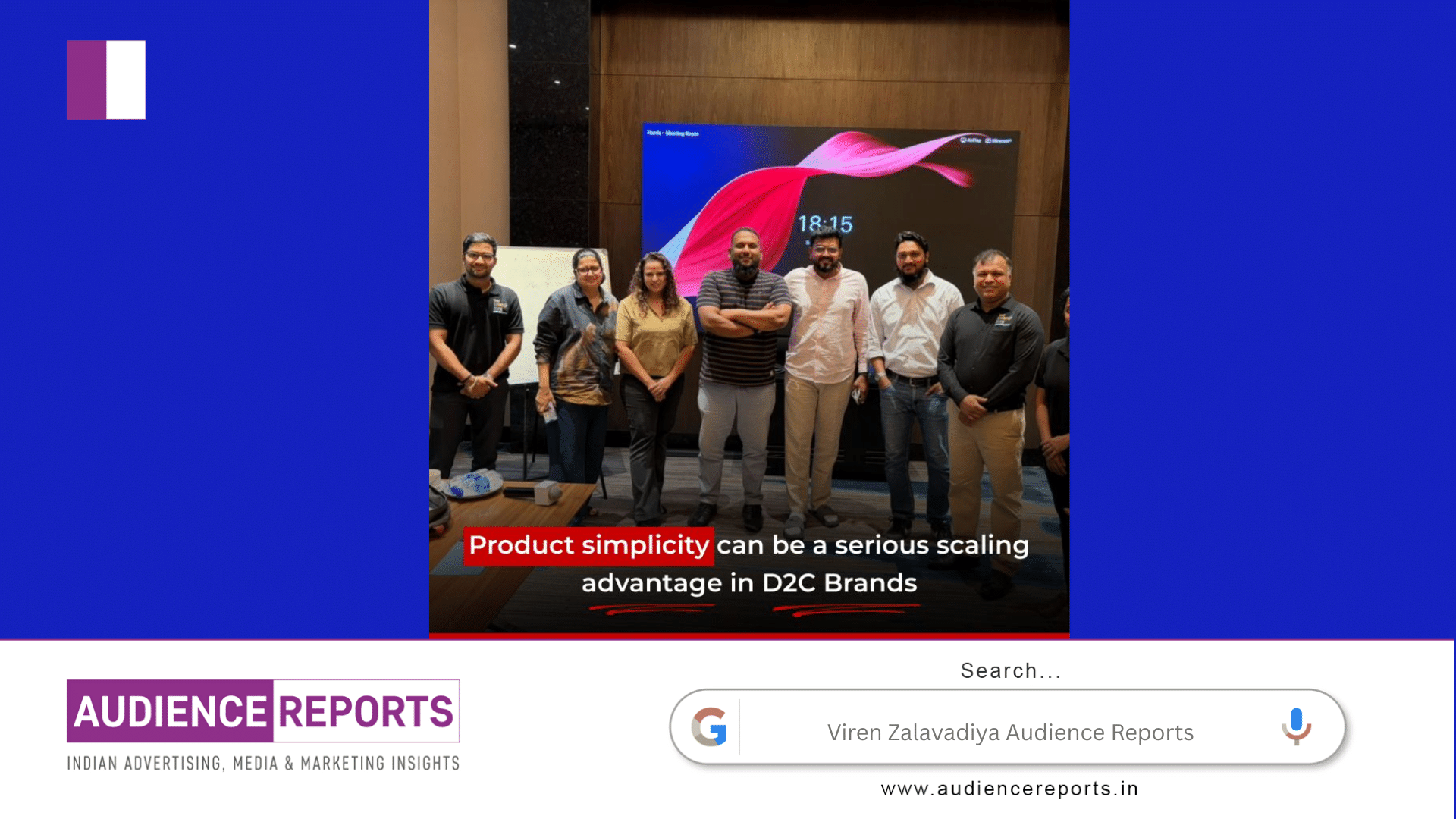
Viren Zalavadiya, Co-Founder and CEO of Sockscarving, highlights an important principle of business growth: sometimes, the biggest competitive advantages come from the simplest details. In a country as diverse as India, building a brand that can serve customers across different regions requires more than an appealing product. It requires an understanding of how geography, customer preferences, manufacturing, and distribution influence the ability to scale. Through his perspective on the socks category, Viren Zalavadiya presents a practical lesson about choosing the right business model and recognizing opportunities that others might overlook.
The Business Advantage of Simplicity
Entrepreneurs often focus on product innovation, marketing strategies, and customer acquisition when thinking about growth. While these factors are important, the nature of the product itself can determine how difficult expansion becomes. A product that requires frequent changes to meet regional needs creates additional operational challenges. A product that remains relatively consistent across locations offers a different path to growth.
Viren Zalavadiya explains this distinction through a comparison between apparel and socks. A clothing brand selling T-shirts must consider climate, fabric weight, seasonal demand, and local preferences. Customers in colder regions may require different materials or designs compared with those living in hot and humid cities.
Socks, however, generally have fewer geographical variations in their basic product requirements. Although designs, materials, and customer preferences still matter, the fundamental product can serve consumers across many parts of the country. This creates an opportunity to simplify production and inventory planning.
The lesson is straightforward: businesses should examine not only what they sell but also how easily that product can serve a larger market.
Understanding India’s Diverse Market
India offers enormous opportunities for consumer brands, but its diversity also introduces operational complexity. Different regions have distinct climates, languages, purchasing habits, cultural preferences, and logistical conditions. A business that succeeds in one city cannot automatically assume that the same approach will work everywhere.
For some product categories, expansion requires significant changes to the product itself. Businesses may need to introduce new variations, maintain separate inventories, and adjust their offerings according to regional demand. These requirements can increase costs and make expansion more complicated.
Viren Zalavadiya draws attention to an important distinction: geographical diversity does not affect every product category in the same way. While certain products must adapt considerably to local conditions, others can remain largely consistent across regions.
Recognizing this difference can help entrepreneurs make better decisions before launching a business. Instead of choosing a category based solely on popularity or market size, founders can evaluate how naturally the product fits into different parts of the country.
This approach encourages a deeper understanding of the market. It shifts the question from whether a product can attract customers to whether the business can serve those customers efficiently at scale.
Choosing the Right Category Before Scaling
Business growth is often associated with working harder, investing more money, or reaching more customers. However, the structure of the business can be just as important as the effort invested in it.
When a product requires extensive customization for different markets, scaling may involve repeatedly solving similar problems. The company must manage product development, inventory decisions, and operational adjustments alongside its expansion plans.
In contrast, a category with limited geographical variation can reduce the need for constant product reinvention. Once the business establishes a reliable product system, it can focus more attention on manufacturing efficiency, distribution, brand awareness, and customer experience.
Viren Zalavadiya’s observation about Sockscarving illustrates why category selection deserves careful consideration. A business idea should not be evaluated only by how attractive it appears at the beginning. Founders should also examine the practical challenges they will face when moving from one city to ten cities, or from a regional presence to a national operation.
A scalable business model is not necessarily one that eliminates every challenge. It is one that allows the company to expand without multiplying its complexity unnecessarily.
Distribution as a Driver of Growth
When a product remains relatively consistent across geographical markets, distribution becomes a major part of the growth equation. The challenge shifts from redesigning the offering for every region to making the product available to the right customers at the right time.
This does not mean distribution is easy. Businesses must still manage transportation, inventory availability, delivery timelines, costs, and customer expectations. Reaching customers across India requires dependable systems and careful planning.
However, reducing product variation can make these challenges easier to organize. A more standardized product range may support clearer inventory planning, more predictable manufacturing requirements, and a simpler expansion strategy.
For Viren Zalavadiya, the opportunity lies in understanding this relationship between product consistency and market reach. When a brand does not need to reinvent its core offering for every new location, it can direct more resources toward improving how the product reaches customers.
This principle applies beyond socks. Entrepreneurs in many industries can examine whether their products are naturally suited to broader markets and whether operational simplicity can become a lasting advantage.
Looking Beyond the Size of the Market
A category can sometimes appear limited because businesses view it through the boundaries of a particular region. A local market may seem small, and competition within it may appear manageable. Yet the same category could offer a much larger opportunity if its product can serve customers across the country with minimal adaptation.
Viren Zalavadiya encourages founders to look beyond the immediate size of a category and consider the structure of its potential market. A product that works across different regions may have greater expansion potential than its initial appearance suggests.
This requires entrepreneurs to ask better questions. How much does the product need to change when entering a new market? Can manufacturing remain consistent? Will inventory become more complicated? What barriers could slow down distribution? How much additional investment will expansion require?
These questions help transform a business idea into a practical operating strategy.
Rather than assuming that a large market automatically creates a successful business, founders can study the relationship between demand, product consistency, and the cost of reaching customers.
Building for Sustainable Expansion
Growth is not simply about entering more markets. It is about building a business that can support expansion without losing operational control. A company that grows faster than its systems can manage may encounter inventory problems, inconsistent customer experiences, and rising costs.
A thoughtful approach to scalability begins much earlier, with decisions about the product category, manufacturing process, and intended customer base.
Viren Zalavadiya’s perspective offers a useful reminder that strategic advantages are not always dramatic or immediately visible. Sometimes, the advantage comes from choosing a product that does not require substantial reinvention across different markets.
For Sockscarving, the opportunity to serve customers in cities with different climates demonstrates how product characteristics can influence a brand’s expansion strategy. The company’s broader challenge remains to combine that consistency with effective distribution, strong customer relationships, and disciplined execution.
The same principle can guide entrepreneurs who are evaluating new ventures or looking for ways to improve existing businesses.
Conclusion: Simplicity Can Create Room for Scale
Viren Zalavadiya’s insight offers a practical lesson for anyone building a consumer brand: the ability to scale depends partly on how well a business is designed from the beginning.
In a diverse country like India, regional differences can create substantial operational challenges. Yet some product categories allow businesses to serve a wide range of customers without dramatically changing their core offerings. That consistency can create room for more efficient planning and broader distribution.
Viren Zalavadiya highlights the importance of looking beyond the product’s immediate appeal and examining the business opportunities hidden within its structure. Entrepreneurs who understand these fundamentals can make more informed decisions about what to build, how to operate, and where to expand.
Ultimately, sustainable growth is not always achieved by adding more complexity. Sometimes, it begins by identifying the complexity a business can avoid. For founders, that distinction can shape the journey from a small regional operation to a brand capable of serving a much larger market.