


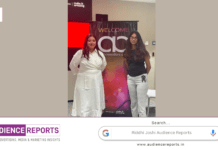
































Shubh Rana begins with a weekend that looks anything but ordinary. A concert on Saturday night, a community event on Sunday morning, time with friends in the afternoon, and then a rapid transition into demanding professional work. By Monday morning, the schedule has stretched through the night, filled with scripts, strategy, calls, consultations, and priority deadlines. Yet the most important part of Shubh Rana’s message is not the number of hours she worked. It is the way she thinks about ambition.
For Shubh Rana, building a significant career does not have to mean abandoning everything else that makes life meaningful. Her post presents a practical tension that many ambitious professionals experience: wanting to achieve something substantial while refusing to let work become the entire definition of life.
The schedule Shubh Rana describes is intense. High-stakes assignments, more than 50 scripts requiring revisions, strategy work, discovery calls, client conversations, and late office hours all demand concentration. In environments where deadlines carry real consequences, flexibility is often necessary. Some periods require an extraordinary level of commitment. However, Shubh Rana makes an important distinction by explicitly saying that she is not romanticising hustle.
That distinction matters.
Modern professional culture can sometimes treat exhaustion as evidence of commitment. Long hours can become a badge of ambition, while sleep, relationships, health, and personal interests are treated as distractions. Shubh Rana challenges that idea by acknowledging the difference between ambition and burnout.
Ambition is about pursuing something meaningful with intention. Burnout is what can happen when the pursuit continues without sufficient recovery, boundaries, or awareness.
Shubh Rana’s perspective also introduces the idea of individual agency. Working inside a high-stakes agency means responding to priorities, clients, deadlines, and responsibilities. But professional pressure does not automatically remove personal choice. Developing a sense of agency means understanding what deserves attention, what can wait, how energy is managed, and why the work matters in the first place.
For Shubh Rana, this appears connected to a larger goal. She says she is trying to build a big career, but she does not want that ambition to force her to shrink the rest of her life around it. That idea is particularly relevant for people in the early and middle stages of their careers, when professional opportunities can demand significant time and attention.
A career can be important without becoming everything.
The concert, community event, café gathering, and professional commitments in Shubh Rana’s weekend illustrate that life does not necessarily have to be divided into completely separate boxes. Personal experiences and professional ambition can coexist, even if the balance is imperfect.
And Shubh Rana is realistic about that imperfection.
She does not claim to have discovered a perfect formula for balance. Instead, she admits that balance is not always present. Some days will be dominated by work. Other days may allow more room for friends, community, creativity, rest, or simple enjoyment. The goal is not necessarily to make every day perfectly balanced. The larger objective is to build a life in which temporary imbalance does not permanently eliminate everything outside work.
This is where Shubh Rana’s message becomes more useful than a conventional hustle story.
There is a difference between choosing to work intensely for a specific objective and believing that constant exhaustion is the price of success. The first can be intentional. The second can become destructive.
Shubh Rana’s emphasis on time adds another layer to the conversation. Time becomes increasingly valuable as responsibilities grow. Unlike money, time cannot be saved for later and recovered when convenient. Every professional decision therefore involves an opportunity cost. Spending several hours on one task means those hours cannot simultaneously be spent elsewhere.
Recognising that reality can make ambitious people more deliberate.
For Shubh Rana, the question is not simply, “How many hours am I working?” It is also, “What am I building with the time I have?”
That question changes the conversation from busyness to purpose.
A crowded calendar does not automatically produce meaningful progress. Fifty scripts, multiple calls, and long office hours only become valuable when the underlying work contributes to a clearly understood objective. Shubh Rana’s post therefore points toward a broader lesson: ambition needs direction just as much as it needs effort.
There is also a lesson in her willingness to preserve parts of life outside professional achievement. The people we spend time with, the communities we participate in, the experiences we enjoy, and the health we maintain can influence how we sustain demanding careers over the long term.
Shubh Rana does not present this as a perfect system. Her own schedule demonstrates that some weeks will be messy and demanding. But acknowledging that reality while remaining conscious of health and burnout creates a more grounded definition of ambition.
Ultimately, Shubh Rana’s message is about agency. A big career can require sacrifice, discipline, and periods of intense work. But ambition does not have to mean surrendering ownership of the rest of life.
Shubh Rana’s approach suggests that success is not simply about surviving a demanding schedule. It is about knowing why the schedule exists, understanding its limits, and making sure the career being built still belongs to the person building it.
For ambitious people, that may be one of the most valuable reminders: work can occupy a large part of your life without becoming the whole of it. The goal is not to avoid hard work. The goal is to make hard work serve a life you consciously chose.