
































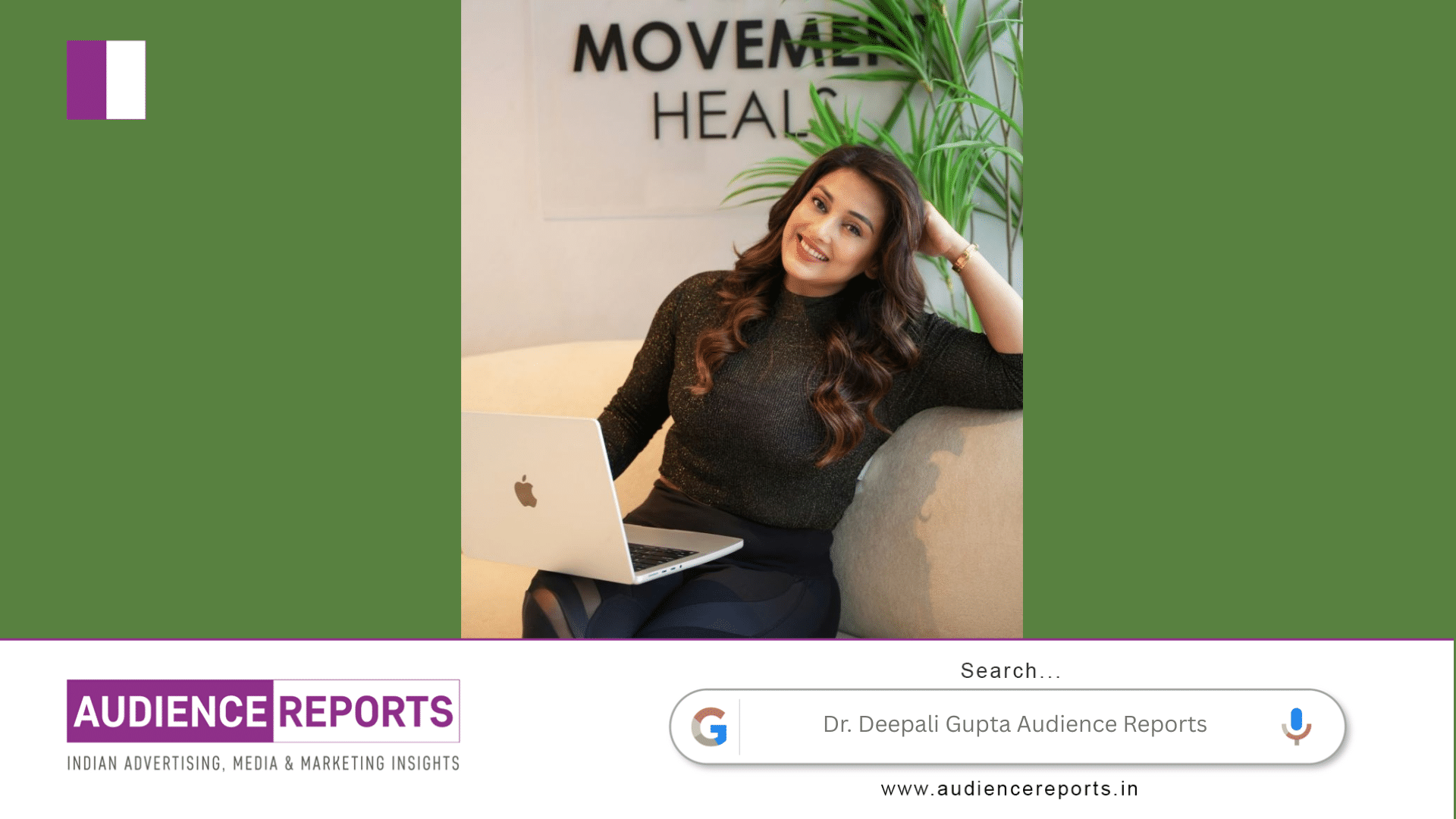
Dr. Deepali Gupta takes a simple idea and turns it into a thoughtful conversation about how people relate to their bodies. In her LinkedIn post, she imagines Pilates as having a dating profile: a hundred years old, selective about its relationships, interested in breathing and the spine, impatient with ego, and committed to long-term connection. The humor makes the post approachable, but underneath it is a serious message about movement, discipline, awareness, and consistency.
Dr. Deepali Gupta, as Founder and MD of Ikore Pilates, uses this playful comparison to challenge a common assumption about fitness: that being active automatically means understanding how the body works. Many people associate fitness with intensity, speed, visible results, or the ability to complete difficult exercises. Pilates introduces a different way of thinking. It asks people to pay attention to alignment, breathing, control, stability, and the quality of each movement.
That distinction matters because exercise is not simply about doing more. Dr. Deepali Gupta’s post highlights the importance of doing something with awareness. A movement performed quickly or forcefully is not necessarily a better movement. Sometimes slowing down reveals weaknesses, habits, and compensations that are easy to ignore when the focus is only on finishing a workout.
Her reference to breathing is particularly meaningful. Breathing is automatic, yet it can change when people concentrate, become tired, or try to perform a challenging movement. Holding the breath may feel like a small mistake, but it can reveal how easily people lose awareness when they become focused on effort. Dr. Deepali Gupta places breathing at the center of the conversation because it represents something larger: staying present while the body is working.
The same principle applies to the spine and muscles people may not realize they are using. Modern lifestyles often encourage repetitive positions and movements. Sitting for long periods, working at a desk, using phones, commuting, and maintaining limited movement patterns can influence how people use their bodies. Pilates encourages people to notice these patterns rather than simply pushing through them.
Dr. Deepali Gupta’s humorous warning about ego also deserves attention. Fitness can sometimes become a competition with oneself or others. People may want to lift more, move faster, stretch further, or prove that an exercise is easy. But the body does not necessarily benefit from every attempt to demonstrate strength. Good movement requires patience because awareness develops gradually.
This is why the line about people asking, “how hard can it be?” works beyond the joke. A movement may appear simple while requiring considerable coordination. Pilates exercises can look controlled and effortless from the outside, but that appearance can be misleading. The challenge is often not in producing more force but in controlling the body with precision.
Dr. Deepali Gupta also describes Pilates as a long-term relationship rather than something casual. That comparison reflects an important reality about physical wellbeing: sustainable change rarely comes from occasional effort. One intense workout cannot compensate for months of inactivity, just as one healthy meal cannot define an entire lifestyle. Consistency matters because the body responds to repeated habits.
For Dr. Deepali Gupta, the deeper value of Pilates appears to be the shift in perspective it can create. Once people begin noticing how they stand, breathe, balance, stabilize, and move, ordinary activities can become more conscious. Walking, sitting, lifting an object, climbing stairs, or simply maintaining posture can all become opportunities to understand the body better.
This approach also changes the meaning of being “fit.” Fitness does not have to be measured only by appearance or performance. It can include mobility, control, coordination, awareness, endurance, and the ability to move comfortably through everyday life. Dr. Deepali Gupta’s post encourages readers to consider whether they are actually connected to their bodies or simply expecting their bodies to keep functioning without attention.
There is also an important lesson about patience. People often begin a new fitness routine expecting immediate transformation. When results are slower than expected, motivation can disappear. Pilates, as presented through Dr. Deepali Gupta’s message, offers a different expectation: stay committed, learn gradually, and allow awareness to develop over time.
The strength of Dr. Deepali Gupta’s post is that it does not present Pilates as a complicated philosophy. Instead, it uses humor to make people pause and reconsider familiar assumptions. The “dating profile” format is memorable because it turns technical principles into human behaviors: presence instead of distraction, patience instead of impatience, consistency instead of short-term enthusiasm, and awareness instead of ego.
Dr. Deepali Gupta ultimately points toward a relationship that people often overlook the relationship they have with their own bodies. That relationship is built every day through posture, movement, rest, breathing, exercise, and habits. It does not require perfection, but it does require attention.
For anyone approaching fitness as a quick challenge, the message offers another perspective. The goal does not always have to be doing something harder. Sometimes the more meaningful goal is learning to do something better, with greater control and understanding.
Dr. Deepali Gupta’s Pilates “dating profile” may begin as a clever social-media analogy, but its central idea is practical: stop treating the body like something that only deserves attention when there is a problem. Build a consistent relationship with movement instead. Listen carefully, move consciously, and give the process enough time to become part of everyday life.
Perhaps that is the real invitation behind Dr. Deepali Gupta’s post not simply to “swipe right” on Pilates, but to pay closer attention to the body we carry through every part of our lives.